Guide
How Many Milligrams Are in a Gram? (Perfect Measurement Conversion Guide)
Dive into the world of measurement conversion! Discover 'how many milligrams are in a gram' and other key conversions. Easy-to-understand guide built for you!
 By April17 min read
In this guide
- How Many Milligrams Are in a Gram
- Understanding the Metric System for Accurate Conversions
- Exploring the Relationship Between Milligrams and Grams
- How to Convert Grams to Milligrams
- How to Convert Milligrams to Grams
- Applying the Gram to Milligram Conversion Formula
- Convenient Conversion Table for Milligrams to Grams
- The Significance of Decimal Places in Measurements
- The Role of Significant Figures in Measurement Calculations
- Estimation Techniques for Quick Approximations
- Understanding Base and Derived Units in the Metric System
- Applying Measurement Conversion in Culinary Arts
- Understanding and Mastering Measurement Conversion
- Our Friends:
- FAQ
How Many Milligrams Are in a Gram
Understanding the Metric System for Accurate Conversions
The metric system is a logical and consistent system of measurement that simplifies conversions between different units. In this section, I'll explain the basics of the metric system to help you better understand the conversion process.
The metric system is used worldwide and provides a standardized framework for measurement. It is based on the decimal system, meaning that units are related by powers of ten. This makes it easy to convert between units by simply moving the decimal point.
When it comes to weights and measures, the metric system uses units such as milligrams (mg) and grams (g). A gram is a unit of mass equal to 1/1,000th of a kilogram, and there are 1,000 milligrams in a gram.
Understanding this conversion between milligrams and grams is essential for accurate measuring in cooking and baking. To convert grams to milligrams, you simply multiply the weight in grams by 1,000. For example, 5 grams would be equal to 5,000 milligrams. Conversely, to convert milligrams to grams, you divide the weight in milligrams by 1,000. For example, 5,000 milligrams would be equal to 5 grams.
https://www.youtube.com/watch?v=T8Zuuo4GdfY
| Grams | Milligrams |
|---|---|
| 1 | 1,000 |
| 2 | 2,000 |
| 5 | 5,000 |
By mastering the metric system and understanding the conversion between milligrams and grams, you'll be able to accurately measure ingredients in your recipes and create culinary delights with confidence.
Exploring the Relationship Between Milligrams and Grams
Milligrams and grams are both units of mass in the metric system, but they represent different magnitudes. In this section, I'll explain the relationship between milligrams and grams and how to convert between them.
A milligram (mg) is a smaller unit of measurement compared to a gram (g). To put it into perspective, there are 1,000 milligrams in a gram. This means that if you have a certain weight in grams, you can convert it to milligrams by multiplying it by 1,000. For example, if you have 5 grams, you would have 5,000 milligrams (5 grams x 1,000).
On the other hand, if you have a weight in milligrams and you want to convert it to grams, you need to divide the weight in milligrams by 1,000. For instance, if you have 5,000 milligrams, it would be equal to 5 grams (5,000 milligrams ÷ 1,000). This conversion is essential in cooking and baking, where accurate measurements are crucial for successful recipes.

| Grams (g) | Milligrams (mg) |
|---|---|
| 1 | 1,000 |
| 2 | 2,000 |
| 3 | 3,000 |
| 4 | 4,000 |
| 5 | 5,000 |
Above is a conversion table that showcases the relationship between grams and milligrams. It provides instant results for commonly used weights in cooking and baking. Simply find the weight in grams and you'll see the corresponding weight in milligrams. This table can be a handy reference when you need to convert between these two units quickly and accurately.
How to Convert Grams to Milligrams
Converting grams to milligrams is a simple calculation that involves multiplying the weight in grams by 1,000. In this section, I'll walk you through the step-by-step process to convert grams to milligrams accurately.
To convert grams to milligrams, you need to use the conversion ratio of 1 gram = 1,000 milligrams. This means that every gram is equal to 1,000 milligrams. So, to convert grams to milligrams, you just need to multiply the weight in grams by 1,000.
Let's take an example: if you have 5 grams and you want to convert it to milligrams, you would multiply 5 by 1,000. The calculation would be as follows:
| Grams | Milligrams |
|---|---|
| 5 | 5,000 |
So, 5 grams is equal to 5,000 milligrams. It's important to remember the conversion ratio and the process of multiplying by 1,000 when converting grams to milligrams.

- Always double-check your calculations to ensure accuracy.
- Use a calculator or conversion tool for quick and precise measurements.
- When dealing with large quantities, it's easier to convert grams to milligrams for more precise measurements.
By following these simple steps, you'll be able to convert grams to milligrams accurately and confidently. This knowledge will come in handy when you're working with different units of measurement in your cooking and baking adventures. Now, let's move on to the next section and learn how to convert milligrams to grams.
How to Convert Milligrams to Grams
Converting milligrams to grams requires dividing the weight in milligrams by 1,000. In this section, I'll guide you through the process of converting milligrams to grams accurately.
Let's take an example to illustrate the conversion. Say you have a measurement of 5,000 milligrams and you want to convert it to grams. To do this, you simply divide 5,000 by 1,000:
| Milligrams (mg) | Grams (g) |
|---|---|
| 5,000 | 5 |
Therefore, 5,000 milligrams is equal to 5 grams.
It's important to remember that converting milligrams to grams involves dividing by 1,000 because there are 1,000 milligrams in a gram. This conversion is particularly useful when dealing with larger quantities, allowing for more convenient and accurate measurements in your recipes.

Now that you know how to convert milligrams to grams, you can confidently perform accurate measurements in your cooking and baking adventures. Whether you're scaling up a recipe or fine-tuning ingredient amounts, understanding this conversion ratio will ensure precise results.
Applying the Gram to Milligram Conversion Formula
The conversion formula for grams to milligrams is a valuable tool when dealing with various weights in recipes. In this section, I'll show you how to apply the conversion formula in practice. Understanding this conversion will ensure accurate measurements and help you create delicious dishes with precision.
To convert grams to milligrams, you simply need to multiply the weight in grams by 1,000. This allows you to move from a larger unit to a smaller unit, providing more precise measurements. Let's take a look at an example:
Example: You have a recipe that calls for 50 grams of flour. To convert this to milligrams, you would multiply 50 by 1,000. The calculation would be as follows:
50 grams x 1,000 = 50,000 milligrams
In this case, 50 grams would be equal to 50,000 milligrams.
Converting milligrams to grams follows the opposite process. You divide the weight in milligrams by 1,000 to move from a smaller unit to a larger unit. Let's see an example:
Example: You have a recipe that requires 75,000 milligrams of sugar. To convert this to grams, you would divide 75,000 by 1,000. The calculation would be as follows:
75,000 milligrams ÷ 1,000 = 75 grams
Therefore, 75,000 milligrams would be equal to 75 grams.
Mastering the grams to milligrams conversion formula will make your culinary measurements more accurate and precise. It empowers you to confidently follow recipes and create dishes that are both delicious and visually appealing. So, let's put this knowledge to use!
Having a conversion table at your fingertips can be incredibly helpful when converting grams to milligrams. In this section, I'll present a conversion table that you can use for quick and accurate conversions.
Grams (g) and milligrams (mg) are both units of mass in the metric system. To convert grams to milligrams, you need to multiply the weight in grams by 1,000. This means that 1 gram is equal to 1,000 milligrams. Conversely, when converting milligrams to grams, you divide the weight in milligrams by 1,000. So, 1 milligram is equal to 0.001 grams.
Here is a handy conversion table that provides instant results when converting grams to milligrams:
| Grams (g) | Milligrams (mg) |
|---|---|
| 1 | 1,000 |
| 2 | 2,000 |
| 3 | 3,000 |
By referring to this conversion table, you can easily determine the milligram equivalent for any weight in grams. Let's say you have a recipe that calls for 5 grams of an ingredient, and you want to convert it to milligrams. According to the table, 5 grams is equal to 5,000 milligrams. Therefore, you would need 5,000 milligrams of that ingredient.
With this handy conversion table, you can save time and ensure accuracy in your measurements. Whether you're a professional chef or a passionate home cook, having a reliable resource for converting grams to milligrams will make your culinary adventures a breeze!
Convenient Conversion Table for Milligrams to Grams
To simplify the process of converting milligrams to grams, I've created a conversion table that provides instant results. In this section, I'll present a conversion table that you can refer to when converting milligrams to grams.
Milligrams (mg) and grams (g) are both commonly used units of mass in the metric system. Understanding how to convert between the two is essential for accurate measurements in cooking and baking. To convert milligrams to grams, simply divide the weight in milligrams by 1,000. This will give you the equivalent weight in grams.
Here is a convenient conversion table that you can use as a quick reference:
| Milligrams (mg) | Grams (g) |
|---|---|
| 100 mg | 0.1 g |
| 500 mg | 0.5 g |
| 1000 mg | 1 g |
| 2000 mg | 2 g |
| 5000 mg | 5 g |
Using this table, you can easily convert any weight in milligrams to grams. Simply locate the value in milligrams and read the corresponding gram equivalent. It's a handy tool to have in your kitchen for accurate measurements and precise cooking or baking.
The metric system encompasses various units of measurement, each serving a specific purpose. In this section, we'll explore other units related to milligrams and grams and how they fit into the metric system. Understanding these units is essential for accurate measurements in the culinary world.
One commonly used unit in the metric system is the kilogram (kg). A kilogram is equivalent to 1,000 grams. It is often used to measure larger quantities of ingredients, such as flour or sugar, in baking recipes. Knowing how to convert grams to kilograms and vice versa can help you scale your recipes up or down as needed.
Conversion Table: Grams to Kilograms
| Grams | Kilograms |
|---|---|
| 100 | 0.1 |
| 500 | 0.5 |
| 1,000 | 1 |
Another unit commonly used in the metric system is the ton. A ton is equal to 1,000 kilograms, or 1 million grams. It is typically used to measure larger quantities of ingredients or bulk products. Understanding how to convert grams to tons and tons to grams can be helpful when working with large-scale recipes or commercial quantities.
Conversion Table: Grams to Tons
| Grams | Tons |
|---|---|
| 1,000,000 | 1 |
| 2,500,000 | 2.5 |
| 5,000,000 | 5 |
Aside from the kilogram and ton, the metric system also includes units such as the ounce and pound. While these units are more commonly used in the customary system of measurement, they still have relevance in certain culinary contexts. However, when converting between metric units, it's important to stick to the standard metric units of grams and kilograms for accurate measurements.

The metric system offers a wide range of units, each with its own conversion factors. Familiarizing yourself with these units and their relationships to milligrams and grams will enhance your understanding of measurement conversion. This knowledge will empower you to create culinary masterpieces with precision and accuracy.
- Ounce (oz): A unit of weight equivalent to 28.35 grams.
- Pound (lb): A unit of weight equivalent to 453.59 grams.
Remember, precise measurements are crucial in the culinary arts, as they can significantly impact the outcome of your dishes. By mastering measurement conversion in the metric system, you'll be able to confidently navigate any culinary challenge that comes your way.
The Significance of Decimal Places in Measurements
In the realm of measurement, precision and accuracy are paramount. Understanding the significance of decimal places and their impact on measurement accuracy is essential for precise cooking and baking. In this section, we'll explore the importance of decimal places and the international system of units (SI units).
The international system of units, also known as SI units, is a globally recognized system that provides a standard for precise measurement. It is based on decimal fractions and powers of ten, making it ideal for scientific and culinary applications. In the SI system, each unit is derived from a specific base unit, allowing for consistent conversions between different quantities.
Decimal places play a crucial role in measurement accuracy. They indicate the level of precision in a measurement, allowing for more exact calculations and reducing the uncertainty and error. By specifying the number of decimal places, you can communicate the exactness of a measurement and ensure consistent results.
quote: "Precision, the number of decimal places in a measurement, reflects the level of detail or granularity in the data. Accuracy, on the other hand, refers to the closeness of a measurement to its true value. While precision and accuracy are not synonymous, they both contribute to the overall reliability of a measurement."
When working with ingredients in cooking and baking, the precise measurement of quantities is crucial for achieving desired results. Whether it's a pinch of salt or a specific weight of flour, paying attention to decimal places ensures accurate and consistent outcomes. So, the next time you're following a recipe or creating your own culinary masterpiece, remember the importance of decimal places and the role they play in achieving precision and accuracy in your measurements.
Table: Decimal Place Examples
| Measurement | Decimal Places | Example |
|---|---|---|
| Teaspoon | 1 | 2.5 tsp |
| Gram | 2 | 25.35 g |
| Cup | 3 | 0.333 cups |
| Milliliter | 4 | 15.6742 mL |
As you can see from the table, different measurements may require different levels of precision. Understanding the appropriate number of decimal places for each ingredient helps ensure accurate and consistent measurements in your culinary endeavors.

The Role of Significant Figures in Measurement Calculations
When performing calculations using measurements, understanding significant figures is crucial for maintaining accurate and precise results. In this section, we'll explore the role of significant figures and how they affect measurement calculations.
Significant figures, also known as sig figs, represent the precision of a measurement. They indicate the number of reliable digits in a measured value and help determine the appropriate level of rounding for calculated results. By using the correct number of significant figures, you can ensure that your calculations are both accurate and consistent.
For example, let's say you are converting a recipe that calls for 250 grams of flour to milligrams. The conversion factor is 1 gram equals 1,000 milligrams. To calculate the conversion, you would multiply 250 grams by 1,000, resulting in 250,000 milligrams. However, since the original measurement has three significant figures, the final answer should also have three significant figures. Therefore, the accurate conversion would be 250,000 milligrams.

By paying attention to significant figures, you can maintain the correct level of precision in your calculations. This ensures that your measurements remain accurate and reliable, avoiding any uncertainties or errors that can arise from improper rounding or truncation. Whether you're calculating ingredient quantities or adjusting cooking times, understanding significant figures is essential for achieving consistent and precise results.
Estimation Techniques for Quick Approximations
While accuracy is crucial, not all situations require precise measurements. In this section, we'll delve into the importance of estimation in measurement conversion and explore techniques for quick approximations.
Estimation is a valuable skill when it comes to measurement conversion, especially in the fast-paced world of culinary arts. Sometimes, quick approximations are sufficient for achieving desired results, whether you're adjusting a recipe on the fly or measuring ingredients in a hurry. By mastering estimation techniques, you can save time and effort in the kitchen while still maintaining a delicious outcome.
One useful technique for estimation is rounding. Rounding involves simplifying a measurement to the nearest whole number or a specified decimal place. For example, if a recipe calls for 75 grams of flour but you only have a rough estimate of the quantity, rounding to the nearest 10 grams can provide a close approximation. In this case, you can estimate the flour to be around 70 grams or 80 grams, depending on your judgment.

Another estimation technique is proportional reasoning. This involves comparing the quantities of different ingredients and making educated guesses based on their relative proportions. For example, if a recipe calls for 500 grams of sugar and you only have a rough estimate of the quantity, you can estimate the amount of sugar based on the ratio of sugar to flour. If the recipe requires 250 grams of flour, and you estimate the flour to be around 200 grams, you can proportionally estimate the sugar to be around 400 grams.
| Estimation Technique | Description |
|---|---|
| Rounding | Simplifying a measurement to the nearest whole number or specified decimal place |
| Proportional Reasoning | Comparing the quantities of different ingredients and making educated guesses based on their relative proportions |
| Visual Estimation | Using visual cues, such as the size or volume of ingredients, to estimate their quantities |
Visual estimation is another handy technique. It involves using visual cues, such as the size or volume of ingredients, to estimate their quantities. For example, if a recipe calls for 100 grams of chopped vegetables, but you don't have a scale, you can estimate the quantity by comparing it to a standard serving size. Visual estimation is particularly useful for ingredients with consistent shapes, like diced onions or grated cheese.
By employing these estimation techniques, you can quickly approximate measurements in various situations, ensuring that your culinary creations turn out deliciously every time. While precision is important, estimation allows for flexibility in the kitchen and empowers you to confidently experiment with flavors and adapt recipes to suit your taste.
Understanding Base and Derived Units in the Metric System
The metric system is structured around base and derived units, which provide a comprehensive framework for measuring various dimensions. In this section, we'll explore the concept of base and derived units in the metric system.
Base units are the foundation of the metric system and are used to measure fundamental quantities such as length, mass, and time. They are defined by specific standards and cannot be derived from any other units. Some examples of base units include the meter (m) for length, the gram (g) for mass, and the second (s) for time. These units form the basis for all other measurements in the metric system.
Derived units, on the other hand, are derived from base units and are used to measure quantities derived from the fundamental dimensions. They are created by combining base units using mathematical operations. For example, the unit for area is derived by multiplying length by length, resulting in square meters (m2). Similarly, the unit for volume is derived by multiplying length by length by length, resulting in cubic meters (m3).
By utilizing a combination of base and derived units, the metric system allows for consistent and coherent measurements across various disciplines. This standardized approach to measurement facilitates accurate and precise calculations, ensuring uniformity and ease of communication in scientific and everyday contexts.
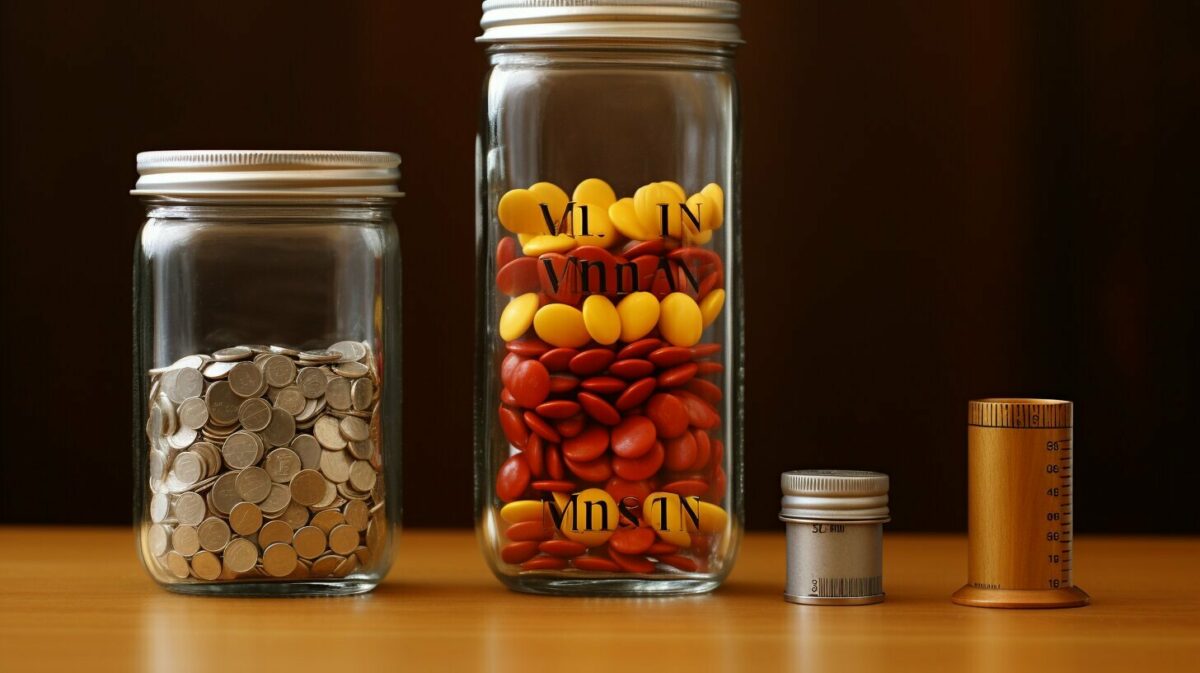
- The metric system is based on base and derived units.
- Base units are fundamental and cannot be derived from any other units.
- Derived units are created by combining base units using mathematical operations.
- Base and derived units provide a standardized and coherent framework for measurement.
By understanding the concept of base and derived units in the metric system, you have gained insight into the foundational principles of measurement. This knowledge will serve as a solid foundation for your understanding of the metric system as a whole and enable you to accurately measure and communicate various dimensions in your everyday life.
Applying Measurement Conversion in Culinary Arts
Measurement conversion plays a vital role in the world of cooking and baking. In this section, we'll explore practical applications of measurement conversion in the culinary arts and how it enhances your ability to create delicious dishes.
Accurate and precise measuring is crucial when it comes to cooking and baking. Whether it's converting grams to milligrams or vice versa, understanding measurement conversion ensures that your recipes turn out just right. It allows you to follow recipes with precision and achieve consistent results every time.
When converting measurements for ingredients like flour, sugar, spices, or yeast, a slight deviation can significantly impact the outcome of your dish. Being able to convert between milligrams and grams accurately ensures that you add the correct amount of each ingredient, resulting in perfectly balanced flavors and textures.
Let's take a look at an example to illustrate the importance of measurement conversion in culinary arts. Suppose you're following a recipe that calls for 100 grams of sugar, but your scale only measures in milligrams. By converting grams to milligrams, you'll know that you need 100,000 milligrams of sugar to achieve the desired sweetness in your dish. Without measurement conversion, you might add an incorrect amount and end up with a dish that's too sweet or not sweet enough.
As you can see, measurement conversion is an essential skill in the culinary arts. It allows you to accurately measure and convert ingredients, ensuring that your dishes turn out as intended. So the next time you're in the kitchen, remember the importance of measurement conversion and embrace it as a tool to elevate your cooking and baking skills!
Understanding and Mastering Measurement Conversion
In conclusion, measurement conversion is a fundamental skill for any chef or cook. By grasping the conversion between grams and milligrams, you've acquired a valuable tool that will enhance your precision and accuracy in the kitchen.
As we've explored throughout this comprehensive guide, the relationship between grams and milligrams is based on a simple ratio. To convert grams to milligrams, you multiply the weight in grams by 1,000. For example, 5 grams would be equal to 5,000 milligrams. On the other hand, to convert milligrams to grams, you divide the weight in milligrams by 1,000. For instance, 5,000 milligrams would be equal to 5 grams. Understanding this conversion allows for precise measurements in your culinary creations.
With this knowledge, you can confidently tackle any recipe, ensuring accurate and consistent results. Whether you're baking delicate pastries or cooking savory dishes, being able to convert measurements accurately is essential for achieving the desired outcome.
So, go forth and unleash your culinary creativity! With your newfound mastery of measurement conversion, you can confidently embark on culinary adventures, knowing that your measurements will be precise and your dishes will be a testament to your skill as a chef or cook.
Our Friends:
- https://www.inchcalculator.com/convert/gram-to-milligram/
- https://livelytable.com/cooking-conversions/how-many-milligrams-are-in-a-gram/
- https://www.rapidtables.com/convert/weight/gram-to-mg.html
Frequently asked questions
- What is a gram?
A gram is a unit of mass equal to 1/1,000th of a kilogram.
- How many milligrams are in a gram?
There are 1,000 milligrams in a gram.
- How do I convert grams to milligrams?
To convert grams to milligrams, you multiply the weight in grams by 1,000.
- How do I convert milligrams to grams?
To convert milligrams to grams, you divide the weight in milligrams by 1,000.
- Why is understanding this conversion important in cooking and baking?
Understanding this conversion is essential for accurate measuring in cooking and baking, as it allows for precise measurements and ensures the desired results in your recipes.
AprilCook, recipe developer and the heart of Chefwiz. More about April