Kitchen notes
The Right Knife for the Job
Any professional, in any line of work, will tell you: you must have the right tools of the trade. Skill, talent, training, and knowledge will never be enough
 By April2 min read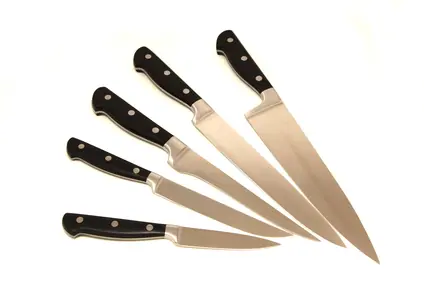
30 May, 2013
The Right Knife for the Job

Posted in : Random on May 30, 2013 by : r.barkia
Any professional, in any line of work, will tell you: you must have the right tools of the trade. Skill, talent, training, and knowledge will never be enough to overcome a lack of proper tools. In a kitchen, knives are among the most important tools a chef can have. Read on to learn about a chef’s must-have knives, and what foods each is used for.
Chef’s Knife/Cook’s Knife: This knife is a chef’s best friend in the kitchen. It has a wide blade, ranges from six to 10 inches long, and curves up toward the tip – a classic, French-style knife. This knife is used mainly for chopping, but can be pressed into service for nearly any purpose. Mainly used for: meats and sturdy vegetables.
Serrated Knife: A serrated knife features a “toothed” blade that gives you many tiny points of contact on the surface you are slicing. It is ideal for foods that have a different texture on the outside than on the inside (e.g., tomatoes and crusty French baguettes.) Mainly used for: breads, tomatoes, some meats.
Paring Knife: Perfect for small tasks that need to be executed with care, such as trimming, peeling, or coring vegetables or fruits, a paring knife is two to four inches long and features a blade that resembles a miniature chef’s knife. Mainly used for: delicate vegetables and fruits.
Slicing Knife: A slicing knife offers a long, thin blade that aids in slicing through meats, game, and fish. It should measure eight to 10 inches long (long enough to span a roast) and should be narrow enough to slice easily through thick meats. This slenderness also provides the flexibility to allow you to separate meat from bone with the blade. Mainly used for: meat requiring thin, even slices; cooked meats.
Cleaver: It takes true skill to wield a cleaver with finesse, but this large, rectangular blade has the heft to chop, slice, or smash virtually anything that crosses your countertops. A cleaver may not be an everyday knife in your kitchen, but when you need it, there is no other tool that can do the job. Mainly used for: large cuts of meat, smashing garlic cloves, ginger, etc.
http://www.foodnetwork.com/recipes-and-cooking/the-three-must-have-knives/index.html
AprilCook, recipe developer and the heart of Chefwiz. More about April