Wonton Wrappers
Rate this recipeBe the first to rate
 By AprilPublished
 Have you ever wondered what makes those delicious dumplings so perfectly wrapped?
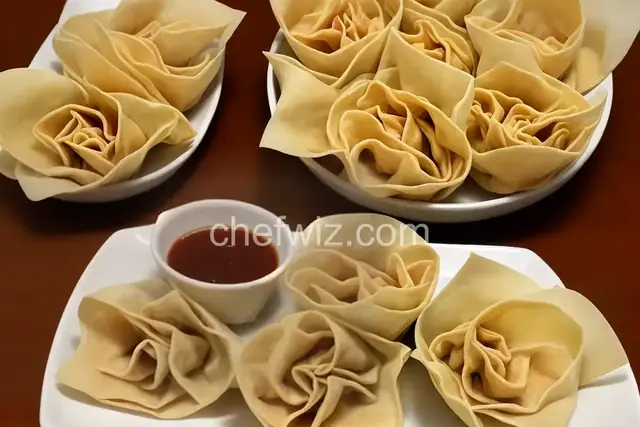 By AprilPublished
 Have you ever wondered what makes those delicious dumplings so perfectly wrapped?
In a medium bowl, whisk the egg thoroughly.
Add 1/3 cup of water to the beaten egg and mix well.
In a large bowl, combine the flour and salt.
Create a well in the center of the flour mixture.
Slowly pour the egg and water mixture into the well.
Mix the ingredients together until well combined.
If the dough is too dry, gradually add 1 teaspoon of water at a time until the dough becomes pliable.
On a lightly floured surface, knead the dough until it becomes elastic.
Divide the dough into two equal portions and shape each portion into a ball.
Cover the dough balls with a damp cloth and let them rest for at least 10 minutes.
Take each dough ball and cut it into four equal pieces.
Roll each piece into a square measuring 10 1/2 x 10 1/2 inches.
Cut each square into nine smaller squares, each measuring 3 1/2 x 3 1/2 inches.
You now have a total of 72 wonton wrappers.
Use these wonton wrappers in any recipe that calls for them.
Have you ever wondered what makes those delicious dumplings so perfectly wrapped? The secret lies in the humble wonton wrapper. These delicate sheets of dough are the foundation of countless Asian dishes, from savory dumplings to crispy fried wontons. In this article, we'll dive into the world of wonton wrappers, exploring their origins, uses, and tips for making your own. So, let's unravel the mystery of wonton wrappers!
Like many culinary creations, wonton wrappers have a rich history that dates back centuries. Their origins can be traced to Northern China, where they were initially made by hand. These thin, square sheets of dough were traditionally made using a simple mixture of flour, water, and salt. Over time, the technique of making wonton wrappers spread throughout China and eventually made its way into other parts of Asia.
Wonton wrappers are incredibly versatile and can be used in a variety of dishes. From steamed dumplings to deep-fried wontons, these flexible sheets can hold a wide range of fillings. Whether you prefer a savory pork and cabbage filling or a delicate shrimp and ginger combination, wonton wrappers are the perfect vessel to showcase your culinary skills.
While store-bought wonton wrappers are convenient, making your own can be a rewarding experience. Not only do homemade wonton wrappers allow for customization, but they also have a fresher taste. With just a few simple ingredients and a bit of patience, you can create your own wonton wrappers from scratch. The process involves combining flour, water, and salt to form a smooth dough, which is then rolled out and cut into squares.
Working with wonton wrappers can be a delicate endeavor, but with a few tips and tricks, you'll be folding and pleating like a pro. Here are some handy tips to keep in mind:
Wonton wrappers are a versatile and essential ingredient in Asian cuisine. Whether you're making savory dumplings or crispy fried wontons, these delicate sheets of dough provide the perfect foundation for your culinary creations. From their humble origins in Northern China to their worldwide popularity, wonton wrappers continue to delight food lovers with their endless possibilities. So, next time you're craving some delicious dumplings, grab a pack of wonton wrappers and let your creativity shine!
Absolutely! Wonton wrappers freeze well and can be stored for several months. Just make sure to separate each wrapper with parchment paper to prevent sticking.
Most wonton wrappers are made from wheat flour and are not gluten-free. However, there are gluten-free alternatives available, such as wrappers made from rice flour or tapioca starch.
Definitely! Wonton wrappers can be filled with sweet fillings like fruit or chocolate and then fried or baked for a delightful dessert treat.
To prevent sticking, make sure to lightly coat the pan or steaming basket with oil or cooking spray before placing the wontons.
While wonton wrappers are similar to spring roll wrappers, they have a slightly different texture. Spring roll wrappers are thinner and more delicate, making them a better choice for spring rolls.
Absolutely! Air-frying wontons is a healthier alternative to deep-frying. Simply spray the wontons with cooking oil and air-fry until crispy and golden.
Leftover wonton wrappers can be stored in an airtight container in the refrigerator for up to a week. Alternatively, you can freeze them for future use.
While wonton wrappers can be a convenient substitute for making ravioli, the texture and flavor may differ slightly. Traditional ravioli dough is typically made with eggs, giving it a richer taste and a softer texture.
AprilCook, recipe developer and the heart of Chefwiz. More about April