Veggie Teriyaki Stir-Fry with Noodles
Rate this recipeBe the first to rate
 By AprilPublished
 Are you in the mood for a delicious and healthy meal? Look no further than this Veggie Teriyaki Stir-Fry with Noodles!
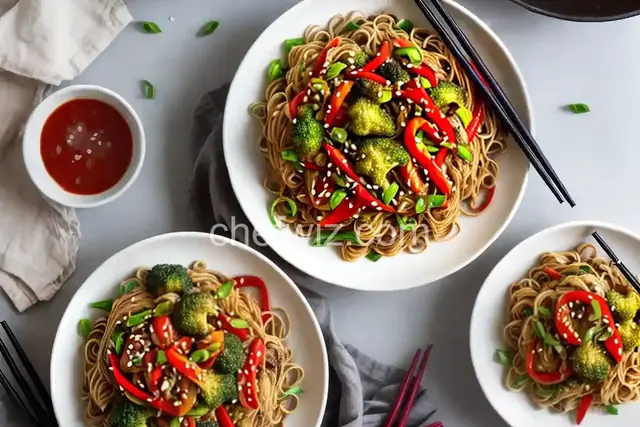 By AprilPublished
 Are you in the mood for a delicious and healthy meal? Look no further than this Veggie Teriyaki Stir-Fry with Noodles!
Boil a pot of water and cook the noodles according to the instructions on the package until they are al dente.
Drain the noodles and rinse them well to remove any excess starch. Set them aside.
In the meantime, heat a large skillet over medium heat. Add the oil, onion, and salt. Cook and stir occasionally until the onion becomes tender, which should take around 4 to 6 minutes.
Add the remaining vegetables to the skillet and cook them until they become tender and start caramelizing on the edges. Stir every minute or two during this process, which will take about 10 to 15 minutes due to the volume of vegetables.
Once the vegetables are done, add the noodles and ½ cup of teriyaki sauce to the skillet. Stir everything together and cook for about 1 minute until all the ingredients are warmed through. If desired, you can add more teriyaki sauce for extra sauciness.
Remove the skillet from the heat and add toasted sesame oil to taste. Be cautious as a little bit goes a long way. You can also use tongs to help mix the noodles into the veggies. Lastly, sprinkle sesame seeds on top.
Serve the noodles in bowls and garnish with sliced green onion and an additional sprinkle of sesame seeds.
Any leftovers can be stored in a covered container in the refrigerator for up to 4 days.
Are you in the mood for a delicious and healthy meal? Look no further than this Veggie Teriyaki Stir-Fry with Noodles! This dish is packed with colorful vegetables, savory teriyaki sauce, and satisfying noodles. It's the perfect combination of flavors and textures that will leave you feeling satisfied and nourished.
Stir-frying is a cooking technique that originated in China and has since become popular all around the world. It involves quickly cooking bite-sized pieces of food in a hot pan or wok, allowing them to retain their color, texture, and nutrients. The high heat cooks the food rapidly, resulting in a dish that is both flavorful and vibrant.
When it comes to stir-frying, the possibilities are endless. You can use a variety of vegetables, proteins, and sauces to create a dish that suits your taste preferences. In this Veggie Teriyaki Stir-Fry, we'll be using an array of colorful vegetables like bell peppers, broccoli, carrots, and snap peas.
Teriyaki sauce is a versatile and flavorful sauce that adds a delicious umami taste to any dish. It's made with a combination of soy sauce, mirin (a sweet rice wine), and sugar. The sauce is then thickened to create a glossy and sweet glaze that coats the stir-fry ingredients.
One of the best things about teriyaki sauce is its ability to enhance the natural flavors of the ingredients it's paired with. It complements the freshness of the vegetables in this stir-fry, creating a harmonious blend of savory and sweet.
No stir-fry is complete without noodles! They add a satisfying element to the dish and help to make it more filling. You can use any type of noodles you prefer, such as udon, soba, or even rice noodles. The choice is yours!
When cooking the noodles, be sure to follow the package instructions carefully. Overcooked noodles can become mushy and lose their texture, while undercooked noodles may be too firm. Aim for noodles that are al dente, or slightly firm to the bite.
Now that we've covered the basics, let's get into the nitty-gritty of preparing this delicious stir-fry:
Start by washing and chopping your vegetables into bite-sized pieces. This will ensure that they cook evenly and are easy to eat.
Bring a pot of water to a boil and cook the noodles according to the package instructions. Once cooked, drain and set aside.
Heat a large pan or wok over medium-high heat. Add a drizzle of oil and swirl it around to coat the pan.
Add the chopped vegetables to the hot pan and stir-fry for a few minutes until they start to soften. You want them to retain their crispness, so be careful not to overcook them.
Pour the teriyaki sauce over the vegetables and stir to coat them evenly. Allow the sauce to simmer for a minute or two, until it thickens and becomes glossy.
Add the cooked noodles to the pan and toss them with the vegetables and sauce. Make sure everything is well combined and heated through.
Transfer the Veggie Teriyaki Stir-Fry with Noodles to a serving dish and garnish with some fresh herbs or sesame seeds. Serve it hot and enjoy the explosion of flavors!
Now that you know how to make this delicious stir-fry, it's time to answer some common questions:
Absolutely! You can add tofu, chicken, or any other protein of your choice to this stir-fry. Simply cook it separately and add it to the pan along with the vegetables and sauce.
Yes, you can experiment with different sauces to create your own unique flavor profile. Some popular alternatives to teriyaki sauce include soy sauce, hoisin sauce, or even a spicy chili sauce.
While fresh vegetables are always preferable, you can use frozen vegetables if that's what you have on hand. Just be sure to thaw them before adding them to the pan, as they may release excess moisture.
While this stir-fry is best enjoyed fresh, you can make it ahead of time and store it in an airtight container in the refrigerator. Simply reheat it in a pan or in the microwave before serving.
Yes, you can make this stir-fry gluten-free by using gluten-free soy sauce or tamari instead of regular soy sauce. Be sure to check the labels of the other ingredients to ensure they are also gluten-free.
Of course! Feel free to add any additional vegetables that you enjoy. Some great options include mushrooms, zucchini, snow peas, or water chestnuts.
If you like a bit of heat, you can add some chili flakes or a drizzle of sriracha sauce to the stir-fry. Adjust the amount to your taste preferences.
Absolutely! You can use any type of noodle that you prefer or have on hand. Just be sure to adjust the cooking time accordingly, as different types of noodles may require different cooking times.
Now that you have all the information you need, it
AprilCook, recipe developer and the heart of Chefwiz. More about April