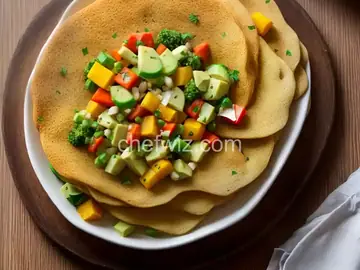
Vegetarian Venezuelan Cuajada Cheese
Rate this recipeBe the first to rate
 By AprilPublished
 Have you ever tried Venezuelan cuajada cheese? This unique cheese is a staple in Venezuelan cuisine and is loved for its creamy texture and mild flavor.
 By AprilPublished
 Have you ever tried Venezuelan cuajada cheese? This unique cheese is a staple in Venezuelan cuisine and is loved for its creamy texture and mild flavor.
Heat the milk until it reaches a temperature of 36� C or 97� F.
In a small amount of water (approximately 1/4 or 1/8 cup), dissolve the calcium chloride and add it to the milk.
Add the starter culture to the milk.
Stir the milk for 2 minutes.
Allow the milk to sit undisturbed for 45 minutes, maintaining the temperature by applying low heat for approximately 2 minutes every 15 minutes.
In a small amount of water (approximately 1/4 or 1/8 cup), dissolve the rennet and add it to the milk.
Cut the curd into 1/2-inch squares using a knife.
Slowly stir the curds for 15 minutes, ensuring they clump together. While stirring, continue to cut the curds into 1/2-inch squares. Maintain a temperature of 36� C or 97� F for the whey throughout.
Remove the pot from the stove and use a slotted spoon to transfer the curds to a colander lined with cheesecloth (preferably thin).
Allow the curds to drain excess whey for 30 minutes.
Transfer the curds to a bowl and knead them together with salt.
Return the curds to the cheesecloth-lined mold or press.
Apply 4-8 pounds of
Have you ever tried Venezuelan cuajada cheese? This unique cheese is a staple in Venezuelan cuisine and is loved for its creamy texture and mild flavor. What sets it apart from other cheeses is that it is made without rennet, making it suitable for vegetarians. In this article, we will explore the process of making vegetarian Venezuelan cuajada cheese and discover why it is a must-try for cheese lovers.
Making Venezuelan cuajada cheese is a labor of love. It requires patience and precision to achieve the perfect texture and flavor. The process begins with heating milk and adding lemon juice or vinegar as a natural coagulant. As the milk curdles, the whey separates, leaving behind a soft curd. This curd is then carefully strained and pressed to remove any excess moisture.
Once the excess moisture is removed, the cheese is shaped into small rounds or molds. It is then left to age for a few days, allowing the flavors to develop and the texture to become firmer. The end result is a creamy and slightly tangy cheese that can be enjoyed on its own or used in a variety of dishes.
Cuajada cheese is incredibly versatile and can be enjoyed in various ways. Its creamy texture makes it the perfect spread for crackers or bread. You can also use it as a topping for salads, pizzas, or tacos, adding a deliciously mild and creamy element to your dish.
Furthermore, cuajada cheese can be melted and used in recipes that call for a melty, creamy cheese. Whether you're making a cheesy dip, a gooey grilled cheese sandwich, or a comforting mac and cheese, cuajada cheese will add a unique twist to your favorite recipes.
If you're a vegetarian or simply looking to reduce your consumption of animal products, vegetarian cuajada cheese is a fantastic option. Traditional cuajada cheese is made with rennet, which is derived from the stomach lining of animals. However, the vegetarian version eliminates the need for rennet, making it an ethical and cruelty-free choice.
By choosing vegetarian cuajada cheese, you can still indulge in the deliciousness of this traditional Venezuelan cheese while aligning with your dietary preferences or values. It's a win-win situation!
Venezuelan cuajada cheese is a delightful and versatile cheese that deserves a spot in every cheese lover's repertoire. Whether you're a vegetarian or simply looking to try something new, cuajada cheese offers a creamy and mild flavor that can be enjoyed in various ways. So why not give it a try? You might just discover your new favorite cheese!
Yes, you can use lime juice instead of lemon juice. Both citrus fruits have similar acid levels, so the result will be the same.
The aging process for cuajada cheese typically takes around 2-3 days. However, you can adjust the aging time based on your personal preference. Some people prefer a milder cheese and age it for a shorter period, while others enjoy a stronger flavor and age it for a longer time.
Yes, you can freeze cuajada cheese. It is best to wrap it tightly in plastic wrap or place it in an airtight container before freezing. When you're ready to use it, simply thaw it in the refrigerator and enjoy!
Absolutely! Cuajada cheese is a blank canvas, and you can add herbs, spices, or even garlic to enhance the flavor. Experiment with different combinations to create your own unique variation of cuajada cheese.
No, cuajada cheese is not lactose-free. It is made from milk, which naturally contains lactose. If you are lactose intolerant, you may need to opt for lactose-free cheese alternatives.
Yes, cuajada cheese can be used as a substitute for ricotta in many recipes. Its creamy texture and mild flavor make it a great alternative.
Cuajada cheese can be found in specialty Latin American grocery stores or online. If you can't find it locally, you can also try making it at home using simple ingredients.
Cuajada cheese can last for up to two weeks when stored properly in the refrigerator. It is best to keep it in an airtight container or wrapped tightly in plastic wrap to maintain its freshness.
AprilCook, recipe developer and the heart of Chefwiz. More about April