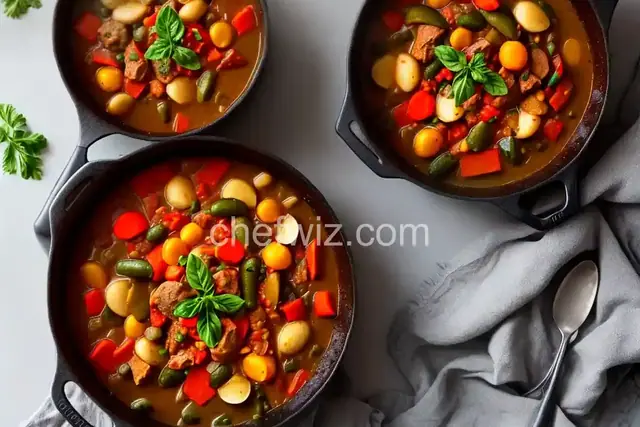
Vegetable Stew (Giambotta)
Rate this recipeBe the first to rate
 By AprilPublished
 Are you tired of the same old recipes and looking to try something new and delicious?
 By AprilPublished
 Are you tired of the same old recipes and looking to try something new and delicious?
Preheat the broiler.
In a medium soup pot over medium heat, add extra-virgin olive oil, bay, chopped garlic, and onions. Allow them to sweat while you prepare the remaining vegetables.
Chop the potatoes, eggplant, zucchini, and bell pepper in order of longest cooking time. Drop them into the pot as you chop.
Season the vegetables with salt and pepper, cover the pot, and cook for 10 minutes, stirring occasionally.
Uncover the pot and add the tomatoes and stock. Cook for an additional 5 minutes to heat through.
Turn off the heat and stir in the basil.
Place the bread under the broiler to char. Rub the toasted bread with cracked garlic, then drizzle with extra-virgin olive oil.
Sprinkle the bread with cheese and pepper, and return it to the broiler for 30 seconds to brown the cheese.
Serve the cheese whole-grain toast with bowls of vegetable stew.
Are you tired of the same old recipes and looking to try something new and delicious? Look no further than vegetable stew, also known as Giambotta! This hearty and flavorful dish is packed with a medley of fresh vegetables, simmered to perfection in a savory broth. Whether you're a vegetarian or just looking to incorporate more veggies into your diet, this stew is a perfect choice. Let's dive into the world of Giambotta and discover how to make this mouthwatering dish.
Giambotta, a traditional Italian vegetable stew, is a one-pot wonder that brings together a variety of vegetables in a harmonious blend of flavors. It's like a symphony of freshness and taste, where each vegetable contributes its own unique note to create a culinary masterpiece.
Imagine a symphony orchestra where each instrument represents a different vegetable. The peppers provide a vibrant and colorful melody, while the eggplants add a smooth and velvety harmony. The tomatoes bring a tangy and bright note, and the zucchini contribute a crisp and refreshing tone. Together, they create a harmonious medley that will make your taste buds sing.
Every great orchestra needs a skilled conductor, and in the case of Giambotta, that role is played by the broth. The broth acts as the maestro, bringing all the flavors together and infusing them with its rich and savory essence. It's the secret ingredient that ties everything together and elevates the stew to a whole new level of deliciousness.
Now that we've set the stage, let's move on to the main act: making Giambotta. The beauty of this dish lies in its simplicity. It's a rustic and comforting recipe that doesn't require any fancy techniques or complicated steps. Just follow these basic instructions, and you'll be on your way to a delightful Giambotta experience:
Start by selecting a variety of fresh vegetables. You can mix and match based on your preferences and what's in season. Some popular choices include bell peppers, eggplants, zucchini, tomatoes, onions, and potatoes. Chop them into bite-sized pieces to ensure even cooking.
Heat some olive oil in a large pot and add the onions. Sauté them until they become translucent and fragrant. Then, add the rest of the vegetables and cook them for a few minutes to release their flavors. Pour in the broth and let the stew simmer on low heat for about an hour, allowing the vegetables to soften and the flavors to meld together.
Season the stew with salt, pepper, and herbs of your choice. Traditional Italian herbs like oregano, basil, and thyme work beautifully in Giambotta. Feel free to experiment and add your own twist to the recipe.
Once the stew is ready, ladle it into bowls and savor the aroma wafting through the air. You can enjoy Giambotta on its own, or pair it with crusty bread or pasta for a more substantial meal. Either way, it's a dish that will warm your heart and nourish your soul.
Giamb
Absolutely! Giambotta tastes even better the next day as the flavors have had time to develop and meld together. Just reheat it gently on the stovetop or in the microwave, and you're good to go.
Yes, Giambotta freezes well. Transfer the stew into freezer-safe containers or bags, leaving some room for expansion, and freeze for up to three months. When ready to enjoy, thaw it in the fridge overnight and reheat it on the stovetop.
While Giambotta is traditionally a vegetarian dish, you can certainly add meat or protein if you prefer. Sausages, chicken, or even tofu can be a great addition. Just adjust the cooking time accordingly to ensure everything is cooked through.
Absolutely! Giambotta is a versatile dish that welcomes creative experimentation. Feel free to swap or add vegetables based on your preferences and what's available. Just remember to adjust the cooking time accordingly, as different vegetables have different cooking times.
Yes, Giambotta is a healthy dish packed with vitamins, minerals, and fiber from the abundance of fresh vegetables. It's a great way to incorporate more plant-based meals into your diet and enjoy a nutritious and satisfying meal.
Absolutely! If you enjoy a little heat, you can add some chili flakes or hot sauce to give your Giambotta a spicy kick. Just be mindful of the amount, so it doesn't overpower the other flavors.
Yes, you can definitely add cheese to your Giambotta. Grated Parmesan or crumbled feta can be a delicious addition that adds a creamy and salty touch to the stew.
Yes, you can adapt the recipe and make Giambotta in a slow cooker. Simply follow the same steps of sautéing the vegetables and then transfer everything to the slow cooker. Cook on low heat for 6-8 hours or on high heat for 3-4 hours until the vegetables are tender.
While Giambotta is hearty enough to be enjoyed as a main course, you can also serve it as a side dish alongside grilled meats or fish. Its vibrant colors and flavors will complement any protein beautifully.
AprilCook, recipe developer and the heart of Chefwiz. More about April