Ube Halaya
Rate this recipeBe the first to rate
 By AprilPublished
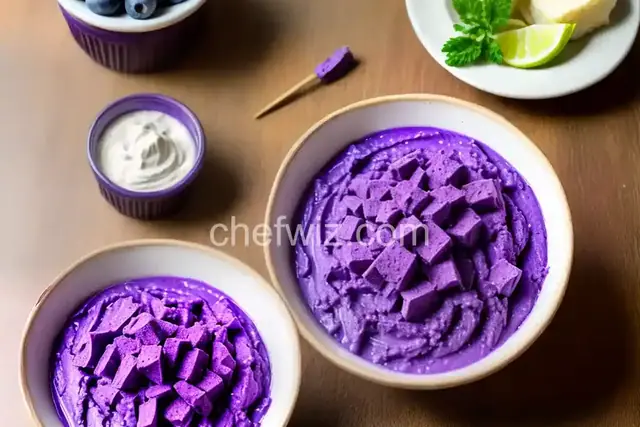
 Are you a fan of sweet and creamy desserts? If so, then you must try Ube Halaya, a popular Filipino delicacy made from purple yam.
 By AprilPublished
 Are you a fan of sweet and creamy desserts? If so, then you must try Ube Halaya, a popular Filipino delicacy made from purple yam.
Place the yams in a large pot and cover them with water. Bring the water to a boil.
Reduce the heat to medium-low and simmer the yams until they become tender, which should take approximately 20 minutes.
Drain the water from the pot and allow the yams to cool for about 20 minutes, until they are safe to handle.
Grate the yams directly into the pot.
Over low heat, add coconut milk, sweetened condensed milk, brown sugar, evaporated milk, butter, and vanilla extract to the pot. Stir constantly while cooking until the mixture becomes thick and sticky. This should take around 20 minutes. The mixture should be able to form a small ball when dropped into room-temperature water.
Grease molds and transfer the mixture into them.
Chill the molds in the refrigerator until the mixture has set, which should take about 30 minutes.
Are you a fan of sweet and creamy desserts? If so, then you must try Ube Halaya, a popular Filipino delicacy made from purple yam. This vibrant and flavorful dessert will surely satisfy your sweet tooth and leave you craving for more. In this article, we will explore the history, ingredients, and cultural significance of Ube Halaya. So sit back, relax, and let's dive into the world of this delightful Filipino treat.
Ube Halaya has a rich history that dates back centuries in the Philippines. The word "ube" refers to the purple yam, which is the main ingredient of this dessert. Native to Southeast Asia, purple yam is known for its vibrant color and distinct taste. It is commonly used in Filipino cuisine, and Ube Halaya is one of its most beloved creations.
Creating Ube Halaya is a labor of love, as it requires a few simple ingredients but demands time and patience. The traditional recipe calls for purple yam, coconut milk, condensed milk, butter, and sugar. These ingredients are combined and cooked slowly until they form a thick and creamy consistency. The result is a dessert that is both visually appealing and incredibly delicious.
Ube Halaya holds a special place in Filipino culture and is often associated with celebrations and special occasions. It is commonly served during holidays like Christmas and Easter, as well as at birthdays and family gatherings. The vibrant purple color of Ube Halaya symbolizes joy and prosperity, making it a staple in festive Filipino feasts.
Ube Halaya is a delicious Filipino dessert that combines the vibrant color and unique taste of purple yam. Its rich history, simple yet flavorful ingredients, and cultural significance make it a beloved treat in the Philippines and beyond. So why not indulge in this sweet delight and experience the joy it brings? Try Ube Halaya today and immerse yourself in the flavors of Filipino cuisine!
Imagine a creamy, sweet, and slightly nutty flavor with a hint of earthiness. Ube Halaya offers a unique taste that is hard to resist.
No, Ube Halaya specifically requires purple yam, which is different from regular yams in terms of texture and flavor.
Yes, Ube Halaya is naturally gluten-free, making it a great option for those with gluten sensitivities or dietary restrictions.
Absolutely! Ube Halaya can be stored in an airtight container in the refrigerator for up to a week, allowing you to enjoy it at your own pace.
While it requires time and patience, Ube Halaya is not overly complicated to make. With the right ingredients and instructions, anyone can create this delicious dessert.
Yes, Ube Halaya has gained popularity worldwide, and you can find it in Filipino restaurants or specialty stores in many countries.
Yes, some variations of Ube Halaya include adding toppings like grated cheese or toasted coconut flakes for added texture and flavor.
Absolutely! Ube Halaya can be used as a filling or topping for cakes, pastries, and even ice cream, adding a delightful twist to your favorite treats.
AprilCook, recipe developer and the heart of Chefwiz. More about April