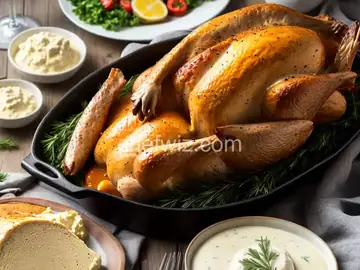
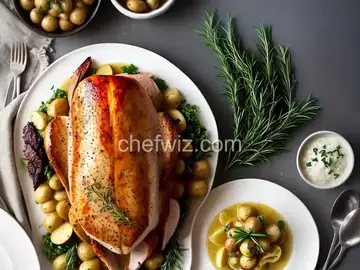
Traditional Roast Turkey
Rate this recipeBe the first to rate
 By AprilPublished
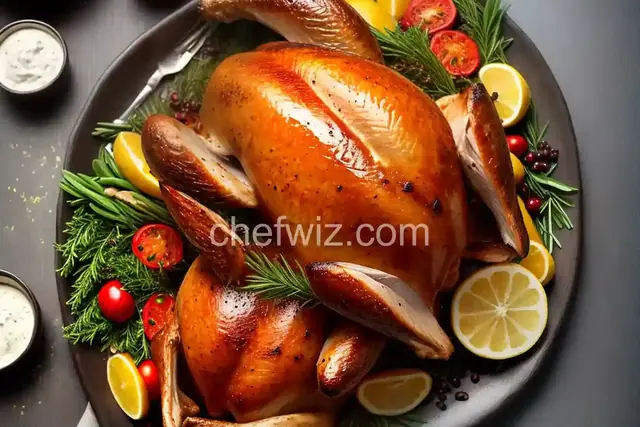
 Thanksgiving is just around the corner, and what better way to celebrate this special occasion than with a delicious traditional roast turkey?
 By AprilPublished
 Thanksgiving is just around the corner, and what better way to celebrate this special occasion than with a delicious traditional roast turkey?
Thaw the turkey in the refrigerator or in a cooler at 38 degrees F, starting two to three days before roasting.
In a large stockpot, combine broth, salt, sugar, peppercorns, allspice, and ginger. Bring to a boil over medium-high heat, stirring until salt and sugar dissolve. Remove from heat and let the brine cool to room temperature. Refrigerate.
The night before serving, truss the turkey legs with kitchen twine if desired. In a 5-gallon bucket, combine the brine, water, and ice. Place the thawed turkey, breast-side down, in the brine, ensuring it is fully immersed. If needed, weigh down the bird. Cover and refrigerate or place in a cooler. Turn the bird once halfway through brining.
On the day of roasting, preheat the oven to 500 degrees F. Remove the bird from the brine and rinse it inside and out with cold water. Discard the brine.
Place the bird on a roasting rack inside a half sheet pan and pat it dry with paper towels. Rub the bird with canola oil. Roast on the lowest oven rack for 30 minutes.
While the bird is cooking, shape a double thickness of aluminum foil into a closely fitting breastplate.
After 30 minutes, reduce the oven temperature to 350 degrees F. Insert a probe thermometer into
Thanksgiving is just around the corner, and what better way to celebrate this special occasion than with a delicious traditional roast turkey? The thought of a perfectly cooked turkey, with its golden brown skin and tender meat, is enough to make anyone's mouth water. But how do you achieve that picture-perfect turkey that will have your family and friends begging for seconds? In this article, we will explore the secrets to preparing and cooking a traditional roast turkey that is sure to impress.
Before we dive into the cooking process, let's talk about the importance of preparation. Just like any great masterpiece, a traditional roast turkey requires careful planning and attention to detail. Start by selecting a high-quality turkey that is fresh and preferably organic. Thaw it properly in the refrigerator, allowing enough time for it to thaw completely. This will ensure even cooking and prevent any potential food safety issues.
One of the secrets to a juicy and flavorful turkey is brining. Brining involves soaking the turkey in a mixture of salt, sugar, and spices for several hours before cooking. This process enhances the turkey's natural flavors, tenderizes the meat, and helps retain moisture. It's like giving your turkey a spa treatment, ensuring it stays moist and succulent throughout the cooking process. Just imagine sinking your teeth into a slice of turkey that is bursting with flavor!
Once your turkey has been properly brined, it's time to season it to perfection. Rub a mixture of herbs, spices, and olive oil all over the turkey, ensuring every nook and cranny is covered. This will infuse the meat with incredible flavors and create a beautiful golden brown crust during cooking. Think of it as dressing up your turkey in a flavor-packed outfit that will steal the show on your Thanksgiving table.
Now that we have prepared our turkey, it's time to cook it to perfection. There are several cooking techniques you can choose from, depending on your preference and available equipment. The most common methods include roasting, grilling, and smoking. Each method imparts its own unique flavors and textures to the turkey, so feel free to experiment and find the one that suits your taste buds.
Roasting is perhaps the most popular and traditional method of cooking a turkey. It involves placing the turkey in a roasting pan, cooking it at a moderate temperature for a specified amount of time. The key to a perfectly cooked turkey is to monitor the internal temperature using a meat thermometer. This ensures that the turkey is cooked to a safe temperature without overcooking or drying out the meat. Imagine pulling a beautifully roasted turkey out of the oven, its skin crispy and its meat perfectly tender.
During the roasting process, it's essential to baste the turkey regularly. Basting involves spooning the pan juices over the turkey to keep it moist and flavorful. Not only does this add an extra layer of juiciness to the meat, but it also helps to create that beautiful golden brown color on the skin. It's like giving your turkey a little spa treatment, ensuring it stays moist and succulent throughout the cooking process.
After hours of preparation and cooking, your traditional roast turkey is finally ready to take center stage on your Thanksgiving table. Carve it with confidence, revealing the beautiful layers of succulent meat and crispy skin. As you take your first bite, savor the explosion of flavors that only a well-cooked turkey can deliver. It's truly a moment to be cherished, shared with loved ones, and celebrated.
The general rule of thumb is to brine the turkey for about 1 hour per pound. However, always refer to the specific instructions for the brine recipe you are using.
While it is possible to stuff the turkey, it is important to note that this can affect the cooking time and may increase the risk of foodborne illness. It is recommended to cook the stuffing separately for safety reasons.
The internal temperature of the turkey should reach 165°F (74°C) in the thickest part of the thigh. Use a meat thermometer to ensure accuracy.
Absolutely! The flavorful pan drippings from the roasted turkey make the perfect base for a delicious gravy. Simply skim off the fat, add some flour or cornstarch to thicken, and season to taste.
While it is possible to cook a frozen turkey, it is highly recommended to thaw it first for even cooking and to prevent any potential food safety issues.
Properly brining the turkey, basting it during cooking, and monitoring the internal temperature with a meat thermometer are all key steps to ensure a moist and flavorful turkey.
While brining is recommended for a traditional roast turkey, you can certainly use a marinade if you prefer. Just make sure to marinate the turkey for a sufficient amount of time to allow the flavors to penetrate the meat.
It is best to let the turkey rest for about 20-30 minutes before carving. This allows the juices to redistribute, resulting in a more flavorful and juicy turkey.
Absolutely! Leftover turkey can be used in a variety of delicious dishes, such as sandwiches, soups, salads, and casseroles. Get creative and enjoy the versatility of this holiday staple.
AprilCook, recipe developer and the heart of Chefwiz. More about April