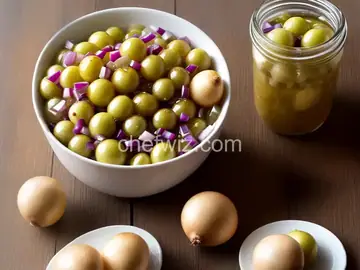
Traditional English Pickled Onions
Rate this recipeBe the first to rate
 By AprilPublished
 Have you ever wondered how those tangy and flavorful pickled onions are made?
 By AprilPublished
 Have you ever wondered how those tangy and flavorful pickled onions are made?
Place peeled onions in a glass or ceramic bowl.
Cover the onions with cold water.
Drain the water into a saucepan and add salt.
Bring the water to a boil until the salt dissolves, then let it cool slightly.
Pour the salted water over the onions.
Cover the bowl with a heavy plate to keep the onions submerged.
Let the onions stand for 24 hours.
Measure vinegar into a saucepan.
Tie pickling spice in a cloth and add it to the vinegar along with bay leaves.
Bring the vinegar to a boil, then simmer for 5 minutes over low heat.
Rinse the onions and pat them dry.
Add the onions to the saucepan with the vinegar.
Simmer the onions in the vinegar for 2 to 3 minutes.
Pack the onions into sterilized jars.
Ladle the brine over the onions until they are covered.
Optionally, add a dried chile pepper to each jar.
Seal the jars with sterilized lids and rings.
Store the jars in a cool, dark place for at least 6 weeks before opening.
To peel the onions, trim off the root end while keeping the layers attached.
Cut a thin slice from the tops of the onions.
Place the onions in a non-reactive bowl and cover with boiling water.
22
Have you ever wondered how those tangy and flavorful pickled onions are made? Traditional English pickled onions are a delightful addition to any meal. Their zesty taste and crunchy texture can elevate even the simplest dish. In this article, we will explore the art of making these delicious pickled onions, from the preparation to the final product. So, let's dive in and discover the secrets behind this classic English condiment.
Before we delve into the process of making traditional English pickled onions, let's understand the science behind pickling. Pickling is a preservation method that has been around for centuries. It involves soaking food in a solution of vinegar, salt, and spices, which creates an acidic environment that inhibits the growth of bacteria. This process not only extends the shelf life of the food but also enhances its flavor and texture.
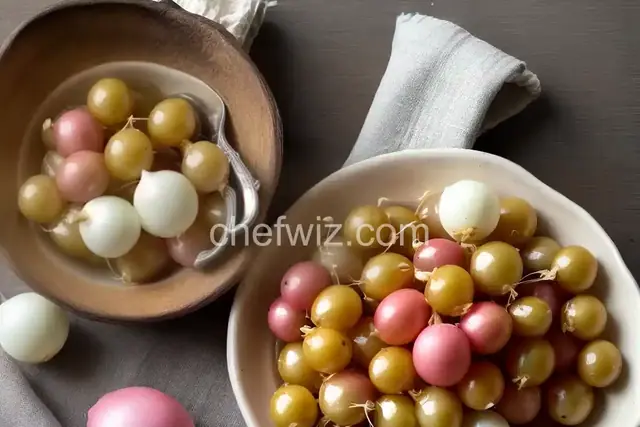
The first step in making traditional English pickled onions is selecting the right onions. For the best results, you'll want to choose small onions with a firm texture. Pearl onions or shallots are excellent options. Their size allows them to fully absorb the pickling solution and develop a robust flavor.
Peeling onions can be a teary task, but it's worth it for the end result. To make the peeling process easier, soak the onions in cold water for a few minutes before peeling. This will help loosen the skins and make them easier to remove.
Now that we have our onions ready, it's time to prepare the pickling solution. The key ingredients for the solution are vinegar, salt, and spices. The vinegar acts as a preservative and gives the onions their tangy flavor. You can choose from a variety of vinegars, such as malt vinegar or white wine vinegar, depending on your preference.
To enhance the flavor of the pickled onions, spices are added to the pickling solution. Common spices used in traditional English pickled onions include mustard seeds, peppercorns, and bay leaves. These spices infuse the onions with a distinct aroma and add complexity to their taste.
With the pickling solution ready, it's time to immerse the peeled onions in it. Place the onions in a sterilized jar and pour the pickling solution over them, ensuring that they are fully submerged. Seal the jar tightly and let it sit for a few weeks to allow the flavors to develop. During this time, the onions will absorb the vinegar and spices, transforming into delicious pickled onions.
Patience is key when it comes to making traditional English pickled onions. As the onions sit in the pickling solution, their flavors intensify and mature. It's important to resist the temptation to open the jar too soon. Allow the onions to pickle for at least two to three weeks before indulging in their tangy goodness.
Traditional English pickled onions are a taste sensation that adds a burst of flavor to any meal. The combination of tangy vinegar, aromatic spices, and crunchy onions creates a delightful condiment that complements a wide range of dishes. So why not try your hand at making these pickled onions at home? With a little patience and the right ingredients, you can enjoy the authentic taste of traditional English pickled onions in the comfort of your own kitchen.
Pickled onions can last for several months when stored in a cool, dry place. However, once the jar is opened, it's best to consume them within a few weeks for optimal flavor and texture.
While small onions are preferred for traditional English pickled onions, you can use larger onions. Keep in mind that larger onions may require longer pickling times to fully absorb the flavors.
Absolutely! Feel free to experiment with different spices and vinegars to create your own unique flavor profile. Just remember to maintain the right balance of acidity and saltiness for proper preservation.
Pickled onions can be a healthy addition to your diet in moderation. However, they do contain vinegar and salt, so it's important to consume them in moderation, especially if you have dietary restrictions or health concerns.
Yes, you can reuse the pickling solution for future batches of pickled onions. Simply strain the solution and store it in a clean, airtight container until you're ready to use it again.
Absolutely! The pickling method used for traditional English pickled onions can be applied to various vegetables, such as cucumbers, carrots, and radishes. Get creative and experiment with different combinations.
While it's tempting to speed up the pickling process, it's best to let the onions pickle naturally for the best flavor. Rushing the process may result in underdeveloped flavors and a less enjoyable eating experience.
Certainly! If you prefer spicier pickled onions, you can add chili flakes or other hot spices to the pickling solution. Adjust the amount according to your taste preferences, but be cautious not to overpower the flavors of the onions and other spices.
AprilCook, recipe developer and the heart of Chefwiz. More about April