Tortillas II
Rate this recipeBe the first to rate
 By AprilPublished
 Have you ever wondered how tortillas are made? Tortillas, those versatile and delicious flatbreads, are a staple in many cuisines around the world.
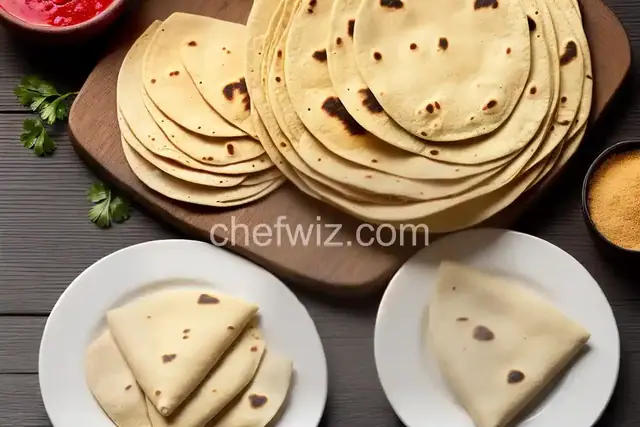 By AprilPublished
 Have you ever wondered how tortillas are made? Tortillas, those versatile and delicious flatbreads, are a staple in many cuisines around the world.
In a large mixing bowl, combine flour, salt, and baking powder. Mix until well combined.
Cut in shortening until the mixture has a coarse cornmeal-like texture.
Add the water to the mixture and mix until the dough can be formed into a ball. If needed, add more water, 1 teaspoon at a time, until the dough comes together.
Cover the dough with a damp cloth and let it rest for 15 minutes.
Divide the dough into 12 equal pieces.
On a lightly floured surface, use a rolling pin to flatten and stretch each piece of dough into a circle about 7 inches in diameter.
Heat an ungreased skillet over medium-high heat.
Cook each tortilla on the skillet until brown spots start to appear.
Keep the cooked tortillas covered with a clean, dry towel until ready to serve.
Have you ever wondered how tortillas are made? Tortillas, those versatile and delicious flatbreads, are a staple in many cuisines around the world. They can be used as a base for tacos, enchiladas, quesadillas, and so much more. In this article, we'll explore the fascinating process of making tortillas, from the humble beginnings of corn to the final product that graces our plates. So, let's dive in and uncover the secrets of Tortillas II!
It all starts with corn, a grain that has been cultivated for thousands of years. Corn kernels are harvested and then dried. Once dried, the kernels are soaked in a process called nixtamalization. This ancient technique involves cooking the corn kernels in an alkaline solution, usually made with lime or wood ash. This process not only softens the corn but also enhances its nutritional value by making important nutrients more bioavailable.
After nixtamalization, the corn is rinsed and then ground into a dough-like consistency called masa. Masa is the foundation of tortillas and is what gives them their distinct flavor and texture. It is made by grinding the soaked and cooked corn kernels using a stone mill or a specialized grinder. The resulting masa can be used immediately or stored for later use.
With the masa ready, it's time to shape it into tortillas. Traditionally, this is done by hand. A small portion of masa is taken and rolled into a ball, which is then flattened using a tortilla press. The press, usually made of wood or metal, applies pressure to the masa ball, transforming it into a thin and round tortilla. Alternatively, a rolling pin can be used to achieve a similar result.
Once the tortillas are shaped, they are cooked on a hot griddle or comal. The comal is a flat, round metal plate that is heated over an open flame. The tortillas are placed on the hot surface and cooked for a short time on each side until they develop a golden brown color and small air pockets. The cooking process is relatively quick, taking only a few seconds per tortilla.
And there you have it! The journey from corn to tortillas is complete. The freshly cooked tortillas are soft, pliable, and full of flavor. They can be enjoyed immediately or stored for later use. With their versatility, tortillas can be used in countless dishes, providing a tasty and nutritious base for your favorite fillings.
So, the next time you bite into a taco or savor a quesadilla, take a moment to appreciate the craftsmanship and tradition that goes into making those delicious tortillas. They are not just a simple flatbread; they are a testament to the rich culinary heritage of the cultures that have embraced them.
Tortillas, those versatile and delicious flatbreads, have a rich history and are a testament to the culinary traditions of various cultures. From the ancient art of nixtamalization to the shaping and cooking process, making tortillas is a labor of love. Whether you enjoy them as tacos, quesadillas, or any other dish, tortillas bring a unique and satisfying element to your meals. So, the next time you reach for a tortilla, savor the flavors and appreciate the craftsmanship that goes into creating these culinary delights.
No, tortillas are traditionally made with corn masa. However, there are wheat flour tortillas available as well, commonly used in some cuisines.
Absolutely! While a tortilla press makes the process easier and faster, you can still shape tortillas by hand using a rolling pin.
Tortillas can stay fresh for a few days if stored properly. It's best to keep them in an airtight container or sealed plastic bag to prevent them from drying out.
Yes, tortillas can be frozen. Simply place them in a freezer-safe bag or container and thaw them as needed.
Tortillas can be used in countless ways! From traditional tacos and quesadillas to inventive wraps, nachos, and even dessert creations, the possibilities are endless.
Traditional corn tortillas made solely from corn masa are gluten-free. However, it's important to check the labels of store-bought tortillas as some may contain added ingredients with gluten.
Absolutely! You can add various flavors to your tortillas by incorporating ingredients like herbs, spices, or even vegetables into the masa dough.
If you don't have a comal, you can use a skillet or a frying pan to cook your tortillas. Just make sure it's heated evenly and at the right temperature.
AprilCook, recipe developer and the heart of Chefwiz. More about April