The Best Prime Rib
Rate this recipeBe the first to rate
 By AprilPublished
 Are you a meat lover? Do you crave that perfect, juicy, and flavorful cut of beef?
 By AprilPublished
 Are you a meat lover? Do you crave that perfect, juicy, and flavorful cut of beef?
Begin by patting the skin of the roast completely dry and placing it on a cutting board, ensuring that the fat side is facing up.
Using a paring knife, make small slits all over the fat and insert garlic slices into these slits.
Sprinkle salt and pepper all over the roast, ensuring that it is evenly coated.
Wrap the roast tightly with plastic wrap and refrigerate it for at least 4 hours, or overnight if preferred.
Preheat the oven to 250 degrees F and remove the plastic wrap from the roast.
Place the roast on a rack in a roasting pan, ensuring that the fat side is facing up.
Roast the meat in the oven until an instant-read thermometer inserted into the center of the roast registers a temperature of 120 degrees F. This should take approximately 4 hours.
Once the desired temperature is reached, remove the roast from the oven and let it sit for 1 hour. During this time, the temperature will continue to rise by 10 to 14 degrees.
Increase the oven temperature to 500 degrees F.
Place the roast back in the oven and bake it until the fatty skin starts to crisp up and turn golden brown. This should take about 10 to 15 minutes.
After baking, allow the roast to rest for an additional 30 minutes before transferring it to a cutting board for slicing.
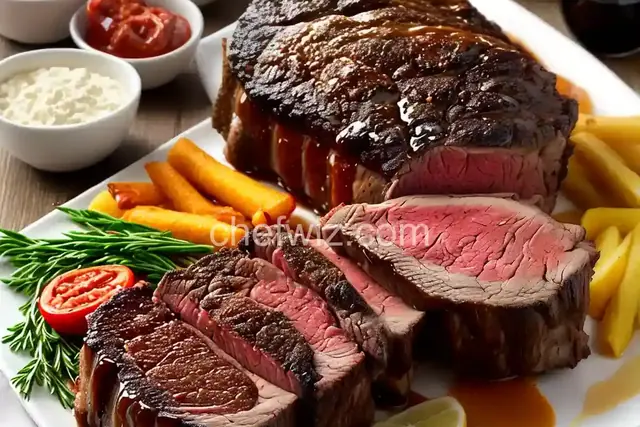
Are you a meat lover? Do you crave that perfect, juicy, and flavorful cut of beef? Look no further than prime rib. This succulent piece of meat is a true indulgence, and when prepared correctly, it can be a showstopper at any dinner table. In this article, we will explore everything you need to know about cooking the best prime rib, from selecting the right cut to achieving the perfect level of doneness.
When it comes to prime rib, the quality of the meat is paramount. Look for a well-marbled piece of beef with a thick layer of fat on top. This fat will not only add flavor but also keep the meat moist during cooking. Opt for a bone-in roast if possible, as the bone adds extra flavor and tenderness to the meat.
Before cooking, it's important to bring the prime rib to room temperature. This allows for more even cooking and ensures a juicy end result. Season the meat generously with your favorite blend of herbs and spices, such as garlic, rosemary, and thyme. The flavors will infuse into the meat as it cooks, creating a mouthwatering aroma.
There are various cooking techniques you can use to achieve the perfect prime rib. One popular method is the slow roast. This involves cooking the meat at a low temperature for an extended period, resulting in a tender and juicy roast. Another option is the reverse sear, which involves starting the roast at a low temperature and then finishing it with a high-heat sear to create a flavorful crust.
When it comes to cooking prime rib, temperature is key. Use a meat thermometer to ensure the roast reaches the desired level of doneness. For a medium-rare prime rib, aim for an internal temperature of 135째F (57째C). Keep in mind that the meat will continue to cook as it rests, so it's important to remove it from the oven a few degrees below your target temperature.
Once the prime rib is cooked to perfection, it's crucial to let it rest before carving. This allows the juices to redistribute throughout the meat, resulting in a more tender and flavorful roast. Tent the meat with foil and let it rest for at least 15-20 minutes. When it's time to carve, be sure to slice against the grain for maximum tenderness.
The quality of prime rib can be determined by looking for marbling and a thick layer of fat on top. These characteristics contribute to a flavorful and tender roast.
Absolutely! While cooking prime rib with the bone adds extra flavor, you can still achieve a delicious roast without it.
The best seasoning for prime rib is a matter of personal preference. Popular options include garlic, rosemary, thyme, and a blend of herbs and spices.
It's recommended to let the prime rib rest for at least 15-20 minutes. This allows the juices to redistribute, resulting in a more tender and flavorful roast.
While it is possible to cook prime rib in a slow cooker, the results may not be as desirable as other cooking methods. Slow cooking can result in a more well-done roast.
The ideal internal temperature for a medium-rare prime rib is 135째F (57째C). Remember to remove the meat from the oven a few degrees below your target temperature, as it will continue to cook as it rests.
The cooking time for prime rib varies depending on factors such as the size of the roast and the desired level of doneness. As a general guideline, allow for 15-20 minutes of cooking time per pound.
Absolutely! The drippings from the prime rib can be used to make a delicious and flavorful gravy. Simply skim off the excess fat and use the remaining juices as a base for your gravy.
So there you have it - everything you need to know about cooking the best prime rib. Whether you choose to slow roast or reverse sear, the key is to take your time and let the meat shine. With the right cut, seasoning, and cooking techniques, you'll be able to enjoy a mouthwatering prime rib that will leave your taste buds begging for more.
Happy cooking!
AprilCook, recipe developer and the heart of Chefwiz. More about April