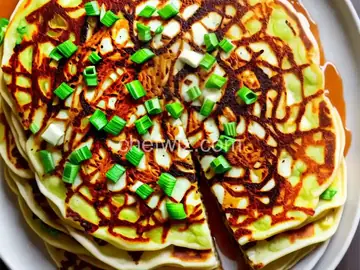
Thai Coconut Custard Dip (Sangkhaya) Recipe
Rate this recipeBe the first to rate
 By AprilPublished
 Are you ready to take your taste buds on a journey to Thailand?
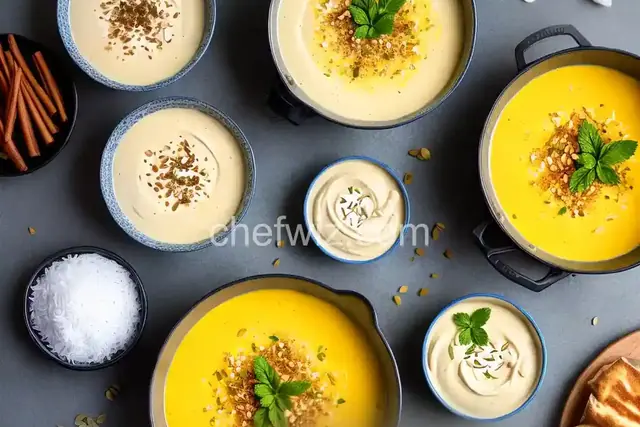 By AprilPublished
 Are you ready to take your taste buds on a journey to Thailand?
Cut the pandan leaves into one-inch pieces.
Place the pandan leaves and coconut milk in a blender or food processor and blend until smooth.
Strain the mixture using a sieve or cheesecloth, pressing out as much liquid as possible.
Measure the pandan-coconut milk mixture and if it's less than one cup, add more coconut milk or whole milk to make it one cup.
In a medium saucepan, whisk together the egg yolks, sugar, salt, and cornstarch until smooth.
Slowly whisk in the pandan-coconut milk mixture, ensuring there are no lumps.
Place the saucepan over medium heat and gradually bring the mixture to a gentle boil, whisking constantly.
After about two minutes, the mixture will thicken to a yogurt-like consistency. Remove the saucepan from the heat.
Allow the custard to cool.
While the custard is cooling, steam the bread cubes by placing them in a heatproof bowl, covering with plastic wrap, and microwaving on high for 40 to 60 seconds.
Keep the bread covered.
Once the custard has cooled to slightly warmer than room temperature, transfer it to a serving bowl.
Serve the custard with the steamed bread cubes.
Are you ready to take your taste buds on a journey to Thailand? Look no further than this amazing Thai Coconut Custard Dip, also known as Sangkhaya. This rich and creamy dip is the perfect accompaniment to your favorite snacks or desserts. Its velvety texture and sweet coconut flavor will have you coming back for more. Let's dive into the world of Thai cuisine and learn how to make this delectable treat.
Thai cuisine is known for its bold flavors and unique combinations. It's a harmonious blend of sweet, spicy, sour, and salty, creating a symphony of taste in every bite. Just like the diverse culture of Thailand, Thai food embraces a wide range of ingredients and cooking techniques.
One of the key ingredients in Thai cooking is coconut. From curries to desserts, coconut is a staple in many Thai recipes. Its creamy texture and subtle sweetness add depth and richness to dishes. In this Thai Coconut Custard Dip, coconut takes center stage, creating an indulgent treat that will transport you to the tropical paradise of Thailand.
Sangkhaya is a traditional Thai dessert that's often enjoyed with sticky rice or as a dip for fruits and bread. It's made with a few simple ingredients, including coconut milk, eggs, sugar, and pandan leaves. The pandan leaves give the custard dip its distinct aroma and vibrant green color. If you can't find pandan leaves, you can use vanilla extract as a substitute.
To make this delectable dip, start by heating coconut milk and pandan leaves in a saucepan. Let the mixture simmer to infuse the coconut milk with the pandan flavor. In a separate bowl, whisk eggs and sugar until well combined. Slowly pour the warm coconut milk into the egg mixture while whisking continuously. This will temper the eggs and prevent them from curdling.
Once the mixture is well combined, strain it to remove any lumps and pandan leaves. Then, pour it back into the saucepan and cook over low heat, stirring constantly. The custard will gradually thicken and become velvety smooth. Be patient and keep stirring to prevent the custard from sticking to the bottom of the pan.
Now that your Thai Coconut Custard Dip is ready, it's time to enjoy it! You can serve Sangkhaya warm, at room temperature, or chilled, depending on your preference. It pairs perfectly with sticky rice, fresh fruits like mango or bananas, or even as a spread for toast or crackers.
Imagine dipping a juicy slice of mango into the creamy custard, savoring the combination of sweet and tangy flavors. Or perhaps spreading a dollop of Sangkhaya on a warm piece of toast, enjoying the contrast between the crisp bread and silky custard. The possibilities are endless, and your taste buds are in for a treat.
Thai Coconut Custard Dip, also known as Sangkhaya, is a delightful treat that showcases the flavors of Thailand. Its creamy texture, sweet coconut flavor, and aromatic pandan leaves or vanilla make it a versatile dip for various snacks and desserts. Whether you're enjoying it with sticky rice, fresh fruits, or spreading it on toast, Sangkhaya is sure to transport your taste buds to the exotic lands of Thailand. So, why not give this recipe a try and experience the magic of Thai cuisine in your own kitchen?
No, coconut milk is essential for achieving the rich and creamy texture of Sangkhaya. Regular milk won't provide the same level of richness and flavor.
If you can't find pandan leaves, you can use vanilla extract as a substitute. It won't have the same aroma and vibrant green color, but it will still add a delicious flavor to the custard.
Sangkhaya can be stored in the refrigerator for up to 3-4 days. Make sure to keep it in an airtight container to maintain its freshness.
Yes, you can freeze Sangkhaya for up to 2-3 months. Thaw it in the refrigerator overnight before consuming.
While it's possible to use egg substitute, it may alter the texture and flavor of the custard. It's best to use real eggs for the authentic Sangkhaya experience.
Absolutely! You can experiment with different flavors by adding a teaspoon of your favorite extract, such as coconut, pandan, or even coffee. Get creative and make it your own!
Yes, Sangkhaya is gluten-free, making it suitable for those with gluten sensitivities or allergies.
Definitely! Sangkhaya makes a delicious filling for pastries like buns or tarts. Just make sure to cool it completely before using it as a filling.
AprilCook, recipe developer and the heart of Chefwiz. More about April