Tamagoyaki (Japanese Rolled Omelette)
Rate this recipeBe the first to rate
 By AprilPublished
 Have you ever tried Tamagoyaki, the mouthwatering Japanese Rolled Omelette?
 By AprilPublished
 Have you ever tried Tamagoyaki, the mouthwatering Japanese Rolled Omelette?
In a bowl, combine eggs, dashi stock, sugar, mirin, and soy sauce, and whisk together.
Heat 1/3 of the oil in a large nonstick skillet over medium-high heat.
Add about 1/3 of the egg mixture to the skillet and swirl the pan quickly to ensure even coverage on the bottom.
Once the omelette is set, start rolling it up from one side to the other.
Set the rolled omelette aside and add another 1/3 of the oil to the skillet.
Pour another 1/3 of the egg mixture into the skillet, swirling it to cover the entire bottom, including around and underneath the first roll.
Cook until set, then roll up from the side with the first roll, so that it is now in the center.
Repeat the process with the remaining oil and egg mixture.
Transfer the rolled omelette to a bamboo rolling mat and roll it up tightly.
Allow the omelette to cool for a few minutes, then unwrap it from the mat.
Slice the omelette into 6 pieces.
Serve the omelette warm or cold.
Note: For those who are serious Japanese home cooks, a tamagoyaki frying pan can be purchased online or in Japanese markets. This rectangular nonstick frying pan is specifically designed for making this type of omelette.
Have you ever tried Tamagoyaki, the mouthwatering Japanese Rolled Omelette? If not, you're in for a treat! This delightful dish is not only delicious but also a feast for the eyes. The unique presentation and flavors make it a popular choice for breakfast, lunch, or even a light dinner. In this article, we'll explore the art of making Tamagoyaki and discover why it has become a beloved staple in Japanese cuisine.
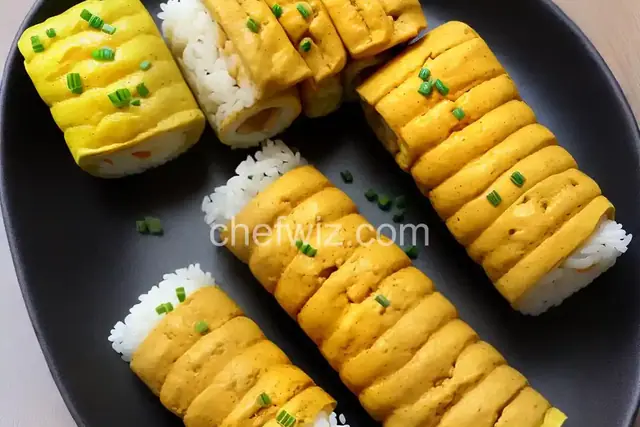
Imagine a perfectly rolled omelette, with layers of tender, fluffy egg stacked together. Each slice reveals a beautiful pattern, reminiscent of a delicate sushi roll. The key to achieving this artful dish lies in the technique. Instead of simply scrambling eggs, Tamagoyaki requires a specialized process of rolling and folding.
Like a skilled artist, the cook carefully pours a thin layer of beaten egg into a rectangular pan. As the egg begins to set, it is gently rolled from one end to the other, creating a tight cylinder. This process is repeated, layer by layer, until the omelette reaches its desired thickness. The result is a visually striking dish that showcases the chef's expertise.
But Tamagoyaki is not just about aesthetics. The flavors are equally delightful. The eggs are seasoned with a combination of soy sauce, sugar, and mirin, a sweet rice wine. This blend of savory and sweet creates a harmonious balance that tantalizes the taste buds.
The umami-rich soy sauce adds depth to the dish, while the sugar and mirin contribute a subtle sweetness. This unique flavor profile sets Tamagoyaki apart from other omelettes and makes it an irresistible choice for any meal of the day.
One of the great things about Tamagoyaki is its versatility. While it is commonly enjoyed on its own, it can also be incorporated into a variety of dishes. In Japan, it is often served as a side dish with rice, miso soup, and pickled vegetables for a well-rounded meal.
Additionally, Tamagoyaki can be used as a filling in sushi rolls or bento boxes. Its compact shape and delicate texture make it a perfect companion to other ingredients like fresh vegetables or cooked meat.
Tamagoyaki is a culinary masterpiece that combines visual appeal with delightful flavors. Its unique rolling technique and sweet-savory profile make it a beloved dish in Japanese cuisine. Whether enjoyed on its own, as a side dish, or in sushi rolls, Tamagoyaki is sure to satisfy your cravings. So why not try your hand at making this delicious Japanese Rolled Omelette and impress your taste buds with a delightful taste of Japan?
Yes, if you prefer to avoid soy sauce, you can substitute it with tamari or coconut aminos for a gluten-free version. However, keep in mind that the flavor may differ slightly.
While sugar adds sweetness and helps with the caramelization, you can reduce or omit it if you prefer a less sweet omelette.
Absolutely! Adding finely chopped vegetables like scallions, mushrooms, or carrots can add a pop of color and extra flavor to your Tamagoyaki. Just make sure to sauté them before adding them to the egg mixture.
While it is traditionally made in a rectangular pan called a tamagoyaki pan, you can use a round pan with a smaller diameter. The shape may differ, but the taste will still be delicious!
Yes, you can make Tamagoyaki in advance and store it in the refrigerator. It can be enjoyed cold or gently reheated before serving.
Yes, you can freeze Tamagoyaki for future use. Make sure to wrap it tightly in plastic wrap or place it in an airtight container to maintain its freshness.
If you don't have mirin on hand, you can substitute it with a combination of rice vinegar and sugar. This will help replicate the sweet and tangy flavor of mirin.
While the texture and flavor may differ slightly, you can experiment with egg substitutes like tofu or chickpea flour to create a vegan-friendly version of Tamagoyaki.
AprilCook, recipe developer and the heart of Chefwiz. More about April