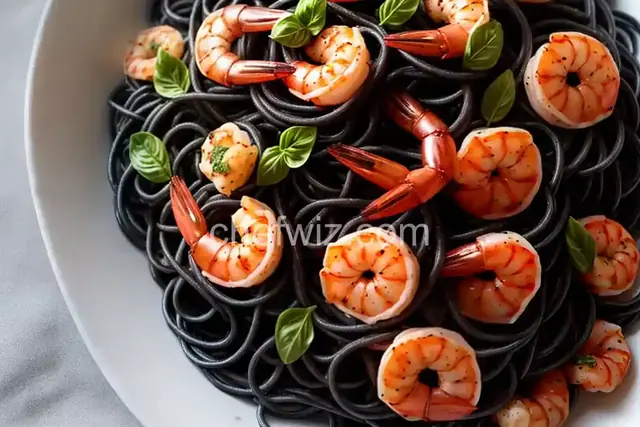
Squid Ink Pasta with Shrimp, Nduja, and Tomato
Rate this recipeBe the first to rate
 By AprilPublished
 Are you a fan of unique and visually stunning dishes? If so, then squid ink pasta should be on your must-try list!
 By AprilPublished
 Are you a fan of unique and visually stunning dishes? If so, then squid ink pasta should be on your must-try list!
Begin by peeling and deveining the shrimp, saving the heads and/or shells for later use.
Finely chop the shrimp and set it aside.
In a medium saucepan, heat 1 tablespoon of oil over medium-high heat.
Add the smashed garlic and cook, stirring, until it turns golden in color, which should take approximately 1 minute.
Add the reserved shrimp heads and/or shells and cook, stirring, until they turn bright pink, about 2 minutes.
Add the bay leaf and 2 cups of water, then bring the mixture to a boil.
Reduce the heat and simmer the stock until it is slightly reduced and has developed flavor, which should take around 8-10 minutes.
Strain the stock through a fine-mesh sieve into a large bowl, discarding any solid remnants.
In a large skillet, heat the remaining 2 tablespoons of oil over medium-high heat.
Add the sliced garlic and cook, stirring, until it becomes fragrant, about 1 minute.
Remove the skillet from heat and carefully add the tomatoes and 1 cup of the stock (be cautious as the mixture may sputter).
Return the skillet to heat and cook, stirring occasionally, until the sauce begins to thicken, which should take about 3 minutes.
Incorporate the nduja into the sauce using a wooden spoon, ensuring it is well mixed.
Are you a fan of unique and visually stunning dishes? If so, then squid ink pasta should be on your must-try list! This jet-black pasta not only captivates with its striking appearance but also offers a delightful seafood flavor that will leave you craving for more. In this article, we will explore the wonders of squid ink pasta and how you can elevate it to new heights with shrimp nduja and tomato. So, let's dive in!
Squid ink pasta is a culinary masterpiece that originates from the coastal regions of Italy. Although its dark hue might seem intimidating at first, the taste is truly extraordinary. The squid ink adds a subtle briny flavor, reminiscent of the sea, and imparts a velvety texture to the pasta. Its unique appearance also makes it a showstopper in any dish.
To take your squid ink pasta to the next level, consider pairing it with shrimp nduja and tomato. Shrimp nduja is a spicy, spreadable sausage made from shrimp and various spices. When combined with the sweet and tangy flavors of tomato, it creates a tantalizing symphony of tastes in your mouth.
Creating the perfect shrimp nduja and tomato sauce is simpler than you might think. Start by sautéing minced garlic and diced onions in olive oil until golden brown. Then, add the shrimp nduja and cook it until it becomes fragrant and releases its flavors. Finally, add diced tomatoes and let the sauce simmer until it thickens. The result is a rich and flavorful sauce that complements the squid ink pasta beautifully.
1. Is squid ink pasta safe to eat?
Yes, squid ink pasta is safe to consume. The ink is sourced from edible squids and goes through a thorough cleaning process before being used in pasta production.
2. Can I make squid ink pasta at home?
Absolutely! While it may seem like a daunting task, making squid ink pasta from scratch is an enjoyable culinary adventure. With the right ingredients and a little patience, you can create your own jet-black pasta.
3. Does squid ink pasta taste fishy?
Contrary to popular belief, squid ink pasta does not have an overpowering fishy taste. The flavor is subtle and adds a hint of brine and umami to your dish.
4. How do I store squid ink pasta?
Store your squid ink pasta in an airtight container in a cool, dry place. It is best consumed within a few months to maintain its freshness and flavor.
5. Can I pair squid ink pasta with other seafood?
Definitely! Squid ink pasta pairs well with a variety of seafood, such as shrimp, calamari, and scallops. The seafood flavors blend harmoniously with the pasta, creating a delightful medley of tastes.
6. Are there any alternatives to shrimp nduja?
If you can't find shrimp nduja, you can substitute it with regular nduja or spicy Italian sausage. These alternatives will still bring a burst of flavor to your dish.
7. Can I add vegetables to the shrimp nduja and tomato sauce?
Absolutely! Feel free to experiment with vegetables like bell peppers, zucchini, or spinach. These additions will not only enhance the flavors but also add a vibrant touch to your dish.
8. What wine pairs well with squid ink pasta?
For a perfect pairing, opt for a dry white wine like Sauvignon Blanc or Pinot Grigio. The crisp acidity of these wines complements the seafood flavors of the dish.
Squid ink pasta with shrimp nduja and tomato is a culinary marvel that brings together visual appeal and exceptional taste. The enigmatic jet-black pasta, combined with the spicy shrimp nduja and tangy tomato sauce, creates a symphony of flavors on your plate. So, embark on this gastronomic adventure and treat yourself to a dish that is as impressive in taste as it is in appearance.
AprilCook, recipe developer and the heart of Chefwiz. More about April