Slow Cooker Tomato Sauce
Rate this recipeBe the first to rate
 By AprilPublished
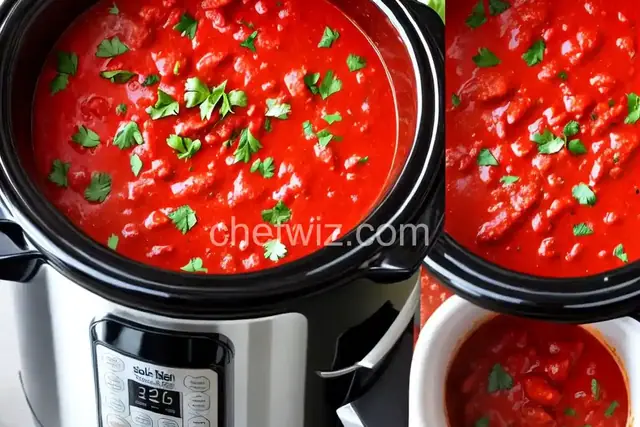
 Have you ever wondered how to make a delicious tomato sauce without spending hours in the kitchen?
 By AprilPublished
 Have you ever wondered how to make a delicious tomato sauce without spending hours in the kitchen?
Put tomatoes, onion, garlic, and olive oil into a slow cooker.
Sprinkle oregano, basil, cayenne pepper, salt, black pepper, and cinnamon on top.
Cover the slow cooker.
Cook on Low for 10 to 15 hours.
The longer it simmers, the more flavorful it will be.
At 10 hours, it will be delicious, but at 15 hours, it will be even better.
Have you ever wondered how to make a delicious tomato sauce without spending hours in the kitchen? Well, look no further! In this article, we will explore the wonders of slow cooker tomato sauce and how it can elevate your pasta dishes to a whole new level of flavor.
Slow cooking is like a symphony for your taste buds. Just imagine the rich, aromatic flavors of tomatoes, garlic, and herbs mingling together in perfect harmony. The slow cooker is the conductor, gently simmering the ingredients over a low heat, allowing them to meld and develop their flavors over time.
One of the great advantages of using a slow cooker for tomato sauce is the consistency it produces. The long, slow cooking process breaks down the tomatoes, resulting in a smooth and velvety sauce. No more chunks of tomato skin or seeds to contend with - just pure, luscious sauce that clings to your pasta like a warm embrace.
Another benefit of slow cooking is the convenience it offers. Once you've prepared the ingredients and set the slow cooker, you can simply walk away and let it work its magic. This means more time for you to relax, catch up on your favorite TV show, or spend quality time with loved ones.
Slow cooker tomato sauce is incredibly versatile. You can use it as a base for a variety of dishes, from classic spaghetti and meatballs to lasagna, pizza, or even shakshuka. The possibilities are endless, and the depth of flavor it adds to your favorite recipes is truly remarkable.
When it comes to flavor, slow cooker tomato sauce is a force to be reckoned with. The slow cooking process allows the ingredients to release their full potential, resulting in a sauce that is robust, tangy, and utterly delicious. It's like a flavor bomb that explodes in your mouth with every bite.
One of the joys of making slow cooker tomato sauce is the ability to customize it to your liking. You can add extra herbs, spices, or even a splash of red wine to take it to the next level. Experiment with different ingredients and find the combination that tickles your taste buds just right.
In conclusion, slow cooker tomato sauce is a game-changer in the kitchen. It's a time-saving, flavor-enhancing, and incredibly versatile sauce that will elevate your pasta dishes to new heights. So why not give it a try? Your taste buds will thank you.
Absolutely! Slow cooker tomato sauce freezes beautifully. Just let it cool completely, portion it into freezer-safe containers, and pop them in the freezer for future use.
Slow cooker tomato sauce can be stored in the refrigerator for up to 5 days. Make sure to transfer it to an airtight container for optimal freshness.
Yes, you can definitely use fresh tomatoes in your slow cooker tomato sauce. Just make sure to blanch and peel them before adding them to the slow cooker.
Absolutely! Slow cooker tomato sauce is incredibly versatile and can be used as a base for various dishes like lasagna, pizza, or even as a topping for grilled vegetables.
Yes, you can add meat to the sauce if you prefer. Brown the meat before adding it to the slow cooker to enhance the flavor even further.
Absolutely! You can add red pepper flakes or chili powder to give your sauce a spicy kick. Adjust the amount according to your preference.
Yes, you can easily make a vegan version of slow cooker tomato sauce by omitting any meat or dairy products. Just focus on using fresh vegetables, herbs, and spices for a delicious plant-based sauce.
Absolutely! Slow cooker tomato sauce makes a fantastic dipping sauce for breadsticks, mozzarella sticks, or even as a topping for bruschetta.
AprilCook, recipe developer and the heart of Chefwiz. More about April