Slow-Cooked Collard Greens in Olive Oil
Rate this recipeBe the first to rate
 By AprilPublished
 When it comes to comfort food, few dishes can compare to the hearty satisfaction of slow-cooked collard greens.
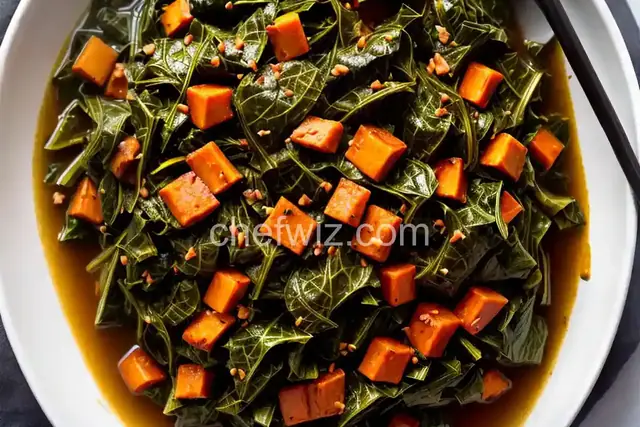 By AprilPublished
 When it comes to comfort food, few dishes can compare to the hearty satisfaction of slow-cooked collard greens.
In a large saucepan, heat ½ cup of oil over medium heat.
Cook garlic and red pepper flakes in the saucepan, stirring frequently, until the garlic turns golden, which should take around 4 minutes.
Gradually add collard greens to the saucepan, stirring well after each addition until they wilt before adding more.
Season the greens with salt and pour in 1 cup of water.
Bring the mixture to a simmer, then reduce the heat so it is gently simmering.
Cover the saucepan and let the greens cook for approximately 1 to 1½ hours, occasionally stirring and removing the lid.
The greens should become tender and have a very dark green color.
Allow the greens to cool slightly, then mix in vinegar and sugar.
Transfer the greens to a serving bowl.
Drizzle more oil and vinegar over the greens if desired.
Serve and enjoy.
When it comes to comfort food, few dishes can compare to the hearty satisfaction of slow-cooked collard greens. The combination of tender greens, savory seasonings, and a touch of olive oil creates a mouthwatering symphony of flavors that will leave you craving for more. In this article, we will explore the art of preparing slow-cooked collard greens and discover how the addition of olive oil can take this classic dish to new heights.
There is something magical about slow cooking. The gentle simmering of ingredients over a long period of time allows flavors to meld together, resulting in a dish that is rich, complex, and incredibly satisfying. When it comes to collard greens, this slow cooking process is essential to achieving the perfect texture and taste.
As the collard greens simmer away in a pot, they release their natural juices, infusing the dish with their unique flavor. The slow cooking process also helps to break down the tough fibers in the greens, making them tender and easy to chew. The result is a dish that is bursting with flavor and melts in your mouth.
While collard greens are delicious on their own, the addition of olive oil takes them to a whole new level. Olive oil not only adds a richness and depth of flavor to the dish but also brings a host of health benefits to the table.
Rich in monounsaturated fats, olive oil is known for its heart-healthy properties. It's also packed with antioxidants that help fight inflammation and protect against chronic diseases. By using olive oil in your slow-cooked collard greens, you can enjoy a delicious meal that is both satisfying and nourishing.
Now that we understand the importance of slow cooking and the role of olive oil, let's dive into the process of making this delectable dish:
Slow-cooked collard greens in olive oil are a delicious and nutritious dish that is sure to please even the most discerning palates. The combination of slow cooking and the addition of olive oil creates a dish that is bursting with flavor and offers a host of health benefits. Whether you enjoy them as a side dish or a main course, these collard greens are a must-try for any food lover. So grab your pot, chop those greens, and let the slow cooking begin!
Absolutely! While collard greens are traditional, you can experiment with other greens like kale or Swiss chard for a unique twist.
While olive oil adds a distinct flavor to the dish, you can use other oils like coconut oil or avocado oil if you prefer.
Leftover collard greens can be stored in an airtight container in the refrigerator for up to three days. Simply reheat them on the stovetop or in the microwave before serving.
Absolutely! Many people enjoy adding smoked ham hocks or bacon to their collard greens for added flavor. Simply cook the meat along with the greens for a delicious twist.
Yes! By omitting the meat and using vegetable broth instead of chicken broth, you can easily make this dish suitable for vegetarians and vegans.
Yes, you can freeze leftover collard greens for future enjoyment. Simply transfer them to an airtight container or freezer bag and freeze for up to three months.
Absolutely! Adding vegetables like onions, bell peppers, or tomatoes can add depth and flavor to your collard greens.
Yes, you can adapt this recipe for a slow cooker. Simply follow the same steps but transfer the ingredients to your slow cooker instead of a stovetop pot.
AprilCook, recipe developer and the heart of Chefwiz. More about April