Skillet Cornbread
Rate this recipeBe the first to rate
 By AprilPublished
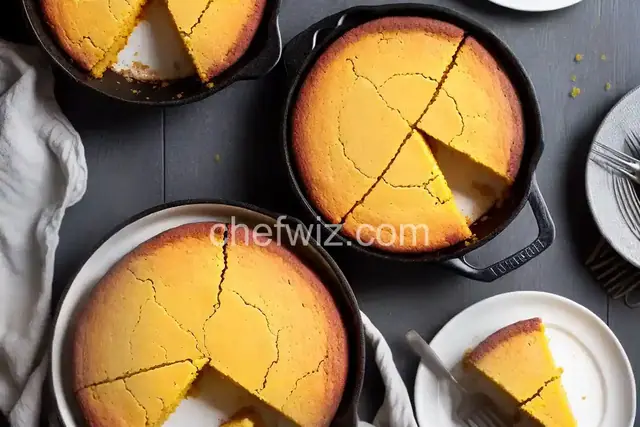
When it comes to comfort food, few things can compare to a steaming slice of cornbread straight from the skillet.
 By AprilPublished
When it comes to comfort food, few things can compare to a steaming slice of cornbread straight from the skillet.
Preheat the oven to 425 degrees F (220 degrees C) and place a 9-inch cast iron skillet in the oven.
In a small bowl, combine milk and cornmeal. Allow it to soak for 10 minutes.
In a mixing bowl, sift flour, baking powder, and salt together. Add the soaked cornmeal mixture, eggs, and butter. Beat the ingredients until a smooth batter forms, approximately 1 minute.
Remove the hot skillet from the oven. Add vegetable oil to the skillet and swirl it around to coat the surface. Discard any excess oil, then pour the batter into the skillet.
Bake in the preheated oven for 18 to 23 minutes, or until a toothpick inserted into the center comes out clean.
Once baked, cut the cornbread into wedges and serve.
When it comes to comfort food, few things can compare to a steaming slice of cornbread straight from the skillet. With its golden crust and tender crumb, this classic side dish is the perfect companion to hearty soups, stews, and chili. But what makes skillet cornbread so special? And how can you achieve that perfect balance of sweetness and savory flavors? Let's dive in and discover the secrets behind this beloved Southern staple.
One of the key factors that sets skillet cornbread apart from its baked counterpart is the cooking vessel itself. The cast iron skillet not only imparts a beautiful crust to the cornbread but also helps to distribute heat evenly, ensuring that every bite is perfectly cooked. Just like a warm hug, the skillet adds an extra layer of comfort to this humble dish.
Skillet cornbread strikes the perfect balance between sweet and savory flavors. The addition of cornmeal gives it a slightly nutty taste, while a touch of sugar adds just the right amount of sweetness. This harmonious blend of flavors makes it a versatile side dish that pairs well with a wide variety of main courses.
If you ask any seasoned cornbread connoisseur, they will tell you that the secret to a truly flavorful skillet cornbread lies in the buttermilk. This tangy ingredient not only adds moisture to the batter but also lends a subtle tang that complements the sweetness of the cornmeal. It's the buttermilk that takes this humble dish to new heights.
To achieve cornbread perfection, here are a few tips to keep in mind:
Skillet cornbread is incredibly versatile and can be enjoyed in many ways. Here are a few serving suggestions to inspire you:
Skillet cornbread is more than just a side dish; it's a taste of Southern tradition and comfort. The combination of a cast iron skillet, the perfect balance of flavors, and a few simple tips can elevate this humble dish to new heights. So next time you're in need of a comforting, delicious side dish, reach for a skillet and experience the magic of cornbread.
While a cast iron skillet is traditionally used for skillet cornbread, you can experiment with other types of oven-safe skillets. Just keep in mind that the cooking time and results may vary.
Yes, you can omit the sugar if you prefer a savory cornbread. However, keep in mind that the absence of sugar may result in a less tender texture.
If you don't have buttermilk on hand, you can make a substitute by adding one tablespoon of vinegar or lemon juice to a cup of milk. Let it sit for a few minutes before using.
Store leftover cornbread in an airtight container at room temperature for up to two days. To reheat, wrap individual slices in foil and warm in a preheated oven.
Absolutely! Feel free to get creative and add ingredients like diced jalapenos, shredded cheese, or cooked bacon to the batter for an extra burst of flavor.
Yes, you can substitute regular flour with a gluten-free flour blend to make skillet cornbread gluten-free. Just make sure to check that all your other ingredients are also gluten-free.
Skillet cornbread pairs well with a variety of dishes, such as fried chicken, smoked ribs, or even a simple salad. Let your taste buds be your guide!
Yes, you can freeze leftover cornbread. Wrap individual slices tightly in plastic wrap, then place them in a resealable freezer bag. Thaw in the refrigerator overnight before reheating.
AprilCook, recipe developer and the heart of Chefwiz. More about April