Shrimp and Andouille Gumbo
Rate this recipeBe the first to rate
 By AprilPublished
 Are you looking for a flavorful and satisfying meal that will transport you straight to the heart of Cajun country?
 By AprilPublished
 Are you looking for a flavorful and satisfying meal that will transport you straight to the heart of Cajun country?
In a bowl, combine peppers, onions, and celery and set aside near the stove.
Heat oil in a large skillet (preferably cast iron) until it begins to smoke.
Gradually add flour to the skillet while constantly whisking.
Continue whisking and cook over medium to medium-high heat until the roux becomes dark brown and has a strong aroma.
Add the vegetable mixture to the skillet and stir with a wooden spoon, cooking for 2 minutes.
Stir in salt, dry seasonings, and garlic, and cook for an additional 1 to 2 minutes. Remove the skillet from heat.
Place shrimp stock in a large Dutch oven or stockpot and bring it to a gentle boil.
Gradually add the roux mixture to the boiling stock, whisking constantly until fully incorporated and dissolved.
Return to a boil and add andouille sausage, then reduce heat to a simmer and cook for 15 minutes.
Taste the gumbo and adjust seasoning if necessary, then add the shrimp and turn off the heat.
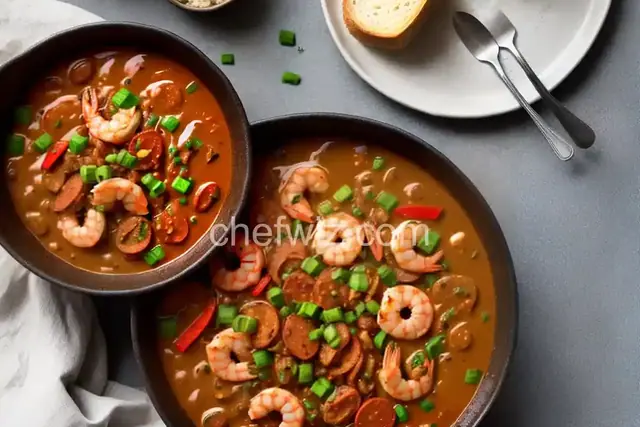
Let the gumbo sit for 5 minutes to allow the shrimp to cook, then serve it over a scoop of plain white rice.
Note: You can prepare the gumbo up to the point of adding the shrimp beforehand. Bring the gumbo to a boil before adding the shrimp to serve.
To make the shrimp stock, peel and devein
Are you looking for a flavorful and satisfying meal that will transport you straight to the heart of Cajun country? Look no further than Shrimp and Andouille Gumbo! This traditional Louisiana dish is a delicious blend of spices, meats, and seafood that is sure to tantalize your taste buds. In this article, we will explore the origins of gumbo, the key ingredients that make it so special, and how you can recreate this culinary masterpiece in your own kitchen.
Like many dishes, the origins of gumbo are steeped in history and culture. It is believed to have its roots in West Africa, brought to Louisiana by enslaved people in the 18th century. Over time, gumbo evolved, incorporating various ingredients and techniques from Native American, French, and Spanish cuisines. Today, it is considered a quintessential dish of Louisiana, representing the diverse influences that have shaped the state's culinary heritage.
One of the things that sets gumbo apart is its rich and complex flavor profile. The key ingredients that contribute to this include the holy trinity of Cajun cooking - onions, bell peppers, and celery. These aromatic vegetables form the base of the gumbo, providing a solid foundation of flavor. Another essential ingredient is the meaty and smoky Andouille sausage, which adds depth and character to the dish.
Of course, no shrimp and Andouille gumbo would be complete without the star ingredient - shrimp! These succulent crustaceans bring a delicate sweetness to the dish and pair perfectly with the other flavors. Whether you use fresh or frozen shrimp, make sure to devein them for a cleaner taste. The shrimp will cook quickly in the gumbo, so be careful not to overcook them, as they can become tough.
Now that you know the key ingredients, it's time to get cooking! Making gumbo may seem intimidating at first, but with a little patience and practice, you'll be able to create a mouthwatering masterpiece in no time. Start by sautéing the holy trinity in a large pot until they become fragrant and translucent. Then, add the Andouille sausage and cook until it releases its smoky aroma.
Next, it's time to add the spices. Gumbo typically calls for a blend of spices, including paprika, thyme, cayenne pepper, and bay leaves. These spices give gumbo its signature kick and depth of flavor. Stir the spices into the pot, allowing them to coat the vegetables and sausage, creating a tantalizing aroma that will fill your kitchen.
Once the spices are well incorporated, it's time to add the liquid. Gumbo traditionally uses a combination of chicken or seafood stock, depending on the meat you're using. Pour in the stock, making sure to scrape up any flavorful bits that may have stuck to the bottom of the pot. Bring the liquid to a boil, then reduce the heat and let the gumbo simmer for at least an hour, allowing the flavors to meld together.
Shrimp and Andouille Gumbo is a dish that embodies the spirit of Louisiana cuisine. Its rich history, diverse flavors, and comforting warmth make it a beloved favorite for many. So why not bring a taste of the Bayou to your own kitchen? With a little bit of effort and a whole lot of love, you can create a gumbo masterpiece that will transport you straight to the heart of Cajun country.
A1: Absolutely! While Andouille sausage is the traditional choice, you can experiment with other types of smoked sausages or even substitute it with chicken or turkey sausage for a lighter twist.
A2: Yes, gumbo actually tastes better the next day as the flavors have had more time to meld together. Just be sure to store it in an airtight container in the refrigerator and reheat it gently on the stovetop.
A3: Gumbo can have a bit of heat, but it's entirely up to you how spicy you want it to be. Adjust the amount of cayenne pepper or hot sauce to suit your taste preferences.
A4: Absolutely! While shrimp is the most common seafood used in gumbo, you can also add crab, crawfish, or even fish to create a seafood medley that will take your gumbo to the next level.
A5: Yes, gumbo can be easily adapted to vegetarian or vegan diets. Simply omit the meat and replace it with hearty vegetables like okra or mushrooms for a satisfying plant-based version.
A6: Yes, gumbo freezes well! Allow it to cool completely before transferring it to airtight containers or freezer bags. It can be stored in the freezer for up to three months. Thaw it in the refrigerator overnight before reheating.
A7: Gumbo is traditionally served over a bed of steamed rice, which helps soak up the flavorful broth. You can also serve it with crusty French bread or cornbread for a complete meal.
A8: Absolutely! Gumbo is a versatile dish that can be customized to your liking. Feel free to add your favorite vegetables, spices, or even experiment with different meats to create a gumbo recipe that reflects your personal taste.
AprilCook, recipe developer and the heart of Chefwiz. More about April