Sesame Balls (Onde-Onde)
Rate this recipeBe the first to rate
 By AprilPublished
 Have you ever tried a dessert that is crispy on the outside, chewy on the inside, and bursting with flavors?
 By AprilPublished
 Have you ever tried a dessert that is crispy on the outside, chewy on the inside, and bursting with flavors?
Drain the soaked mung beans after approximately 1 hour or more and steam them until soft.
Use a chopper to mash the mung beans.
Transfer the mashed mung beans to a pot and add all the other ingredients.
Cook and stir the mixture frequently until it becomes dry.
Set aside the mixture to cool and form mung bean balls.
Dough:
In a large bowl, combine all the ingredients for the dough.
Use your hands to stir the ingredients until you can wrap the filling with the dough. The dough should not be too hard.
Assembly:
Take a portion of the dough and flatten it.
Place some of the filling in the center of the flattened dough.
Roll the dough with your hands until it forms a perfectly round shape.
Set aside the prepared mung bean balls.
Coating:
Dip each mung bean ball into water one by one.
Roll the wet ball in sesame seeds, pressing gently with your hands to make the seeds stick.
Set aside the coated mung bean balls.
Frying:
Heat oil in a deep fryer or pan over medium heat.
Carefully place a few mung bean balls into the fryer, making sure not to overcrowd it.
Fry the balls until they turn golden brown.
Repeat the frying process for the remaining mung bean balls.
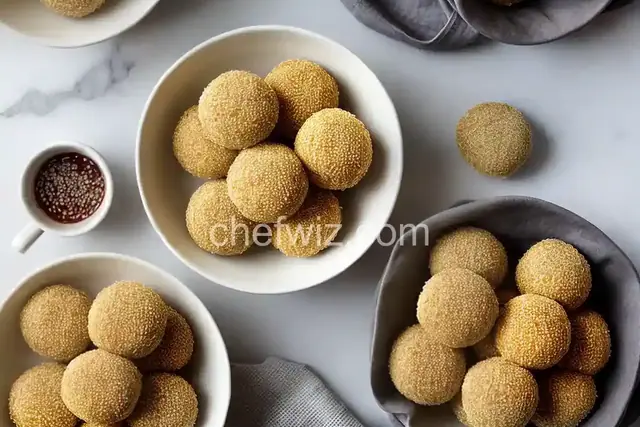
Have you ever tried a dessert that is crispy on the outside, chewy on the inside, and bursting with flavors? If not, you're in for a treat! Sesame balls, also known as onde-onde, are a popular Asian sweet delicacy that will make your taste buds dance with joy. In this article, we will delve into the world of sesame balls, exploring their origins, the ingredients that make them so delightful, and how you can enjoy these delectable treats in the comfort of your own home.
Sesame balls have a rich history that dates back centuries. Originating in China, these sweet treats quickly spread across Asia, gaining popularity in countries like Malaysia, Thailand, and Indonesia. Each culture has put its own unique twist on the traditional recipe, resulting in a variety of flavors and fillings.
One of the things that make sesame balls so irresistible is their unique combination of textures and flavors. The outer shell is made from glutinous rice flour, giving it a crispy and slightly chewy texture. Inside, you'll find a sweet filling that can range from mung bean paste to red bean paste, or even a combination of both. These fillings add a burst of sweetness that perfectly complements the slightly savory taste of the outer layer.
While you can easily find sesame balls at Asian bakeries or dessert shops, there's something incredibly satisfying about making them in your own kitchen. Not only do you get to enjoy the process of creating these delightful treats, but you also have the freedom to experiment with different fillings and flavors.
Creating sesame balls from scratch may seem daunting at first, but with the right recipe and a bit of practice, you'll soon become a master chef. The key is in the preparation and technique. From kneading the dough to sealing the filling inside, each step contributes to the final result.
Don't be discouraged if your first attempt doesn't turn out perfect. Remember, practice makes perfect, and even imperfect sesame balls are still delicious!
Sesame balls, with their crispy exterior, chewy interior, and delightful fillings, are a true indulgence for dessert lovers. Whether you choose to enjoy them at your favorite Asian bakery or attempt to make them at home, these sweet treats are sure to leave you craving for more. So go ahead, dive into the world of sesame balls and let your taste buds embark on a sensational journey!
No, traditional sesame balls are not gluten-free as they are made with glutinous rice flour. However, there are gluten-free variations available that use alternative flours such as rice flour or tapioca flour.
Yes, you can freeze sesame balls. After cooking, allow them to cool completely, then store them in an airtight container or freezer bag. When you're ready to enjoy them, simply reheat them in the oven or microwave until they are warm and crispy.
To prevent sesame balls from exploding while frying, make sure the oil is not too hot. The temperature should be around 350°F (175°C). Additionally, make sure the balls are sealed tightly to prevent any filling from leaking out.
Absolutely! While traditional sesame balls are filled with mung bean or red bean paste, you can get creative and use other fillings such as chocolate, peanut butter, or even fruit preserves. Let your imagination run wild!
Sesame balls can be made vegan-friendly by using plant-based ingredients. Ensure that the fillings and any additional ingredients you use are free from animal products.
While traditional sesame balls are typically fried, you can experiment with baking them as well. Baking will result in a slightly different texture, but the taste will still be delicious.
Sesame balls are best enjoyed fresh, but they can be stored in an airtight container at room temperature for up to 2 days. After that, they may start to lose their crispiness.
Yes, serving sesame balls with a dipping sauce can add an extra layer of flavor. Popular options include sweetened condensed milk, chocolate sauce, or even a simple syrup flavored with pandan leaves.
AprilCook, recipe developer and the heart of Chefwiz. More about April