Seared Red Chard
Rate this recipeBe the first to rate
 By AprilPublished
 When it comes to adding a pop of color and flavor to your dishes, few vegetables can compare to the vibrant and nutritious red chard.
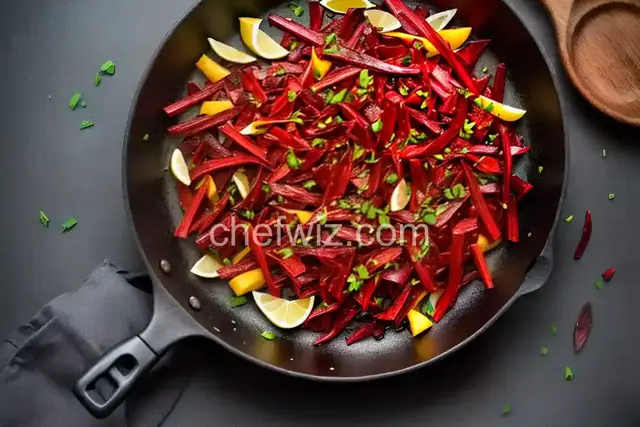 By AprilPublished
 When it comes to adding a pop of color and flavor to your dishes, few vegetables can compare to the vibrant and nutritious red chard.
Ensure that your greens are thoroughly dried before beginning the recipe.
Wash and chop the greens immediately after returning from the market to save time later.
Heat oil in a large nonstick skillet over medium-high heat.
Add onions to the skillet and sauté for 2 minutes.
Gradually add the chard to the skillet in bunches, continuously stirring as it wilts slightly. The goal is to sear the greens without fully cooking them.
The greens should retain their crispness and crunchiness throughout the process. This should take approximately 3 to 4 minutes.
Season the greens with nutmeg, salt, and pepper to taste.
Drizzle a small amount of vinegar into the skillet, then remove it from the heat.
Toss the greens in the skillet to allow the vinegar to evaporate.
Serve the greens while hot.
When it comes to adding a pop of color and flavor to your dishes, few vegetables can compare to the vibrant and nutritious red chard. With its deep red stalks and dark green leaves, red chard not only makes for an appealing addition to any plate, but it also offers a range of health benefits that can support your overall well-being.
Red chard is a nutritional powerhouse, packed with essential vitamins, minerals, and antioxidants. It is an excellent source of vitamins A, C, and K, which play a vital role in maintaining healthy skin, boosting the immune system, and promoting proper blood clotting. Additionally, red chard contains minerals like iron, magnesium, and potassium, which are essential for maintaining healthy bones, supporting muscle function, and regulating blood pressure.
Seared red chard not only retains the vibrant colors and flavors of this nutritious vegetable, but it also adds a delightful texture to your dishes. The searing process caramelizes the natural sugars in the chard, giving it a slightly sweet and savory taste. This cooking method also helps to soften the leaves and stalks, making them tender and easy to chew.
When you sear red chard, you also enhance its nutritional value. While chard is already packed with nutrients, the searing process helps to break down the tough cell walls, making it easier for your body to absorb and utilize these essential vitamins and minerals. This means that by searing red chard, you can maximize its nutritional benefits and ensure that you are getting the most out of this vibrant vegetable.
Now that you know the benefits of seared red chard, let's dive into how you can prepare this delicious dish. Start by washing the red chard thoroughly to remove any dirt or debris. Once cleaned, remove the leaves from the stalks and set them aside. Chop the stalks into bite-sized pieces.
Next, heat a skillet over medium-high heat and add a drizzle of olive oil. Once the oil is hot, add the chopped stalks to the skillet and cook for a few minutes until they start to soften. Then, add the chard leaves and cook for an additional couple of minutes until they wilt.
Season the chard with salt, pepper, and any other desired herbs or spices. Stir everything together to ensure that the seasoning is evenly distributed. Continue cooking for another minute or two until the chard is tender and has achieved a slightly seared appearance.
Once the chard is seared to your liking, remove it from the heat and serve immediately. You can enjoy seared red chard as a side dish, toss it into salads, or use it as a flavorful topping for pizzas and sandwiches. The possibilities are endless!
Seared red chard is not only a visually stunning addition to your meals but also a powerhouse of nutrition. By searing this vibrant vegetable, you can enhance its flavors and textures while maximizing its nutritional benefits. So why not give seared red chard a try and elevate your dishes with its beautiful colors and delicious taste?
Absolutely! While red chard adds a vibrant color to your dishes, you can use other types of chard, such as Swiss chard or rainbow chard, which offer their unique flavors and textures.
Of course! Feel free to experiment with adding other vegetables like bell peppers, onions, or garlic to the skillet while searing the chard. This can add extra flavor and depth to the dish.
Yes, you can use other cooking oils like avocado oil or coconut oil if you prefer. Just keep in mind that different oils may impart slightly different flavors to the dish.
Absolutely! Allow the seared red chard to cool completely before transferring it to an airtight container. Store it in the refrigerator for up to three days and reheat it when ready to serve.
While it is possible to freeze seared red chard, the texture may change slightly upon thawing. It is best to enjoy this dish fresh for the best taste and texture.
Absolutely! Searing red chard adds a delicious flavor and texture to pasta dishes. Toss it with cooked pasta, garlic, and Parmesan cheese for a simple yet satisfying meal.
Yes, seared red chard can be a fantastic addition to stir-fries. Its vibrant color and slightly sweet taste can complement a variety of stir-fry ingredients.
Absolutely! Seared red chard can add a burst of flavor and nutrition to soups and stews. Simply chop it into smaller pieces and add it to your favorite recipes.
AprilCook, recipe developer and the heart of Chefwiz. More about April