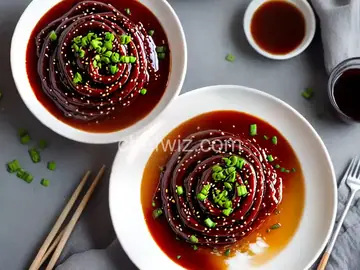
Salted Preserved Eggs
Rate this recipeBe the first to rate
 By AprilPublished
 **Salted Preserved Eggs: A Delicacy Worth Savoring** Have you ever wondered how a simple egg can be transformed into a delicacy that tantalizes your taste buds?
 By AprilPublished
 **Salted Preserved Eggs: A Delicacy Worth Savoring** Have you ever wondered how a simple egg can be transformed into a delicacy that tantalizes your taste buds?
In a small saucepan, combine the salt and water and bring it to a boil. Remove from heat and let it cool completely.
Carefully place the eggs into a large earthenware crock, glass jar, or plastic container.
Pour the cooled brine over the eggs.
To keep the eggs submerged, place a quart-sized zip-top plastic bag half-filled with water or a small dish on top.
Set the eggs in a cool, dark place for 3 to 4 weeks.
The curing time depends on your preference for saltiness. During the last week of curing, test the eggs by taking one from the brine, rinsing it, and placing it in a saucepan with enough water to cover it by 1 inch.
Bring the water to a boil over medium heat, then lower to a gentle simmer and cook the egg for 8 to 10 minutes.
Remove the egg from heat, flush it with cold water, and peel it. Taste it to check if it's salty enough.
If the egg is salty enough, remove the remaining eggs from the brine. If not, leave them in the brine for a few more days.
Store the salted eggs in the refrigerator for up to 1 month. The longer they sit, the saltier they will become.
If the egg whites become too salty, you can still enjoy the yolks.
**Salted Preserved Eggs: A Delicacy Worth Savoring**
Have you ever wondered how a simple egg can be transformed into a delicacy that tantalizes your taste buds? Look no further than the salted preserved eggs, a culinary treasure that adds a unique flavor and texture to various dishes. In this article, we will delve into the fascinating world of salted preserved eggs, exploring their history, preparation, and the culinary wonders they unlock.
**The Journey of Salted Preserved Eggs**
Salted preserved eggs, also known as century eggs or thousand-year-old eggs, have a rich history that dates back centuries. Originating in China, these eggs were created as a method of preserving eggs for extended periods. The preservation process involves coating the eggs in a mixture of clay, ash, salt, quicklime, and rice straw, allowing them to ferment for weeks or even months.
The result? Eggs with a striking appearance, with their whites turning translucent and the yolks transforming into a creamy, custard-like consistency. The taste of salted preserved eggs can be described as savory, with a hint of ammonia and a unique umami flavor that elevates any dish they are used in.
**Preparing Salted Preserved Eggs**
To prepare salted preserved eggs, the first step is to select fresh eggs of the highest quality. These eggs are then carefully coated with the preservation mixture, ensuring each one is evenly covered. Afterward, they are placed in a cool, dark environment for the fermentation process to take place.
During this period, the eggs undergo a chemical reaction, which alters their composition and transforms their taste and texture. Once the desired level of fermentation is achieved, the eggs are removed from their coating, revealing their intriguing appearance. They are then ready to be enjoyed as a culinary delight.
**Culinary Wonders of Salted Preserved Eggs**
The unique taste and texture of salted preserved eggs make them a versatile ingredient in a wide range of dishes. In Chinese cuisine, they are often used in congee, dumplings, stir-fries, and even salads. The creamy yolk adds depth and richness, while the savory flavor enhances the overall taste profile of the dish.
Not only do salted preserved eggs contribute to the taste of a dish, but they also provide an element of visual appeal. When sliced open, the contrasting colors of the white and yolk create a visually stunning effect, making any dish more enticing.
**FAQs about Salted Preserved Eggs**
1. **Are salted preserved eggs safe to eat?**
- Yes, salted preserved eggs are safe to eat. The preservation process eliminates any harmful bacteria, ensuring they are safe for consumption.
2. **How long do salted preserved eggs last?**
- Salted preserved eggs have a long shelf life and can be stored for several months in a cool, dark place.
3. **Can I make salted preserved eggs at home?**
- While it is possible to make salted preserved eggs at home, the traditional fermentation process can be complex and time-consuming. It is recommended to purchase them from reputable sources.
4. **Are there any health benefits to consuming salted preserved eggs?**
- Salted preserved eggs are a good source of protein and essential nutrients. However, they should be consumed in moderation due to their high sodium content.
5. **Can I substitute salted preserved eggs with regular eggs in recipes?**
- While regular eggs can be used as a substitute, the unique flavor and texture of salted preserved eggs cannot be replicated.
6. **Are there different varieties of salted preserved eggs?**
- Yes, there are variations of salted preserved eggs found in different regions. For example, the Thai version, known as "pidan," has a milder flavor compared to the Chinese century eggs.
7. **What are some popular dishes that feature salted preserved eggs?**
- Popular dishes include salted egg yolk prawns, salted egg custard buns, and salted egg fried rice.
8. **Can salted preserved eggs be frozen?**
- Freezing salted preserved eggs is not recommended as it may affect the texture and taste.
In conclusion, salted preserved eggs are a culinary gem that offers a unique and unforgettable taste experience. From their ancient origins to their versatile use in various dishes, these eggs have captured the hearts and palates of food enthusiasts worldwide. So, the next time you come across salted preserved eggs, dare to indulge in their savory charm and embark on a gastronomic adventure like no other.
AprilCook, recipe developer and the heart of Chefwiz. More about April