Salsa Verde: Green Tomatillo Salsa
Rate this recipeBe the first to rate
 By AprilPublished
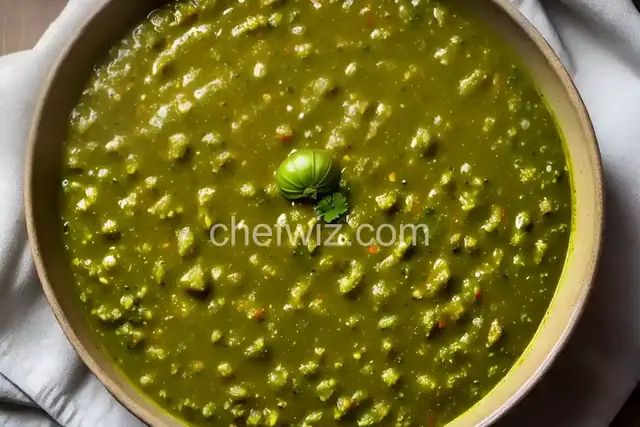
 Are you craving a tangy and flavorful salsa to brighten up your meals?
 By AprilPublished
 Are you craving a tangy and flavorful salsa to brighten up your meals?
To make the All-Raw version of the salsa:
Chop the tomatillos and chiles into rough pieces.
In a blender or food processor, combine the tomatillos, chiles, cilantro, and 1/4 cup of water.
Process the ingredients until you have a coarse puree.
Transfer the mixture into a serving dish.
Rinse the onion under cold water and shake off any excess moisture.
Stir the onion into the salsa.
Season the salsa with salt, usually around a generous 1/4 teaspoon.
To make the Roasted version of the salsa:
Preheat the broiler.
Place the tomatillos and chiles on a baking sheet, about 4 inches below the broiler.
Roast the tomatillos and chiles until they are darkly roasted, with some spots even blackened, which should take around 5 minutes.
Flip them over and roast the other side for an additional 4 to 5 minutes, until you have splotchy-black and blistered tomatillos and chiles.
In a blender or food processor, combine the roasted tomatillos and chiles, including any delicious juice from the baking sheet.
Add the cilantro and 1/4 cup of water to the blender and blend until you have a coarse puree.
Scrape the mixture into a serving dish.
8
Are you craving a tangy and flavorful salsa to brighten up your meals? Look no further than salsa verde, a delicious green tomatillo salsa that adds a zesty kick to any dish. Whether you're dipping tortilla chips, topping your tacos, or drizzling it over grilled meats, salsa verde is a versatile condiment that can elevate your culinary creations. In this article, we'll explore the world of salsa verde, its origins, and how to make it at home. So, let's dive in!
Salsa verde, meaning "green sauce" in Spanish, has a rich history that dates back centuries. It is believed to have originated in Central and South America, where tomatillos, the main ingredient, are native. Tomatillos are small, green fruits with a citrusy flavor, similar to tomatoes but with a slightly tart taste.
Just like the red salsa, salsa verde comes in various regional variations, each with its own unique twist. Mexican salsa verde often includes ingredients like jalapenos, cilantro, garlic, and lime juice, giving it a vibrant and refreshing taste. In contrast, Peruvian salsa verde incorporates ingredients like huacatay, a native herb, and rocoto peppers, which add a spicy kick.
Creating your own salsa verde is surprisingly easy and can be done in a matter of minutes. All you need are a few simple ingredients and a blender or food processor. Let's walk through the steps:
To make salsa verde, you'll need fresh tomatillos, jalapenos or other spicy peppers, cilantro, garlic, lime juice, and salt. You can adjust the heat level by adding or reducing the amount of peppers you use. Don't forget to remove the husks from the tomatillos and wash them thoroughly.
Place all the ingredients in a blender or food processor and blend until you reach your desired consistency. Some prefer a chunkier salsa, while others like it smooth and creamy. Taste and adjust the seasoning if needed.
Allow the flavors to meld together by letting the salsa rest in the refrigerator for at least 30 minutes. This will give the salsa a chance to develop a more intense flavor profile.
Salsa verde is a vibrant and tangy green tomatillo salsa that can take your meals to the next level. With its origins rooted in Central and South America, this versatile condiment has become a beloved staple in many cuisines. Making your own salsa verde is quick and easy, allowing you to customize the flavors to suit your preferences. So, why not give it a try and add a burst of flavor to your next meal?
A1: Absolutely! Salsa verde freezes well and can be stored in airtight containers or freezer bags for up to 3 months. Just thaw it in the refrigerator before using.
A2: The level of spiciness in salsa verde can vary depending on the amount of peppers you use. If you prefer a milder salsa, you can remove the seeds and membranes from the peppers before blending.
A3: While you can use tomatoes as a substitute, the taste and texture of the salsa will be different. Tomatillos have a unique tanginess that adds a distinct flavor to salsa verde.
A4: Homemade salsa verde can be stored in the refrigerator for up to one week. Make sure to keep it in a tightly sealed container to maintain its freshness.
A5: Absolutely! Salsa verde is a versatile sauce, and you can experiment with additional ingredients like avocado, roasted garlic, or even fruits like pineapple for a unique twist.
A6: Yes, salsa verde is typically gluten-free as it consists of fresh ingredients like tomatillos, peppers, herbs, and lime juice. However, always check the labels of store-bought salsas to ensure they are gluten-free.
A7: While fresh tomatillos are the traditional choice, you can rehydrate dried tomatillos by soaking them in hot water for 20 minutes before using them in your salsa verde.
A8: Salsa verde can be used in various dishes beyond the traditional chips and tacos. Use it as a marinade for grilled chicken, as a dressing for salads, or even as a sauce for enchiladas or chilaquiles.
AprilCook, recipe developer and the heart of Chefwiz. More about April