Salad with Artichokes
Rate this recipeBe the first to rate
 By AprilPublished
 Are you craving a refreshing and healthy salad? Look no further than a salad with artichokes!
 By AprilPublished
 Are you craving a refreshing and healthy salad? Look no further than a salad with artichokes!
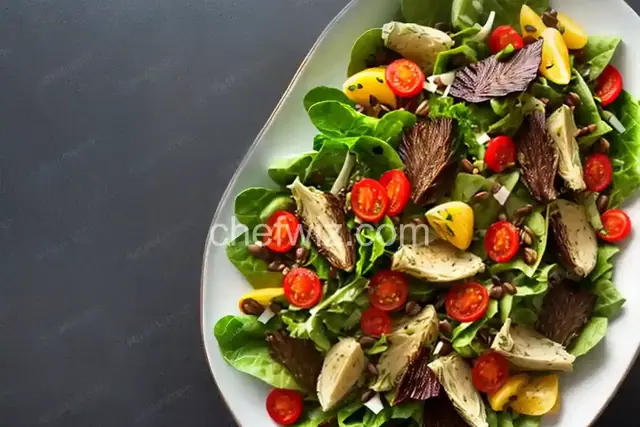
In a big bowl, mix together a combination of mixed greens, artichoke hearts, and onion.
In another bowl, whisk together oil, vinegar, seasoned salt, garlic powder, and pepper.
Pour the desired amount of dressing from the second bowl onto the salad in the first bowl, and mix well to evenly coat all the ingredients.
Sprinkle grated Parmesan cheese over the salad.
Serve the salad.
Are you craving a refreshing and healthy salad? Look no further than a salad with artichokes! This versatile vegetable adds a delightful flavor and texture to any salad, making it a popular choice among salad enthusiasts.
Artichokes are not only delicious but also packed with nutrients. They are an excellent source of fiber, vitamin C, vitamin K, and antioxidants. Including artichokes in your salad can help promote digestion, support heart health, and boost your immune system.
Moreover, artichokes add a unique texture to your salad. Their tender yet slightly crunchy leaves and creamy heart create a delightful contrast that elevates the overall salad experience.
Preparing artichokes may seem daunting, but it's easier than you think. Start by trimming the tough outer leaves until you reach the tender ones. Cut off the top of the artichoke and remove the choke, the inedible part in the center. Then, slice the artichoke into thin wedges or dice it into smaller pieces, depending on your preference.
To prevent discoloration, squeeze some lemon juice over the artichokes. This not only adds a tangy flavor but also helps retain their vibrant green color.
When it comes to creating a salad with artichokes, the possibilities are endless. You can mix and match various ingredients to suit your taste buds. Here are a few ideas to get you started:
Create a Mediterranean-inspired salad by combining artichokes with fresh tomatoes, cucumbers, olives, feta cheese, and a drizzle of olive oil. This combination offers a burst of flavors that will transport you to the sunny shores of Greece.
Combine fresh spinach leaves with artichokes, cherry tomatoes, red onions, and a creamy dressing for a delightful and nutritious salad. This combination is a perfect balance of flavors and textures.
Add some protein to your salad by including grilled chicken breast along with artichokes, mixed greens, cherry tomatoes, and a tangy vinaigrette. This salad is not only filling but also a complete meal in itself.
Salads with artichokes are not only healthy but also incredibly delicious. The combination of artichokes with various salad ingredients creates a symphony of flavors and textures that will leave you craving for more. So why not experiment with different salads and add a touch of artichoke goodness to your next meal?
Yes, artichokes are a great choice for both vegetarian and vegan diets as they are entirely plant-based.
Absolutely! Canned artichokes are a convenient alternative if fresh ones are not readily available. Just be sure to drain and rinse them before adding them to your salad.
No, artichokes are relatively low in calories. One medium-sized artichoke contains approximately 60 calories.
Yes, the tender part of the leaves can be eaten. Simply dip them in a tasty sauce and scrape the flesh off with your teeth. The heart of the artichoke is also edible and highly prized.
While artichokes may not be as commonly found as other vegetables, they are still relatively easy to find in most grocery stores and farmers' markets, especially during their peak season.
While it's possible to eat raw artichokes, they are typically cooked or marinated to enhance their flavor and texture. Cooking also helps soften the tough outer leaves.
To keep fresh artichokes at their best, store them in the refrigerator in a plastic bag. They can stay fresh for up to a week when properly stored.
Yes, you can freeze artichoke hearts. Simply blanch them in boiling water for a few minutes, cool them down, and store them in an airtight container or freezer bag. They can last up to six months in the freezer.
AprilCook, recipe developer and the heart of Chefwiz. More about April