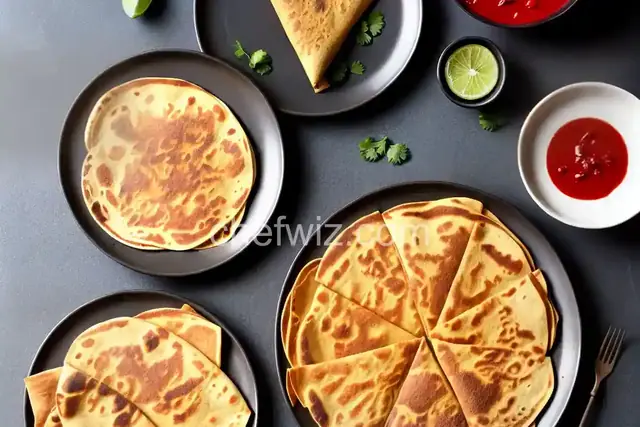
Roti Canai/Paratha (Indian Pancake)
Rate this recipeBe the first to rate
 By AprilPublished
 Have you ever tasted a dish that not only satisfies your taste buds but also takes you on a journey through the rich culinary traditions of India?
 By AprilPublished
 Have you ever tasted a dish that not only satisfies your taste buds but also takes you on a journey through the rich culinary traditions of India?
In a bowl, combine warm water, salt, and sugar.
In a large mixing bowl, place the flour and use your fingertips to work in 3 1/2 tablespoons of ghee.
In another bowl, beat an egg with 1 teaspoon of water and add it to the flour mixture.
Gradually mix the warm water mixture into the flour mixture, kneading until the dough becomes soft and pliable.
Form the dough into balls and let them rest in a well-oiled bowl for 2 to 3 hours.
On a flat greased surface, take a dough ball and flatten it using the heel of your palm to create a paper-thin circle.
Spread 1 teaspoon of ghee inside the circle and fold the edges together to form a square roti. Repeat with the remaining dough.
Heat about 1 tablespoon of ghee on a griddle or skillet over medium heat.
Cook the roti until browned, approximately 1 to 3 minutes per side.
Have you ever tasted a dish that not only satisfies your taste buds but also takes you on a journey through the rich culinary traditions of India? If not, then you must try Roti Canai/Paratha, a mouthwatering Indian pancake that will leave you craving for more.
Imagine a soft, fluffy pancake with layers so delicate that they melt in your mouth. That's exactly what you get with Roti Canai/Paratha. This popular Indian flatbread is made by folding and rolling the dough multiple times to create those delightful layers. The result is a flaky and crispy pancake that pairs perfectly with a variety of savory and spicy dishes.
Preparing Roti Canai/Paratha is an art that requires skill and patience. The dough is made by combining flour, water, and a pinch of salt. It is then kneaded until it becomes elastic and smooth. The dough is left to rest for some time, allowing the gluten to relax and make the rolling process easier.
Once the dough has rested, it is divided into small portions and rolled out into thin circles. Oil or ghee is spread on the surface, followed by a sprinkling of flour. The dough is then folded in a unique way, resembling a fan fold or a paper airplane. The folded dough is rolled out once again, creating those tantalizing layers.
Roti Canai/Paratha is a versatile dish that can be enjoyed in various ways. It serves as an excellent accompaniment to curries, gravies, and chutneys. The flaky texture of the pancake provides a delightful contrast to the rich and flavorful curries, making it a match made in heaven. Whether it's a spicy chicken curry or a tangy vegetable masala, Roti Canai/Paratha adds a unique touch to every meal.
But Roti Canai/Paratha is not limited to savory dishes alone. It can also be enjoyed as a sweet treat. You can drizzle it with honey, sprinkle it with sugar, or even stuff it with your favorite fruits and nuts. The possibilities are endless, and each bite will transport you to a world of culinary bliss.
Roti Canai/Paratha holds a special place in the hearts of many Indians. It is not just a food item; it is a symbol of cultural heritage and tradition. In many Indian households, making Roti Canai/Paratha is a family affair. It brings people together, as they gather around the kitchen to roll out the dough, share stories, and create memories.
Moreover, Roti Canai/Paratha has also gained popularity in other parts of the world. It has become a staple in Malaysian cuisine, where it is often served with a side of curry or as a street food snack. The flaky and crispy texture of Roti Canai/Paratha has won the hearts of people from different cultures, making it a truly global delight.
Roti Canai/Paratha originated in India and has since become popular in various South Asian and Southeast Asian countries.
While Roti Canai and Paratha are often used interchangeably, Roti Canai is typically thinner and crispier, while Paratha is thicker and softer.
While oil or ghee is traditionally used to make Roti Canai/Paratha, you can also use butter or margarine as a substitute.
Yes, you can freeze Roti Canai/Paratha for later use. Simply wrap them in plastic wrap or aluminum foil and store them in an airtight container in the freezer.
To reheat Roti Canai/Paratha, simply place them on a hot griddle or skillet for a few minutes until they are heated through. You can also microwave them for a quick reheating option.
Yes, you can make Roti Canai/Paratha gluten-free by using a combination of gluten-free flours, such as rice flour, tapioca flour, and potato starch.
Roti Canai/Paratha is often served with curries, gravies, and chutneys. Some popular pairings include chicken curry, vegetable masala, and coconut chutney.
Yes, you can make Roti Canai/Paratha vegan by using plant-based oils, such as coconut oil or vegetable oil, and replacing dairy-based ghee with vegan butter or margarine.
In conclusion, Roti Canai/Paratha is not just a pancake; it is a culinary masterpiece that combines taste, texture, and tradition. Whether you enjoy it with a savory curry or as a sweet indulgence, this Indian delight will surely tantalize your taste buds and leave you craving for more.
AprilCook, recipe developer and the heart of Chefwiz. More about April