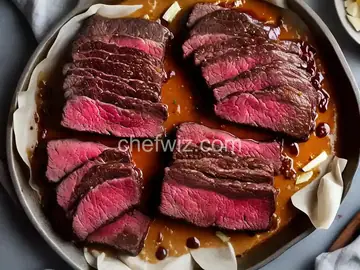
Roasted Duck
Rate this recipeBe the first to rate
 By AprilPublished
 Have you ever wondered how to achieve that perfect combination of crispy skin and succulent meat when roasting a duck?
 By AprilPublished
 Have you ever wondered how to achieve that perfect combination of crispy skin and succulent meat when roasting a duck?
Preheat the oven to 375 degrees F (190 degrees C).
In a small bowl, combine paprika, salt, and pepper. Rub the spice mixture onto the skin of the duck.
Place the duck in a roasting pan.
Roast the duck in the preheated oven for 1 hour.
After 1 hour, spoon 1/4 cup melted butter over the duck and continue cooking for 45 more minutes.
Spoon the remaining 1/4 cup melted butter over the duck and cook until it turns golden brown, approximately 15 more minutes.
Have you ever wondered how to achieve that perfect combination of crispy skin and succulent meat when roasting a duck? Well, look no further! In this article, we will delve into the art of roasting duck and uncover the secrets to a mouthwatering masterpiece.
When it comes to roasting duck, the quality of the meat is paramount. Opt for a duck that is plump, with firm and evenly colored skin. This ensures that you will end up with a tender and flavorful dish.
Before roasting, it is essential to prepare the duck properly. Start by removing any excess fat from the cavity and neck. This will prevent the meat from becoming greasy during the cooking process. Additionally, score the skin to allow the fat to render off, resulting in that coveted crispy texture.
Seasoning is key when it comes to enhancing the flavors of the duck. A simple combination of salt, pepper, and herbs such as thyme or rosemary can do wonders. Rub the seasoning both inside and outside the duck to ensure a well-balanced taste.
Now that our duck is perfectly prepared, it's time to roast it to perfection. Preheat your oven to the desired temperature and place the duck on a rack in a roasting pan. This allows the heat to circulate evenly, resulting in a crispy exterior and tender interior.
Roasting a duck is a labor of love that requires patience. Start by roasting the duck at a higher temperature to render off excess fat and achieve that crispy skin. Then, reduce the temperature and continue cooking until the meat is cooked to your desired level of doneness.
To infuse the duck with even more flavor, basting is essential. Every 20 minutes or so, remove the duck from the oven and brush it with its own juices. This will ensure a moist and succulent result that will have your taste buds dancing with delight.
Once your duck is beautifully roasted, it's time to plate up and savor the fruits of your labor. Carve the duck into succulent slices and serve it alongside your favorite accompaniments. Whether it's roasted vegetables or a tangy fruit sauce, the possibilities are endless.
Roasted duck, when prepared with care and attention, is a culinary delight. By choosing the perfect duck, preparing it meticulously, and roasting it to perfection, you can create a dish that will impress even the most discerning palates. So, why wait? Embark on your culinary journey and roast a duck that will leave your taste buds yearning for more!
The cooking time for roasting a duck depends on its size and the desired level of doneness. As a general rule, a 4-5 pound duck will take around 2-3 hours to roast.
While it is common to stuff poultry, it is not recommended to stuff a duck. The high fat content of the duck can make the stuffing greasy and affect the overall cooking time and texture of the meat.
Scoring the skin and roasting at a higher temperature initially helps render off the fat and achieve that desirable crispy skin. Basting the duck during the cooking process also contributes to the final texture.
Roasted duck pairs well with a variety of side dishes. Some popular options include roasted potatoes, steamed vegetables, or a fresh green salad.
Absolutely! Leftover roasted duck can be used in various dishes such as salads, sandwiches, or even stir-fries. Its rich flavor adds a delightful twist to any recipe.
The best way to determine if a duck is cooked is by using a meat thermometer. Insert it into the thickest part of the thigh, and it should read 165°F (74°C) for fully cooked meat.
Duck fat is a prized ingredient in cooking. You can strain and store the rendered duck fat for future use. It adds a unique flavor to dishes like roasted potatoes or can be used for frying.
Absolutely! Grilling a duck adds a smoky flavor and a charred exterior to the meat. Just make sure to monitor the temperature and use indirect heat for even cooking.
AprilCook, recipe developer and the heart of Chefwiz. More about April