Roasted and Reverse Seared Prime Rib Recipe
Rate this recipeBe the first to rate
 By AprilPublished
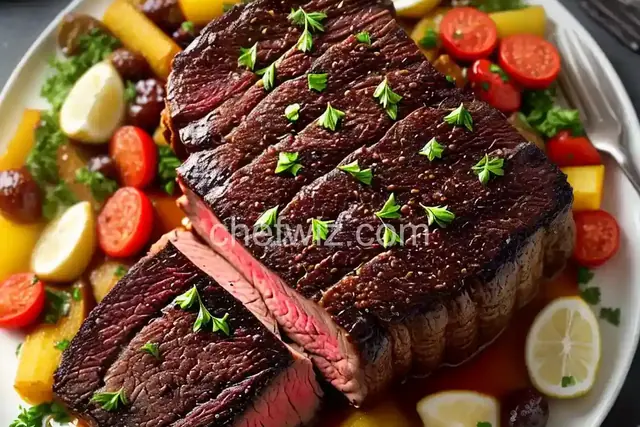
 Are you ready to indulge in a succulent and flavorful prime rib that will leave your taste buds dancing with delight?
 By AprilPublished
 Are you ready to indulge in a succulent and flavorful prime rib that will leave your taste buds dancing with delight?
Preheat the oven to the lowest possible temperature setting, such as 150°F (66°C) or higher if needed. Note that some ovens may not go below 250°F/121°C.
Generously season the roast with salt and pepper.
Place the roast, fat side up, on a V-rack in a large roasting pan or on a wire rack in a rimmed baking sheet.
Put the roast in the oven and cook until the center registers 120-125°F (49-52°C) for rare, 130°F (54°C) for medium-rare, or 135°F (57°C) for medium to medium-well. This will take approximately 5 1/2 to 6 1/2 hours in a 150°F oven or 3 1/2 to 4 hours in a 250°F oven.
Remove the roast from the oven and loosely cover it with aluminum foil. Let it rest in a warm area of the kitchen for at least 30 minutes to 1 1/2 hours.
Meanwhile, preheat the oven to the highest possible temperature setting, such as 500 to 550°F (260 to 288°C).
Ten minutes before serving, take off the foil, return the roast to the hot oven, and cook for 6 to 10 minutes until the exterior is well-browned and crisp.
Take the roast
Are you ready to indulge in a succulent and flavorful prime rib that will leave your taste buds dancing with delight? Look no further because we have the perfect recipe for you. In this article, we will explore the art of roasting and reverse searing prime rib to perfection. Whether you're a seasoned chef or a novice in the kitchen, this is a dish that will impress your family and friends.
Roasting prime rib is a culinary journey that requires patience and precision. The key is to cook the meat slowly at a low temperature to ensure a tender and juicy result. Think of it as a marathon rather than a sprint. By roasting the prime rib, you allow the heat to penetrate the meat evenly, resulting in a perfectly cooked piece of beef.
But how do you achieve this slow and steady cooking process? It's simple. Start by preheating your oven to a low temperature, around 250°F (120°C). This gentle heat will ensure that the meat cooks evenly from edge to edge. Place the prime rib on a wire rack in a roasting pan, fat side up. This allows the fat to melt and baste the meat as it cooks, adding flavor and moisture.
Seasoning is the key to transforming a good prime rib into an exceptional one. While salt and pepper are the classics, consider adding your own twist to the mix. Experiment with herbs and spices to create a flavor profile that suits your taste. Whether it's rosemary, thyme, garlic, or a blend of your favorite spices, the choice is yours.
Once you've seasoned the prime rib to perfection, it's time to place it in the oven. Remember, patience is a virtue. Allow the meat to roast slowly, checking its internal temperature periodically. A meat thermometer is your best friend during this process. The ideal internal temperature for a medium-rare prime rib is around 135°F (57°C). This ensures a rosy pink center that is both tender and juicy.
If you're looking for a different twist on the traditional roasting method, reverse searing is the way to go. This technique involves searing the prime rib at a high temperature first, followed by a slow roast. The result? A beautiful crust with a perfectly cooked interior.
To reverse sear your prime rib, start by preheating your oven to a moderate temperature, around 300°F (150°C). Place the seasoned prime rib on a wire rack in a roasting pan and sear it in the oven for a short period of time. This high-heat sear will create a flavorful crust on the outside of the meat.
Once you've achieved the desired sear, reduce the oven temperature to a low heat, around 225°F (107°C). Allow the prime rib to continue cooking slowly until it reaches the desired internal temperature. Remember to use a meat thermometer to ensure accuracy.
After the prime rib has reached its ideal internal temperature, it's time to let it rest. Resting the meat allows the juices to redistribute, resulting in a tender and juicy final product. Cover the prime rib loosely with foil and let it rest for at least 15 minutes before carving.
When it's time to carve, be sure to slice against the grain. This ensures that each slice is tender and easy to chew. Serve your masterpiece with your favorite sides and enjoy the compliments from your guests.
Roasting and reverse searing prime rib are two techniques that elevate this classic dish to new heights. Whether you choose the slow and steady roasting method or the sizzling reverse searing technique, your prime rib will be a showstopper on any occasion.
Remember to be patient, experiment with seasonings, and use a meat thermometer for the perfect result. And don't forget to enjoy every juicy and flavorful bite of this mouthwatering delight. Happy cooking!
The cooking time will depend on the size of your prime rib. As a general rule, calculate around 15 minutes of cooking time per pound of meat.
Absolutely! Feel free to experiment with different herbs, spices, and marinades to create a flavor profile that suits your taste.
For a medium-rare prime rib, aim for an internal temperature of around 135°F (57°C).
Searing the prime rib before roasting is optional but highly recommended. It adds flavor and creates a beautiful crust on the meat.
If you have any leftovers, store them in an airtight container in the refrigerator. They can be enjoyed cold or reheated.
Absolutely! A rub is a convenient way to season your prime rib. Simply apply the rub evenly on the meat before cooking.
While a meat thermometer is highly recommended for accuracy, you can still cook a prime rib without one. However, it's important to keep a close eye on the cooking time and check the doneness by slicing into the meat.
Yes, you can! Grilling a prime rib adds a smoky flavor to the meat. Follow the same roasting or reverse searing technique, but use indirect heat on the grill.
AprilCook, recipe developer and the heart of Chefwiz. More about April