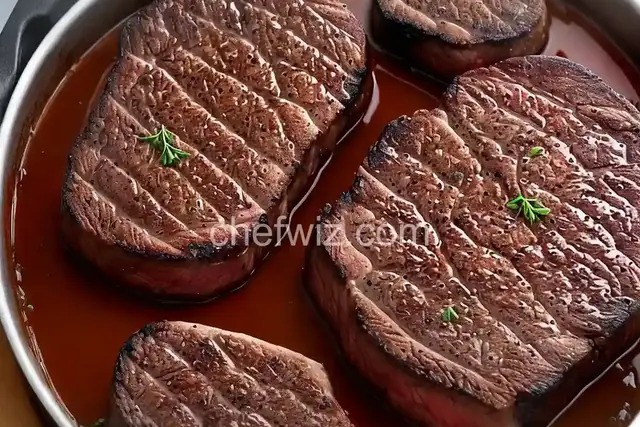
Reverse-Sear Filet Mignon (or Ribeye Filet)
Rate this recipeBe the first to rate
 By AprilPublished
 Have you ever wondered how to achieve that perfect, mouthwatering steak with a crispy, caramelized crust and a juicy, tender center?
 By AprilPublished
 Have you ever wondered how to achieve that perfect, mouthwatering steak with a crispy, caramelized crust and a juicy, tender center?
Season both sides of the steak with salt and let it sit on a rack placed in a sheet pan at room temperature for 10 minutes.
Preheat the oven to 200 degrees F.
Insert a probe thermometer horizontally into the side of the steak and roast it until the internal temperature reaches 120 degrees F, which should take around 30 minutes.
Take the steak out of the oven and let it rest uncovered for 10 minutes.
Meanwhile, heat a 12-inch cast-iron pan over high heat until it reaches a temperature of at least 600 degrees F, which usually takes about 10 minutes. You can test the temperature by dropping half a teaspoon of water into the pan - it should evaporate completely in 5 seconds.
Lightly brush both sides of the steak with peanut oil.
Sear the steak on each side for 1 minute.
Let the steak rest on a rack for 5 minutes, then slice it diagonally against the grain before serving.
Have you ever wondered how to achieve that perfect, mouthwatering steak with a crispy, caramelized crust and a juicy, tender center? Look no further than the reverse-sear method. This cooking technique, which involves searing the steak after it's been slow-cooked to perfection, is a game-changer for steak lovers everywhere.
Unlike the traditional searing method, where the steak is seared first and then finished in the oven, the reverse-sear method ensures that the steak is cooked evenly from edge to edge. By slow-cooking the steak at a low temperature before searing, you have better control over the doneness of the steak, resulting in a perfectly cooked piece of meat every time.
Think of it this way: Imagine you're baking a cake. You wouldn't start by turning the oven to its highest temperature and throwing the batter in. Instead, you'd set the oven to a lower temperature, allowing the cake to cook slowly and evenly. Once it's nearly done, you crank up the heat to give it that golden, crispy crust. The same principle applies to reverse-searing a steak.
The first step in reverse-searing is to preheat your oven to a low temperature, around 250°F (120°C). Season your steak with salt, pepper, and any other desired seasonings, and place it on a wire rack set over a baking sheet. This setup allows for even airflow and prevents the steak from steaming in its own juices.
Next, insert a meat thermometer into the thickest part of the steak, making sure it doesn't touch the bone if there is one. Slowly cook the steak in the oven until it reaches your desired internal temperature. This can take anywhere from 30 minutes to an hour, depending on the thickness of the steak and your preferred level of doneness.
Once the steak has reached the desired temperature, remove it from the oven and let it rest for a few minutes. While the steak is resting, heat a cast-iron skillet or grill pan over high heat. Add a splash of oil and sear the steak for about a minute on each side until it develops a beautiful crust.
By reverse-searing your steak, you're ensuring that it cooks evenly from edge to edge. The slow-cooking process in the oven allows the steak to reach its desired internal temperature without overcooking the outer layers. When you sear the steak at the end, you're adding that irresistible crust that elevates the flavor and texture to a whole new level.
Whether you're cooking a filet mignon or a ribeye filet, the reverse-sear method is a foolproof way to achieve a perfectly cooked steak every time. So why not give it a try and take your steak game to the next level?
The reverse-sear method is a foolproof way to achieve a perfectly cooked steak with a deliciously crispy crust and a juicy, tender center. By slow-cooking the steak in the oven before searing, you have better control over the doneness and ensure even cooking throughout. So why not give it a try and elevate your steak game to a whole new level?
Absolutely! While filet mignon and ribeye filet are popular choices, you can use the reverse-sear method for any thick-cut steak.
Use a meat thermometer to check the internal temperature. For medium-rare, aim for around 130°F (54°C), and for medium, aim for around 140°F (60°C). Remember to remove the steak from the oven a few degrees below your desired temperature, as it will continue to cook during the resting period.
Absolutely! Simply follow the same steps, but instead of searing the steak on a stovetop, preheat your grill to high heat and sear the steak for a minute on each side.
While marinating can add flavor to the steak, it's not necessary for the reverse-sear method. The slow-cooking process allows the natural flavors of the steak to shine, and the searing at the end adds a delicious crust.
It's best to thaw the steak before reverse-searing to ensure even cooking. If you're in a pinch, you can thaw the steak in a cold water bath before proceeding with the reverse-sear method.
While a cast-iron skillet or grill pan is ideal for searing, you can use any heavy-bottomed pan that can withstand high heat.
While using a wire rack allows for more even airflow, you can still reverse-sear a steak in the oven without one. Simply place the steak directly on a baking sheet lined with parchment paper or aluminum foil.
Absolutely! Set up your grill for indirect heat by placing the hot coals on one side and the steak on the other. Close the lid and let the steak slowly cook until it reaches the desired internal temperature. Then, move the steak over the hot coals to sear it for a minute on each side.
Absolutely! Seasoning the steak before slow-cooking allows the flavors to penetrate the meat. However, be mindful of using salt, as it can draw out moisture and result in a drier steak.
AprilCook, recipe developer and the heart of Chefwiz. More about April