Real Hungarian Goulash (No Tomato Paste Here)
Rate this recipeBe the first to rate
 By AprilPublished
 Have you ever tasted a dish that whisked you away to a different time and place?
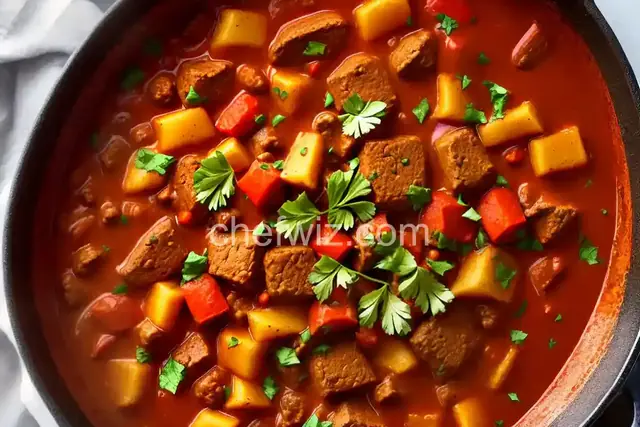 By AprilPublished
 Have you ever tasted a dish that whisked you away to a different time and place?
Heat a large pot over medium heat and melt the lard.
Add the onions to the pot and cook them in the melted lard until they become soft and translucent, which should take around 5 to 8 minutes.
Stir in the beef and paprika into the onions.
Reduce the heat to low and let the mixture simmer for 1 hour, stirring occasionally.
After 1 hour, add 1 cup of water to the pot and continue simmering. If the mixture becomes too dry, add more water as needed.
Simmer the mixture for about 1 more hour, or until the meat is tender and easily falls apart and the onion sauce thickens.
Finally, season the dish with salt and pepper according to your taste preferences.
Have you ever tasted a dish that whisked you away to a different time and place? A dish that was not only a feast for your taste buds but also a journey for your imagination? Look no further than real Hungarian goulash. This hearty and flavorful dish is a true masterpiece of Hungarian cuisine. In this article, we will delve into the secrets of authentic Hungarian goulash, exploring its rich history, unique ingredients, and the best cooking techniques to bring this traditional dish to life.
Just like a time machine, a spoonful of Hungarian goulash can transport you back to the 9th century, where nomadic Hungarian herdsmen roamed the vast plains of Central Europe. These skilled horsemen needed a dish that would sustain them through long rides and harsh weather conditions. Thus, goulash was born. Originally cooked in cauldrons over open fires, goulash was a hearty stew made with simple ingredients such as meat, onions, and paprika. Over time, goulash evolved and became an integral part of Hungarian culture.
Authentic Hungarian goulash is all about the ingredients. The star of the show is, of course, the meat. Tender beef, preferably from the shoulder or chuck, is the traditional choice. The meat is cut into bite-sized pieces, allowing it to soak up all the rich flavors of the dish. Onions, garlic, and paprika are also essential components, adding depth and complexity to the stew. Don't forget the potatoes, which not only thicken the goulash but also provide a comforting and satisfying element to the dish. With these key ingredients, you're well on your way to creating an authentic Hungarian goulash.
Creating a real Hungarian goulash requires time and patience. The meat needs to be browned to perfection, allowing those caramelized flavors to develop. The onions are sautéed until golden and fragrant, releasing their natural sweetness. Then comes the star of the show, the paprika. This vibrant red spice is the soul of Hungarian goulash, infusing the stew with its distinct smoky and slightly sweet flavor. The goulash is simmered slowly, allowing the flavors to meld together and create a harmonious symphony of taste. The end result? A bowl of goulash that will transport you straight to the heart of Hungary.
Real Hungarian goulash is a dish that goes beyond its ingredients. It is a journey through time, a taste of history. With its tender beef, fragrant onions, and vibrant paprika, this traditional stew captures the essence of Hungarian cuisine. So why not embark on your own culinary adventure and recreate the magic of Hungarian goulash in your own kitchen? Get ready to savor the flavors of Hungary and indulge in a bowl of real Hungarian goulash.
Hungarian goulash is a rich and flavorful stew made with tender beef, onions, garlic, and paprika. It is traditionally served with potatoes or dumplings. American goulash, on the other hand, is a pasta dish made with ground beef, tomatoes, and macaroni.
While beef is the traditional choice, you can experiment with other meats such as pork or lamb. Just make sure to choose cuts that are suitable for slow cooking.
Hungarian goulash is not known for its spiciness. The paprika used in the dish provides a rich, smoky flavor rather than heat. However, you can adjust the spiciness to your liking by adding more or less paprika.
Absolutely! Hungarian goulash is well-suited for slow cooking. Simply brown the meat and sauté the onions before transferring everything to the slow cooker. Let it cook on low for 6-8 hours or on high for 3-4 hours.
Yes, Hungarian goulash freezes well. Allow it to cool completely before transferring it to airtight containers or freezer bags. It can be stored in the freezer for up to 3 months.
Some popular side dishes include Hungarian dumplings (nokedli), boiled potatoes, or crusty bread. These accompaniments help soak up the flavorful sauce and complete the meal.
Yes, Hungarian goulash is naturally gluten-free. However, if you plan to serve it with dumplings or bread, make sure to use gluten-free alternatives.
Absolutely! While the traditional goulash recipe doesn't include many vegetables besides onions and potatoes, you can certainly add carrots, bell peppers, or mushrooms for added flavor and texture.
AprilCook, recipe developer and the heart of Chefwiz. More about April