PW's Prime Rib with Rosemary Salt Crust
Rate this recipeBe the first to rate
 By AprilPublished
 Are you craving a juicy and tender prime rib that will leave your taste buds dancing with delight?
 By AprilPublished
 Are you craving a juicy and tender prime rib that will leave your taste buds dancing with delight?
Preheat the oven to 500 degrees F.
Cut the rib eye in half to ensure even cooking.
Heat oil in a large skillet over high heat.
Sear both halves of the rib eye until they turn a dark golden color, around 2 to 3 minutes per side.
Place the peppercorns in a bag and crush them with a rolling pin.
Remove the leaves from the thyme and rosemary sprigs.
In a separate bowl, mix the crushed peppercorns, rosemary leaves, thyme leaves, salt, and garlic.
Pour olive oil over the rib eye and then add the rub mixture, patting it slightly to ensure it sticks to the meat.
Roast the rib eye for 20 minutes in the preheated oven.
Reduce the oven temperature to 275 degrees F and continue roasting until a meat thermometer registers 125 degrees F for rare/medium-rare, approximately 20 more minutes (keep in mind that the roast will continue to cook slightly after it is removed from the oven).
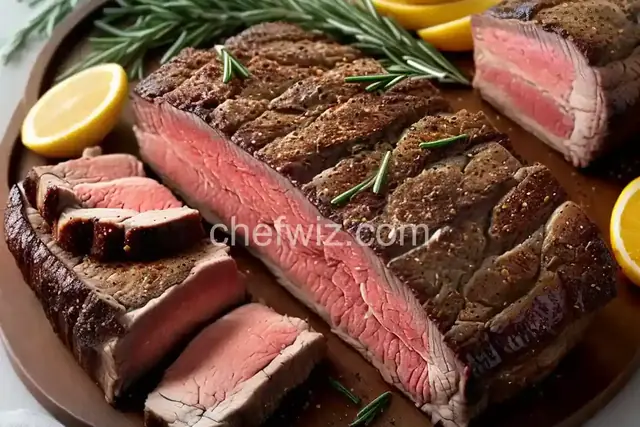
Remove the rib eye from the oven and allow it to rest for 15 to 20 minutes before slicing.
Are you craving a juicy and tender prime rib that will leave your taste buds dancing with delight? Look no further! In this article, we will explore PW's Prime Rib with Rosemary Salt Crust. This mouthwatering dish is sure to impress your family and friends at your next special occasion. Get ready to indulge in a culinary masterpiece that will have everyone asking for seconds!
When it comes to prime rib, the seasoning is key. PW's Rosemary Salt Crust adds a burst of flavor that elevates this classic dish to a whole new level. The combination of fresh rosemary and coarse salt creates a beautiful crust that seals in the juices and infuses the meat with a fragrant aroma. It's like a symphony of flavors dancing on your palate!
Rosemary is not only a versatile herb, but it also brings a unique earthy flavor to the prime rib. Its woody aroma and pine-like taste perfectly complement the rich and succulent meat. Think of it as the secret ingredient that takes this dish from ordinary to extraordinary!
Now that we've covered the seasoning, let's talk about the cooking process. Cooking a prime rib may seem intimidating, but with PW's foolproof method, it's easier than you think. The key is to achieve the perfect balance of tenderness and juiciness.
Just like a slow dance, cooking a prime rib requires patience. Slow-roasting the meat at a low temperature allows the fat to render, resulting in a tender and moist prime rib. It's like a gentle caress that ensures every bite melts in your mouth.
Are you ready to impress your guests with a show-stopping prime rib? Here's how to make PW's Prime Rib with Rosemary Salt Crust:
Start by combining fresh rosemary and coarse salt in a bowl. This mixture will be the star of the show, so make sure to coat the entire prime rib generously. The crust will create a barrier that locks in the flavors and keeps the meat tender and juicy.
Before placing the prime rib in the oven, preheat it to a low temperature. This slow and steady approach will ensure even cooking and a perfectly pink center. It's like setting the stage for a culinary masterpiece!
Place the prime rib on a rack in a roasting pan, fat side up. Slowly roast the meat at a low temperature, allowing the flavors to meld together and the fat to render. It's like a symphony of aromas that will fill your kitchen with anticipation.
Once the prime rib reaches your desired level of doneness, remove it from the oven and let it rest. This step is crucial as it allows the juices to redistribute, resulting in a tender and succulent piece of meat. It's like giving the prime rib a well-deserved break before it takes center stage on your plate!
PW's Prime Rib with Rosemary Salt Crust is the epitome of a show-stopping dish. The combination of the flavorful crust and the slow-roasted tender meat will leave your guests speechless. So, the next time you're looking to impress, remember to follow PW's recipe for a prime rib that will have everyone coming back for more!
A1: While fresh rosemary is recommended for the best flavor, you can use dried rosemary as a substitute. Just keep in mind that the flavor may not be as vibrant.
A2: It's best to let the prime rib rest for at least 20 minutes before carving. This allows the juices to redistribute and results in a more flavorful and tender piece of meat.
A3: While coarse salt is recommended for the crust, you can use other types of salt if that's what you have on hand. Just adjust the amount accordingly, as different salts have varying levels of saltiness.
A4: The best way to determine the doneness of the prime rib is by using a meat thermometer. For medium-rare, the internal temperature should be around 135°F (57°C).
A5: Absolutely! Feel free to experiment with different herbs to customize the flavor of the crust. Thyme, garlic, and black pepper are popular additions that pair well with rosemary.
A6: Yes, this recipe works well for both bone-in and boneless prime rib. Just adjust the cooking time accordingly, as boneless prime rib tends to cook faster.
A7: Prime rib pairs perfectly with a variety of side dishes. Creamy mashed potatoes, roasted vegetables, and a fresh green salad are popular choices that complement the rich flavors of the meat.
A8: Yes, you can adjust the cooking time based on the size of your prime rib. As a general rule, calculate the cooking time at 15 minutes per pound of meat for medium-rare.
AprilCook, recipe developer and the heart of Chefwiz. More about April