Prime Rib Roast
Rate this recipeBe the first to rate
 By AprilPublished
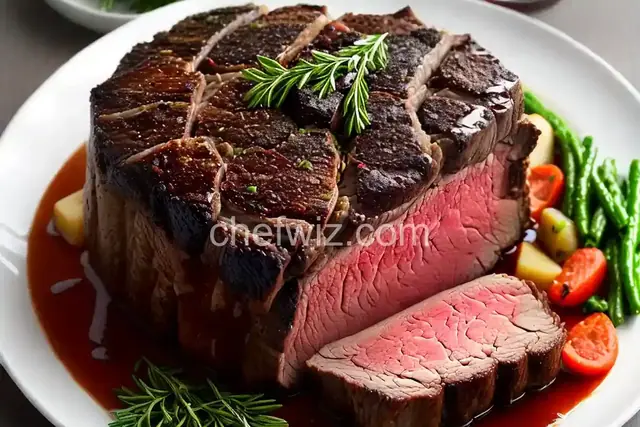
 When it comes to special occasions, nothing quite beats the elegance and grandeur of a prime rib roast.
 By AprilPublished
 When it comes to special occasions, nothing quite beats the elegance and grandeur of a prime rib roast.
Preheat the oven to 350 degrees F.
Using a sharp knife, make a slit 3/4 of the way up the fat cap.
Pull the fat cap back and season the entire roast with Essence.
Place the garlic, thyme, and onion slices in-between the meat and fat cap.
Lay the fat cap back over the vegetables and meat.
Secure the fat cap to the meat by tying them together at six different intervals using butchers twine.
Cover the exposed fat cap with cracked black pepper.
Place the roast, rib side down, on a wire rack.
Place the wire rack in the oven on the center rack.
Place a drip pan on the bottom rack of the oven to catch the drippings.
Roast for 1 1/2 to 2 hours for medium rare.
Remove the roast from the oven and let it rest for 10 to 15 minutes before slicing.
Cut away the butchers twine using a knife.
Carve the roast into individual servings.
Reserve the drippings for later use.
Combine all ingredients thoroughly and store in an airtight jar or container.
When it comes to special occasions, nothing quite beats the elegance and grandeur of a prime rib roast. This mouthwatering cut of beef is tender, juicy, and bursting with flavor. Whether you're hosting a holiday feast or celebrating a milestone, a prime rib roast is sure to impress your guests. In this article, we'll explore everything you need to know about this classic dish, from selecting the perfect cut to cooking it to perfection.
When selecting a prime rib roast, it's important to choose the right cut of beef. Look for a well-marbled piece with a layer of fat on top. This fat will not only add flavor but also keep the meat moist during the cooking process. Remember, the quality of the meat will greatly influence the final result, so it's worth investing in a high-quality cut.
Before cooking the prime rib roast, it's essential to properly prepare it. Start by seasoning the meat generously with salt, pepper, and any other desired herbs and spices. Let the roast sit at room temperature for at least an hour to allow the flavors to penetrate the meat. This step is crucial for ensuring a flavorful and evenly cooked roast.
There are several cooking techniques you can use to prepare a prime rib roast. One popular method is the low and slow approach, where the roast is cooked at a low temperature for an extended period. This results in a perfectly tender and juicy roast. Another option is the reverse sear method, which involves cooking the roast at a low temperature first and then searing it at high heat to create a delicious crust.
When cooking a prime rib roast, temperature is key. Use a meat thermometer to ensure accurate results. For a medium-rare roast, aim for an internal temperature of around 135°F (57°C). Keep in mind that the roast will continue to cook as it rests, so it's important to remove it from the oven a few degrees below the desired doneness.
Once the prime rib roast is cooked to perfection, it's crucial to let it rest before carving. This allows the juices to redistribute throughout the meat, resulting in a tender and flavorful roast. Let the roast rest for at least 15-20 minutes before slicing. When carving, be sure to slice against the grain to ensure maximum tenderness.
A prime rib roast pairs beautifully with a variety of side dishes. Classic accompaniments include creamy mashed potatoes, roasted vegetables, and a rich red wine jus. The combination of flavors and textures will elevate your dining experience and leave your guests in awe.
A prime rib roast is not just a dish; it's a centerpiece that brings people together. Its succulent flavors and melt-in-your-mouth texture make it the perfect choice for any special occasion. So, the next time you want to impress your loved ones, consider preparing a prime rib roast. With the right cut, proper preparation, and cooking techniques, you'll create a memorable dining experience that will be talked about for years to come.
It's recommended to let the roast rest for at least 15-20 minutes before carving. This allows the juices to redistribute and ensures a tender and flavorful roast.
While it's not recommended, you can choose to cook a prime rib roast without seasoning. However, keep in mind that seasoning enhances the flavor of the meat and adds depth to the overall dish.
The best temperature for a medium-rare prime rib roast is around 135°F (57°C). Remember to remove the roast from the oven a few degrees below the desired doneness, as it will continue to cook as it rests.
A prime rib roast is traditionally made using a rib roast cut, also known as standing rib roast. While you can use a different cut, the flavor and tenderness may vary.
While both cuts come from the same area of the cow, a prime rib roast is a larger piece of meat that includes several ribs, while a ribeye steak is a smaller, individual steak cut from the rib roast.
Using a meat thermometer is the most accurate way to determine if the prime rib roast is done. For medium-rare, aim for an internal temperature of around 135°F (57°C).
Yes, you can cook a prime rib roast on a grill. However, the cooking time and technique may vary compared to cooking it in an oven. It's important to monitor the temperature and adjust the cooking method accordingly.
The number of servings will depend on the size of the roast and the portion size. As a general guideline, you can expect around 2 servings per pound of meat.
AprilCook, recipe developer and the heart of Chefwiz. More about April