Prime Rib Roast with Red Wine Au Jus
Rate this recipeBe the first to rate
 By AprilPublished
 Are you a fan of succulent, melt-in-your-mouth prime rib roast?
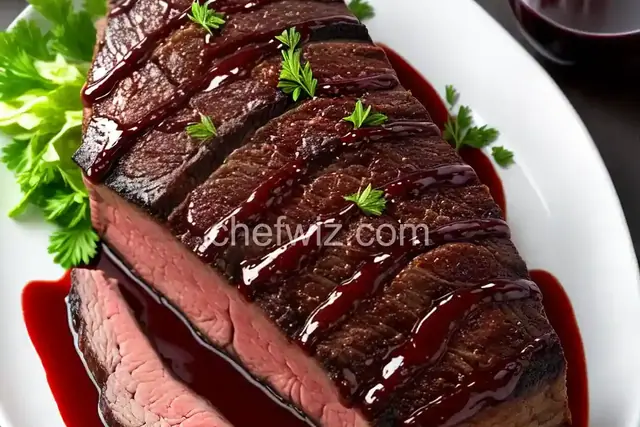 By AprilPublished
 Are you a fan of succulent, melt-in-your-mouth prime rib roast?
Preheat the oven to 450 degrees F.
Generously season the prime rib roast with salt and pepper.
Place the seasoned roast on a rack inside a roasting pan.
Roast the prime rib for 30 minutes.
Reduce the oven temperature to 350 degrees F.
Continue roasting the prime rib until an instant-read thermometer inserted into the thickest part of the roast reads 130 degrees F for medium-rare (approximately 1 1/2 hours).
Transfer the cooked prime rib to a platter and cover it loosely with foil to keep it warm.
Place the roasting pan on the stove over medium-high heat.
Turn two burners to high heat.
Add butter to the pan and use a wooden spoon to stir and scrape the bottom of the pan.
Pour in beef stock and red wine and cook until the liquid is reduced by half (approximately 20 minutes).
Whisk in rosemary and season the mixture with salt and pepper.
Slice the cooked prime rib between the bones to create individual steaks.
Serve each steak with the prepared red wine au jus.
Are you a fan of succulent, melt-in-your-mouth prime rib roast? Do you enjoy the rich flavors of a red wine au jus? If so, then you're in for a treat! In this article, we're going to explore the delectable world of prime rib roast with red wine au jus. Get ready to tantalize your taste buds and impress your guests with this mouthwatering dish!
Prime rib roast is often hailed as the king of roasts. Its superior marbling and tenderness make it a truly special cut of meat. As the name suggests, prime rib comes from the primal rib section of the beef, which is known for its rich and juicy flavors. When cooked to perfection, prime rib roast offers a luxurious dining experience that is hard to beat.
Cooking a prime rib roast requires a delicate balance of time and temperature. The goal is to achieve a beautiful medium-rare doneness, where the meat is rosy pink and juicy. To achieve this, it's crucial to use a meat thermometer to monitor the internal temperature of the roast. This ensures that you don't overcook the meat and end up with a dry and tough result.
Before cooking the prime rib roast, it's important to season it well. A simple yet flavorful blend of salt, pepper, garlic, and herbs can work wonders. The seasoning helps to enhance the natural flavors of the meat and create a delicious crust on the outside.
The key to a tender prime rib roast is to cook it slowly and at a low temperature. This allows the meat to cook evenly and retain its moisture. A good rule of thumb is to cook the roast at 325째F (163째C) for about 15-20 minutes per pound. This method ensures that the inner part of the roast reaches the desired medium-rare temperature while the outer part develops a beautiful crust.
No prime rib roast is complete without a luscious red wine au jus. The au jus is a flavorful sauce made from the pan drippings of the roast, combined with red wine and other aromatics. It adds an extra layer of richness and depth to the already delicious meat.
To make the red wine au jus, start by deglazing the roasting pan with red wine, scraping up all the browned bits from the bottom. This process helps to release all the flavorful juices stuck to the pan. Then, simmer the wine until it reduces slightly. Finally, add beef broth, herbs, and seasonings, and let it simmer until the flavors meld together into a tantalizing sauce.
Prime rib roast with red wine au jus is a culinary masterpiece that is sure to impress. The tender and juicy meat, paired with the rich and flavorful au jus, creates a dining experience that is truly exceptional. So, why not treat yourself and your loved ones to this delicious dish? With a little patience and attention to detail, you'll be rewarded with a meal that will be remembered for years to come!
While prime rib roast is the traditional choice, you can certainly use other cuts like ribeye or tenderloin. Just keep in mind that the cooking time and temperature may vary.
Use a meat thermometer to check the internal temperature. For medium-rare, aim for 135째F (57째C). Remember to let the roast rest for a few minutes before slicing.
Absolutely! You can substitute the red wine with beef broth or even grape juice for a non-alcoholic version. The flavors will still be delicious.
Yes, you can make the au jus ahead of time and reheat it when needed. Just store it in an airtight container in the refrigerator.
Classic accompaniments include creamy mashed potatoes, roasted vegetables, Yorkshire pudding, and horseradish sauce. The possibilities are endless!
It's best to slice the roast against the grain into thick, juicy slices. This helps to maintain the tenderness of the meat.
Yes, you can freeze the leftover roast for future enjoyment. Just make sure to wrap it tightly in foil or plastic wrap before placing it in the freezer.
Definitely! The flavorful au jus can be used as a base for gravies, sauces, or even to enhance the flavor of soups and stews.
AprilCook, recipe developer and the heart of Chefwiz. More about April