Pressure Cooker Chintan Shoyu Ramen
Rate this recipeBe the first to rate
 By AprilPublished
 Are you a fan of Japanese cuisine? Do you enjoy the rich and flavorful bowls of ramen that warm your soul?
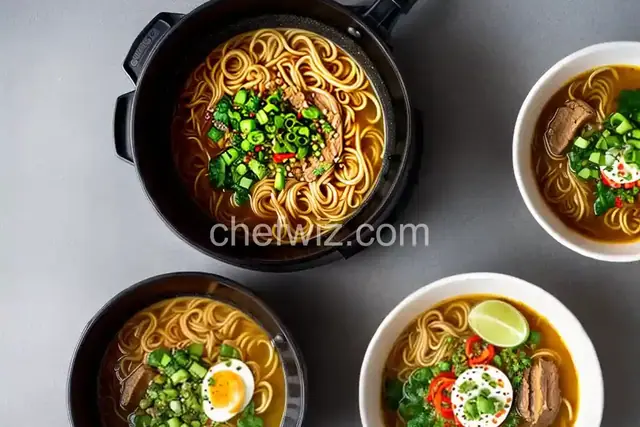 By AprilPublished
 Are you a fan of Japanese cuisine? Do you enjoy the rich and flavorful bowls of ramen that warm your soul?
In a bowl, mix salt and sugar thoroughly.
Sprinkle the sugar-and-salt mixture all over the pork belly, then remove any excess.
Place the pork belly in a zip-top bag and refrigerate for at least 8 to 24 hours.
Combine kombu and water for the tare in a covered container and refrigerate for at least 8 to 24 hours.
Put the chicken in a pressure cooker and cover it with 6 1/4 cups (1.5L) of water. Do not exceed the max-fill line.
Rinse the cured pork belly to remove the salt and sugar, then add it to the pressure cooker, placing it on top. The pork belly does not need to be submerged.
Cover the pressure cooker and bring it to low pressure. Cook for 40 minutes, then allow the pressure cooker to depressurize naturally.
In a large heatproof bowl, combine leek, onion, carrot, garlic, and ginger.
Carefully transfer the pork belly to a plate or rimmed baking sheet using tongs and a spatula.
Pour the broth through a fine-mesh strainer into the bowl of chopped vegetables. Stir the broth and add the kombu for the broth. Let it steep for 45 minutes.
Strain the broth into a large, clean mixing bowl, then transfer it to pint or other storage containers. Cover
Are you a fan of Japanese cuisine? Do you enjoy the rich and flavorful bowls of ramen that warm your soul? If so, you're in for a treat! In this article, we'll explore the world of pressure cooker chintan shoyu ramen and how you can easily recreate this delicious dish in your own kitchen. So, grab your chopsticks and let's dive in!
Chintan Shoyu Ramen is a type of Japanese ramen that is known for its clear, flavorful broth. Unlike its creamy counterparts like tonkotsu ramen, chintan shoyu ramen is made by simmering meat and vegetables for a long time to extract their essence. The result is a light yet intensely savory broth that is both comforting and satisfying.
Now, you may be wondering how you can achieve that rich and flavorful broth without spending hours in the kitchen. This is where the pressure cooker comes to the rescue! By using a pressure cooker, you can significantly reduce the cooking time while still extracting all the delicious flavors from the ingredients.
Creating the perfect chintan shoyu ramen requires a careful balance of ingredients. The broth is typically made with a combination of chicken, pork, and various vegetables. The chicken and pork bones add depth and richness to the broth, while the vegetables contribute their own unique flavors and aromas.
To enhance the umami flavor, soy sauce and mirin are added to the broth. Soy sauce adds a savory note, while mirin adds a touch of sweetness. These two ingredients work together to create a harmonious balance of flavors that will make your taste buds sing.
Now that you have a basic understanding of chintan shoyu ramen and the role of a pressure cooker, let's dive into the step-by-step process of making this delicious dish:
Start by gathering all the necessary ingredients for the broth, including chicken bones, pork bones, vegetables, soy sauce, and mirin. Make sure to wash and clean the bones thoroughly before use.
Heat some oil in your pressure cooker and sauté the vegetables until they become fragrant. This will help release their flavors and enhance the overall taste of the broth.
Add the chicken and pork bones to the pressure cooker, along with enough water to cover the ingredients. Be careful not to overfill the pressure cooker, as it needs some space to build pressure.
Secure the lid of the pressure cooker and cook the broth under high pressure for about 1-2 hours. This will allow the flavors to meld together and create a rich and aromatic broth.
Once the cooking time is up, carefully release the pressure from the cooker according to the manufacturer's instructions. This step ensures that you can safely open the cooker without any steam accidents.
Taste the broth and adjust the seasoning with soy sauce and mirin according to your preference. Remember, a good chintan shoyu ramen is all about balance, so take your time to find the perfect combination of flavors.
Cook the ramen noodles according to the package instructions and prepare your desired toppings, such as boiled eggs, sliced pork, green onions, and seaweed.
Finally, assemble your chintan shoyu ramen by placing the cooked noodles in a bowl, adding the broth, and arranging the toppings on top. Serve it piping hot and savor each spoonful of this delectable dish.
Pressure cooker chintan shoyu ramen is a delightful and comforting dish that you can easily make at home. With the help of a pressure cooker, you can achieve a rich and flavorful broth in a fraction of the time it would traditionally take. So, why not give it a try and enjoy a bowl of delicious ramen that will transport you to the streets of Japan?
While beef bones can add a different depth of flavor, they may result in a heavier and less traditional broth. It's best to stick to chicken and pork bones for an authentic chintan shoyu ramen experience.
The broth can be stored in an airtight container in the refrigerator for up to 3 days. Simply reheat it before using and adjust the seasoning if needed.
Absolutely! You can make a vegetarian version of chintan shoyu ramen by using vegetable broth and omitting the meat. Add a variety of vegetables and seasonings to create a flavorful vegetarian broth.
Yes, you can freeze the leftover broth in a freezer-safe container for up to 3 months. Thaw it in the refrigerator overnight before reheating.
Traditional chintan shoyu ramen contains soy sauce, which typically contains gluten. However, you can make it gluten-free by using gluten-free soy
AprilCook, recipe developer and the heart of Chefwiz. More about April