Portuguese Flan
Rate this recipeBe the first to rate
 By AprilPublished
 Are you craving a creamy and indulgent dessert that will transport you to the sunny beaches of Portugal?
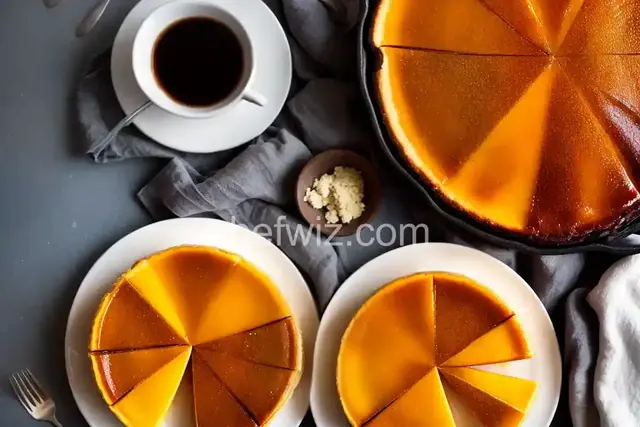 By AprilPublished
 Are you craving a creamy and indulgent dessert that will transport you to the sunny beaches of Portugal?
Preheat the oven to 325 degrees.
Making the caramel: In a medium saucepan, combine the sugar and water. Ensure that all sugar granules are washed down from the sides of the pan using a wet pastry brush.
Cook over moderate heat, swirling the pan occasionally, until the mixture turns golden brown and has a caramel scent. This should take around 10 to 15 minutes.
Pour the caramel into a 9-inch round cake pan and swirl it around to evenly coat the bottom and sides of the pan. Use an oven glove to hold the pan. Set it aside.
In a large mixing bowl, gently whisk together the eggs, egg yolks, sugar, vanilla, and 2 cups of half and half. Avoid incorporating air into the mixture.
In a small saucepan, bring the remaining half and half and port to a simmer. Gradually whisk this mixture into the egg mixture, whisking constantly until fully incorporated.
Pour the mixture through a strainer into the prepared cake pan.
Place the cake pan inside a large roasting pan and pour hot tap water into the roasting pan, filling it halfway up the sides of the cake pan.
Bake for approximately 1 to 1 1/4 hours, or until the center of the custard is slightly jiggly but not wavy.
Allow the custard to cool to room temperature, then cover it
Are you craving a creamy and indulgent dessert that will transport you to the sunny beaches of Portugal? Look no further than Portuguese Flan! This delectable treat is a popular dessert in Portugal, known for its smooth texture and rich flavors. In this article, we will explore the wonders of Portuguese Flan, its history, and how you can make it at home to impress your friends and family.
Just like the language and the culture, Portuguese cuisine has been influenced by various cultures throughout history. The roots of Portuguese Flan can be traced back to ancient Roman times, where custard-based desserts were enjoyed in many parts of Europe. Over the centuries, the recipe for flan evolved, incorporating local ingredients and techniques.
What makes Portuguese Flan so special? It's all about the texture and flavor. This dessert is incredibly smooth and velvety, almost like a silk scarf caressing your taste buds. The custard is made with eggs, milk, and sugar, creating a luscious base that is then caramelized to perfection. The combination of the creamy custard and the sweet caramel sauce is simply irresistible.
Creating the caramel sauce for Portuguese Flan is an art in itself. The sugar is heated until it melts and transforms into a golden syrup, giving the flan its signature caramel flavor. The caramelization process requires precision and patience, as it can quickly go from golden to burnt. But once you master the technique, you'll be rewarded with a caramel sauce that adds a delightful touch to your flan.
While the basic recipe for Portuguese Flan remains the same, there are variations that incorporate local ingredients and flavors. Some recipes call for a hint of lemon zest or a touch of cinnamon, adding a subtle Portuguese twist to the classic dessert. These small additions elevate the flan and make it even more special.
Now that you're familiar with the wonders of Portuguese Flan, it's time to try making it in your own kitchen. The process may seem intimidating at first, but with a little practice, you'll be able to create a flan that rivals the ones served in Portuguese cafes.
The first step is to prepare the custard. In a saucepan, heat the milk until it's warm but not boiling. In a separate bowl, whisk together the eggs and sugar until well combined. Slowly pour the warm milk into the egg mixture, whisking continuously. This will temper the eggs and prevent them from curdling. Once the custard is smooth, set it aside.
Next, it's time to caramelize the sugar. In a small saucepan, heat the sugar over medium heat. Stir the sugar constantly until it melts and turns into a golden syrup. Be careful not to burn the sugar, as it can happen quickly. Once the caramel is ready, pour it into the bottom of your flan mold or individual ramekins, swirling it around to coat the bottom evenly.
Now it's time to bring everything together. Pour the custard mixture into the flan mold or ramekins, on top of the caramel. Place the mold or ramekins in a larger baking dish filled with hot water, creating a water bath. This will ensure even cooking and prevent the flan from curdling. Bake the flan in a preheated oven until it's set but still slightly jiggly in the center. Once baked, remove from the oven and let it cool to room temperature. Then, refrigerate for at least a few hours or overnight to allow the flavors to meld and the flan to become firm.
A1: While the traditional recipe calls for whole milk, you can experiment with different types of milk, such as almond milk or coconut milk, to suit your dietary preferences.
A2: If stored properly in an airtight container, Portuguese Flan can last for up to five days in the refrigerator.
A3: Yes, you can freeze Portuguese Flan. Just make sure to wrap it tightly in plastic wrap or place it in an airtight container before freezing. Thaw it in the refrigerator before serving.
A4: Portuguese Flan is delicious on its own, but you can also serve it with fresh berries, a dollop of whipped cream, or a drizzle of chocolate sauce for an extra touch of decadence.
A5: Eggs are an essential ingredient in Portuguese Flan as they give it a smooth and creamy texture. There are eggless flan recipes available, but they will have a different taste and texture.
A6: While granulated white sugar is traditionally used for the caramel, you can experiment with different types of sugar, such as brown sugar or coconut sugar, to add a unique flavor to your flan.
A7: The flan is done baking when it's set around the edges but still slightly jiggly in the center. It will firm up as it cools.
A8: Absolutely! You can pour the custard mixture into individual ramekins instead of a large flan mold for individual servings. Just adjust the baking time accordingly.
In conclusion, Portuguese Flan is a delightful dessert that combines the creaminess of custard with the sweetness of caramel. Its origins can be traced back to ancient Roman times, and it has become a beloved treat in Portugal. With a few simple ingredients and a little kitchen magic, you can recreate this indulgent dessert in the comfort of your own home. So why not give it a try and treat yourself to a taste of Portugal?
AprilCook, recipe developer and the heart of Chefwiz. More about April