Portuguese Egg Custard Tarts
Rate this recipeBe the first to rate
 By AprilPublished
 Have you ever indulged in a warm, flaky pastry with a creamy, velvety custard filling that simply melts in your mouth?
 By AprilPublished
 Have you ever indulged in a warm, flaky pastry with a creamy, velvety custard filling that simply melts in your mouth?
In a large bowl, mix salt, 1 cup flour, and ½ cup water until a shaggy dough forms.
Knead the dough for about 5 minutes until it is elastic but still sticky. Alternatively, beat the dough on medium speed in a stand mixer with the paddle attachment until it pulls away from the sides of the bowl.
Wrap the dough in plastic and let it sit for 30 minutes to relax the gluten.
Soften the butter to the consistency of sour cream.
Flour a clean work surface generously. Place the dough on the surface and dust it with flour. Coat the rolling pin with flour.
Roll the dough out to form a 12 square, using additional flour to prevent sticking.
Brush off excess flour from the dough. Divide the dough into three equal columns.
Spread 2½ tablespoons of butter over the left and center columns, leaving a ½ border around the edges.
Fold the right column over the middle column, then fold the far left column over the middle, as if folding a letter into thirds.
Rotate the dough 90° counterclockwise.
Flour the work surface and dough again. Roll out the dough to a 12 square.
Repeat the buttering and folding process.
Rotate the folded dough 90° counterclockwise, flouring the surface as needed.
Roll out the
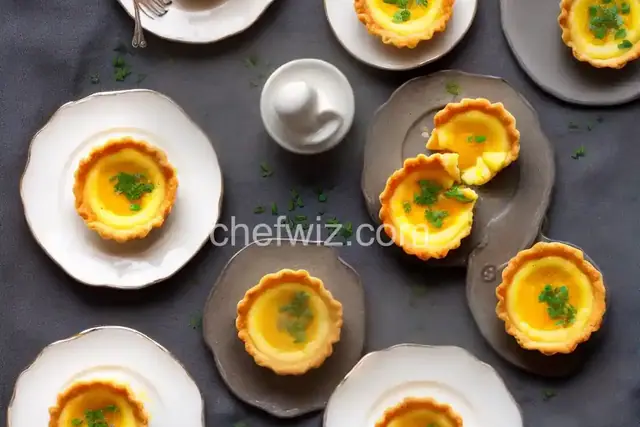
Have you ever indulged in a warm, flaky pastry with a creamy, velvety custard filling that simply melts in your mouth? If not, then you're missing out on one of Portugal's most beloved culinary treasures - Portuguese Egg Custard Tarts. These delectable treats, also known as Pastéis de Nata, are a true delight that will transport your taste buds to the sunny streets of Lisbon.
Like many culinary wonders, the history of Portuguese Egg Custard Tarts can be traced back to a stroke of culinary genius. Legend has it that these tarts were created by Catholic monks in the Jerónimos Monastery in Belém, a suburb of Lisbon, during the 18th century. Seeking a way to sustain themselves financially, the monks used egg yolks leftover from starching their religious garments to create a creamy custard filling. They then wrapped this decadent filling in delicate, buttery pastry and the Portuguese Egg Custard Tart was born.
What sets Portuguese Egg Custard Tarts apart from other pastries is the perfect balance of flavors they offer. The flaky, golden-brown pastry provides a satisfying crunch, while the rich and creamy custard filling offers a velvety smoothness that is simply irresistible. The custard is delicately sweetened and infused with hints of vanilla, making each bite a heavenly experience.
Portuguese Egg Custard Tarts are not just an ordinary dessert; they are a true culinary masterpiece. The process of making these tarts requires skill, precision, and a deep understanding of the delicate balance of flavors. From the perfectly baked pastry to the creamy custard filling, every element of this dessert is carefully crafted to create a symphony of flavors that will leave you craving for more.
Over the years, Portuguese Egg Custard Tarts have gained popularity not only in Portugal but around the world. Their unique combination of textures and flavors has captivated the hearts (and taste buds) of people from all walks of life. From cozy bakeries in Lisbon to bustling cafes in New York City, these tarts have become a global sensation.
Imagine walking into a bakery and being greeted by the enticing aroma of freshly baked Portuguese Egg Custard Tarts. As you take a bite into a warm tart, the delicate layers of pastry crumble beneath your teeth, giving way to the luscious custard filling that oozes out, filling your mouth with its creamy goodness. It's a moment of pure bliss that is hard to describe, but once experienced, it will forever be etched in your memory.
Portuguese Egg Custard Tarts are not only delicious on their own but also serve as a versatile base for creativity. They can be enjoyed as is or paired with a dollop of whipped cream, a sprinkle of cinnamon, or a drizzle of caramel sauce for an extra touch of decadence. These tarts can be enjoyed as a dessert, a snack, or even as a breakfast treat - there's no wrong time to savor their delightful flavors.
While the process requires some patience and skill, making Portuguese Egg Custard Tarts at home is definitely achievable with the right recipe and a bit of practice.
Yes, you can freeze Portuguese Egg Custard Tarts. Just make sure to cool them completely before wrapping them tightly and placing them in the freezer. When ready to enjoy, simply thaw them in the refrigerator overnight and reheat in the oven for a few minutes.
Traditional Portuguese Egg Custard Tarts are not gluten-free as they are made with a pastry that contains wheat flour. However, there are gluten-free variations available using alternative flours.
Absolutely! While vanilla extract adds a delightful aroma and flavor to the custard, you can experiment with other extracts such as almond, lemon, or even a hint of coffee to create your own unique twist.
To reheat leftover Portuguese Egg Custard Tarts, preheat your oven to a low temperature, around 250°F (120°C), and place the tarts on a baking sheet. Heat them for a few minutes until they are warmed through and enjoy!
While pre-made puff pastry can be used for convenience, homemade pastry will give you the best results in terms of taste and texture. The flakiness and buttery richness of homemade pastry elevate the overall experience of the tarts.
Portuguese Egg Custard Tarts have gained popularity worldwide and can be found in many countries. However, they remain a beloved culinary icon in Portugal, where they are enjoyed by locals and tourists alike.
Yes, you can make the custard filling ahead of time and refrigerate it until ready to use. Just make sure to give it a good stir before filling the pastry shells to ensure a smooth and creamy consistency.
Portuguese Egg Custard Tarts are traditionally served warm, allowing the custard to be soft and the pastry to be flaky. However, they can also be enjoyed at room temperature or chilled, depending on personal preference.
In conclusion, Portuguese Egg Custard Tarts are a sweet delight that should be on everyone's culinary bucket list. From their rich history to their perfect balance of flavors, these tarts are a true masterpiece. Whether you enjoy
AprilCook, recipe developer and the heart of Chefwiz. More about April