Pork Fried Rice
Rate this recipeBe the first to rate
 By AprilPublished
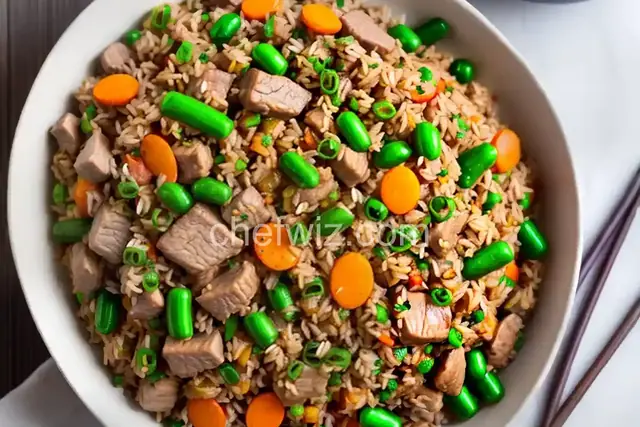
 Are you craving a delicious and satisfying meal? Look no further than pork fried rice!
 By AprilPublished
 Are you craving a delicious and satisfying meal? Look no further than pork fried rice!
Heat a large non-stick skillet over medium heat and melt the butter.
Add the pork, green onion, carrot, and broccoli to the skillet. Cook and stir until the pork is fully cooked, which should take around 7 to 10 minutes.
Transfer the pork mixture to a separate bowl and set it aside. Return the skillet to medium heat.
Crack an egg into the skillet and scramble it until it is completely set.
Add the pork mixture back into the skillet. Stir in the rice, peas, soy sauce, garlic powder, and ground ginger.
Cook and stir the mixture until it is heated through, which should take around 7 to 10 minutes.
Are you craving a delicious and satisfying meal? Look no further than pork fried rice! This popular dish is not only easy to make but also incredibly versatile. Whether you're a fan of Chinese cuisine or simply looking to try something new, pork fried rice is a fantastic option. In this article, we'll explore the ins and outs of this delectable dish, from its origins to the best tips for achieving the perfect balance of flavors. So, grab your wok and let's dive in!
Like many beloved dishes, the exact origins of pork fried rice are a bit hazy. Some believe it originated in China, while others attribute its creation to Chinese immigrants in the United States. Regardless of its beginnings, pork fried rice has become a staple in Chinese-American cuisine and is enjoyed by people all over the world.
One of the reasons pork fried rice is so beloved is its ability to balance various flavors in one dish. The combination of tender pork, savory soy sauce, and aromatic garlic creates a mouthwatering experience. The addition of vegetables like carrots, peas, and onions adds a refreshing crunch and vibrant color. The key is to ensure each ingredient is cooked to perfection, resulting in a harmonious medley of flavors.
Creating a delicious pork fried rice dish requires some skill and know-how. Here are a few tips to help you achieve the perfect outcome:
While traditional pork fried rice is undoubtedly delicious, there are endless variations to explore. You can add additional ingredients such as shrimp, chicken, or beef to create your own unique twist. Vegetarians can substitute the pork with tofu or tempeh for a protein-packed alternative. The possibilities are truly endless!
In conclusion, pork fried rice is a versatile and mouthwatering dish that is sure to satisfy your cravings. With its perfect balance of flavors and various customization options, it's a crowd-pleaser for any occasion. So, why not try your hand at making pork fried rice tonight? Your taste buds will thank you!
Yes, you can use any type of rice for pork fried rice. However, long-grain rice such as jasmine or basmati is commonly used for its fluffy texture and ability to absorb flavors well.
Absolutely! Pork fried rice can be easily adapted to suit different dietary preferences. Simply omit the pork and add extra vegetables or a plant-based protein like tofu or tempeh.
Pork fried rice comes together quickly, usually within 15-20 minutes. The key is to have all your ingredients prepped and ready to go before you start cooking.
Yes, you can freeze leftover pork fried rice. Allow it to cool completely, then transfer it to an airtight container or freezer bag. When ready to eat, simply thaw and reheat in a hot skillet or microwave.
Definitely! Pork can be substituted with other proteins like chicken, beef, shrimp, or even tofu. Feel free to get creative and experiment with different flavors and textures.
Yes, frozen vegetables can be used in pork fried rice. Just make sure to thaw them before adding them to the dish, as they can release excess moisture if added frozen.
Absolutely! If you enjoy a bit of heat, you can add some chili flakes, sriracha, or your favorite hot sauce to the dish. Adjust the amount according to your spice tolerance.
While soy sauce is the traditional choice for pork fried rice, you can certainly experiment with other sauces. Oyster sauce, hoisin sauce, or even a combination of soy sauce and fish sauce can add a unique twist to the dish.
AprilCook, recipe developer and the heart of Chefwiz. More about April