Pommes Frites
Rate this recipeBe the first to rate
 By AprilPublished
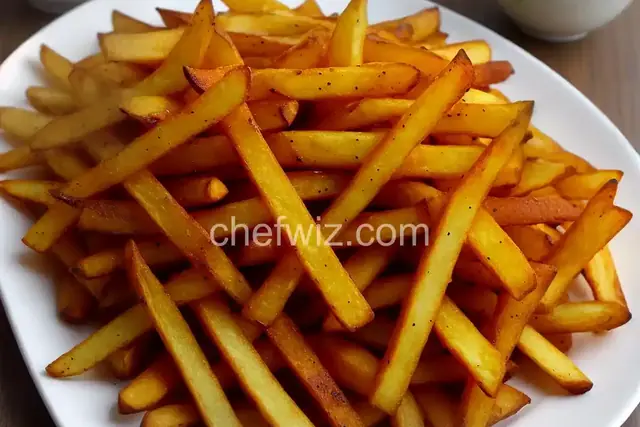
 Who can resist the golden, crispy perfection of a plate of pommes frites?
 By AprilPublished
 Who can resist the golden, crispy perfection of a plate of pommes frites?
Peel the potatoes and cut them into batons that are similar in length and width to your index finger.
Preheat a deep pot of oil to 325 degrees F.
Deep fry the potatoes in the oil for about 5 to 6 minutes, or until they turn a light golden color. Make sure not to overload the fryer. If needed, fry them in three separate batches.
Use a slotted spoon to remove the potatoes from the oil and let them cool down to room temperature.
Increase the temperature of the oil to 375 degrees F.
Deep fry the potatoes for an additional 2 minutes, or until they become crispy.
Remove the potatoes from the oil and transfer them into a colander or a bowl.
While the potatoes are still hot, sprinkle some salt on them.
Serve the potatoes with your favorite dipping sauce.
Mix all ingredients together.
Who can resist the golden, crispy perfection of a plate of pommes frites? These thin, delectable strips of deep-fried goodness are a staple in many cuisines around the world. Whether you enjoy them plain or smothered in ketchup, they are undeniably delicious. But have you ever wondered what makes the perfect French fry? In this article, we will delve into the art of making pommes frites and discover what sets them apart from ordinary fries.
Creating the perfect pommes frites is no easy task. It requires precision, patience, and the right technique. The secret to achieving that coveted crispy exterior lies in two simple steps: double frying and blanching. By blanching the potatoes first, you remove excess starch, ensuring a fluffy interior. Then, a second fry at a higher temperature results in a crispy, golden exterior. It's this two-step process that sets pommes frites apart from other fries.
When it comes to pommes frites, not all potatoes are created equal. The ideal potato for making French fries is one that is high in starch and low in moisture. Russet potatoes, with their dense, dry flesh, are the go-to choice for many chefs. Their high starch content allows for a fluffy interior, while their low moisture prevents sogginess. So, next time you're at the grocery store, reach for a bag of Russet potatoes to achieve that perfect fry.
An essential ingredient in the art of making pommes frites is the oil used for frying. The ideal oil should have a high smoke point and a neutral flavor, allowing the natural taste of the potatoes to shine through. Many chefs swear by peanut or vegetable oil for frying French fries. These oils can withstand the high temperatures required for deep frying and result in a crisp, golden fry that is not greasy.
Pommes frites, the beloved French fry, are a culinary delight that captures the hearts and taste buds of people around the world. The art of making these crispy delights lies in the double frying technique and the use of the right potato and oil. By following these steps and incorporating your own personal touch, you can create the perfect pommes frites that will leave everyone craving for more.
While you can use different types of potatoes, Russet potatoes are the preferred choice for their high starch content and low moisture.
Double frying ensures that the interior of the fries is fluffy while the exterior is crispy. It's a technique that gives pommes frites their unique texture.
Peanut or vegetable oil are popular choices due to their high smoke point and neutral flavor.
The ideal thickness for pommes frites is about 1/4 inch. This allows for even cooking and a crispy texture.
Yes, you can make pommes frites using a deep pot and a thermometer to monitor the oil temperature.
Blanch the potatoes for about 5 minutes to remove excess starch and ensure a fluffy interior.
It's best to season the fries immediately after frying while they are still hot. This allows the seasoning to adhere to the fries and enhances the flavor.
Cut the potatoes into uniform strips to ensure even cooking. This will result in a consistent texture throughout your batch of pommes frites.
AprilCook, recipe developer and the heart of Chefwiz. More about April