Pomegranate Syrup or Molasses
Rate this recipeBe the first to rate
 By AprilPublished
Have you ever wondered how a simple fruit like the pomegranate can transform into a luscious, sweet syrup or molasses?
 By AprilPublished
Have you ever wondered how a simple fruit like the pomegranate can transform into a luscious, sweet syrup or molasses?
In a 4-quart saucepan set over medium heat, combine the pomegranate juice, sugar, and lemon juice.
Stir occasionally until the sugar has completely dissolved.
Once the sugar has dissolved, reduce the heat to medium-low and continue cooking until the mixture has reduced to 1 1/2 cups, which should take around 50 minutes.
The consistency should be similar to syrup.
Remove the saucepan from the heat and let it cool for 30 minutes.
Transfer the syrup to a glass jar and allow it to cool completely.
Once cooled, cover the glass jar and store it in the refrigerator for up to 6 months.
To make the molasses:
In a 4-quart saucepan set over medium heat, combine the pomegranate juice, sugar, and lemon juice.
Stir occasionally until the sugar has completely dissolved.
Once the sugar has dissolved, reduce the heat to medium-low and continue cooking until the mixture has reduced to 1 cup, which should take approximately 70 minutes.
The consistency should be thick, similar to molasses.
Remove the saucepan from the heat and let it cool for 30 minutes.
Transfer the molasses to a glass jar and allow it to cool completely.
Once cooled, cover the glass jar and store it in the refrigerator for up to 6 months
Have you ever wondered how a simple fruit like the pomegranate can transform into a luscious, sweet syrup or molasses? Well, you're in for a treat! In this article, we will delve into the world of pomegranate syrup and molasses, exploring their differences, uses, and benefits. So, let's dive right in!
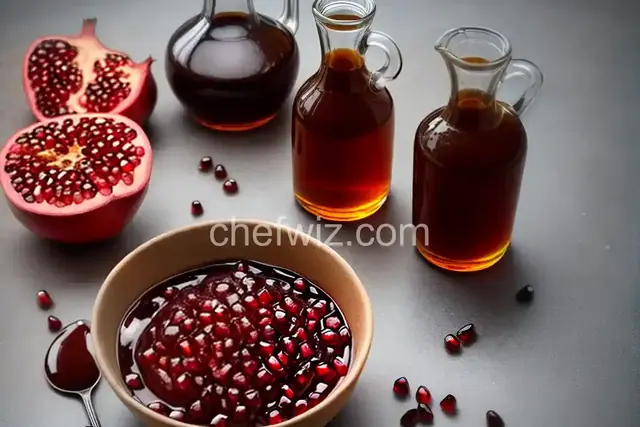
Pomegranate syrup, also known as pomegranate molasses, is a thick, dark, and tangy syrup made from pomegranate juice. It is created by reducing the juice down to a syrupy consistency, resulting in a rich and flavorful liquid. This versatile syrup has been used for centuries in Middle Eastern, Mediterranean, and Persian cuisine.
One of the most common uses of pomegranate syrup is as a flavoring agent. Its sweet and tart taste adds a unique depth of flavor to both sweet and savory dishes. It can be drizzled over salads, roasted vegetables, grilled meats, or used as a glaze for poultry. Pomegranate syrup can also be added to beverages, such as cocktails and mocktails, for a burst of tanginess.
Pomegranate syrup is not only delicious but also packed with health benefits. It is a great source of antioxidants, which help protect your body against harmful free radicals. Additionally, it contains vitamins C and K, as well as potassium. Studies have also suggested that pomegranate syrup may have anti-inflammatory properties and aid in digestion.
Pomegranate molasses, on the other hand, has a slightly different consistency compared to pomegranate syrup. It is thicker, stickier, and more concentrated. The molasses is made by further reducing the syrup and adding sugar and lemon juice for balance.
Similar to pomegranate syrup, pomegranate molasses is a popular ingredient in Middle Eastern and Mediterranean cuisine. It is often used as a glaze for meats, a marinade for kebabs, or a topping for desserts like ice cream and yogurt. The intense flavor of pomegranate molasses adds a delightful complexity to both sweet and savory dishes.
In addition to the health benefits of pomegranate syrup, pomegranate molasses contains high levels of antioxidants and polyphenols. These compounds have been linked to various health benefits, including heart health, improved digestion, and reduced inflammation. Pomegranate molasses is also a natural source of iron and can help boost your energy levels.
A1: Absolutely! Making your own pomegranate syrup or molasses at home is simple. All you need is pomegranate juice, sugar (for molasses), and lemon juice. Just reduce the juice on low heat until it reaches the desired thickness, and voila!
A2: Yes, both pomegranate syrup and molasses are vegan-friendly as they are made from pomegranate juice without any animal-derived ingredients.
A3: Absolutely! Pomegranate syrup or molasses can be used as a natural sweetener alternative in various recipes, including sauces, dressings, and even baked goods.
A4: When stored in an airtight container in the refrigerator, pomegranate syrup or molasses can last for several months. Just make sure to check for any signs of spoilage before using.
A5: While pomegranate syrup and molasses are generally safe to consume, it's important to note that they are high in sugar content. Individuals with diabetes or those watching their sugar intake should consume them in moderation.
A6: Absolutely! Pomegranate syrup or molasses adds a delightful touch to cocktails, providing a unique flavor profile and a vibrant color.
A7: Yes, pomegranate syrup or molasses can be used to create delicious, tangy salad dressings. Its sweet and tart taste pairs well with various salad ingredients.
A8: Pomegranate syrup or molasses can be found in specialty food stores, Middle Eastern or Mediterranean markets, or online. Look for reputable brands that offer high-quality products.
In conclusion, pomegranate syrup and molasses are delightful additions to your culinary adventures. Their unique flavors, health benefits, and versatility make them a must-have in any kitchen. Whether you choose to drizzle pomegranate syrup over a salad or use pomegranate molasses as a glaze for your favorite meat, these delicious creations will surely elevate your dishes to the next level. So, why not give them a try?
AprilCook, recipe developer and the heart of Chefwiz. More about April