Perfect Prime Rib With Red Wine Jus Recipe
Rate this recipeBe the first to rate
 By AprilPublished
 Picture this: it's a special occasion, and you want to impress your guests with a show-stopping main course.
 By AprilPublished
 Picture this: it's a special occasion, and you want to impress your guests with a show-stopping main course.
Adjust the oven rack to the lower position and preheat the oven to 250°F (120°C).
Heat oil in a large Dutch oven over high heat until it starts to smoke lightly.
Add the beef shins or oxtail and soup bones to the Dutch oven. Cook, flipping and stirring occasionally, until they are well browned on all sides, which should take about 15 minutes. Use tongs to transfer the beef to a large plate and set it aside.
Add the carrot, celery, and onion to the pot and cook, stirring occasionally, until they start to lightly brown, approximately 8 minutes.
Add the wine, bay leaves, thyme, and parsley to the pot. Cook while scraping up the browned bits from the bottom of the pot. Bring it to a boil and cook until it is reduced by half, which should take about 10 minutes.
Add the chicken stock to the pot, bring it to a boil, and cook until it is reduced by half, another 10 minutes.
Arrange the beef shins or oxtail and bones in the bottom of a large roasting pan. Pour the entire contents of the Dutch oven on top of the bones and spread the vegetables around into an even layer. Place a V-rack on top, arranging the meat and vegetables so that the rack rests on the bottom of the pan.
Generously season the rib roast with salt and
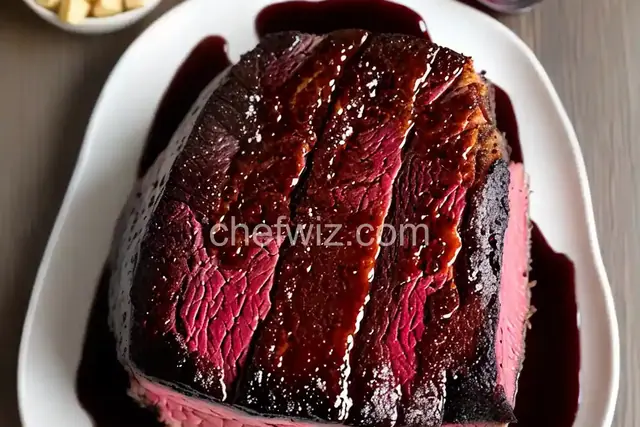
Picture this: it's a special occasion, and you want to impress your guests with a show-stopping main course. What could be more impressive than a perfectly cooked prime rib, juicy and tender, with a rich and flavorful red wine jus? It's a culinary masterpiece that will leave everyone in awe. But how do you achieve that level of perfection? Fear not, because today I'm going to reveal the secrets to cooking the perfect prime rib. Let's dive in!
When it comes to prime rib, the first step to success is choosing the right cut of meat. Look for a well-marbled piece, as the fat will melt during cooking and infuse the meat with incredible flavor and tenderness. A bone-in prime rib is also a great option, as the bone helps to retain moisture and adds an extra layer of flavor.
Now that you have your prime rib, it's time to season it to perfection. A simple yet effective seasoning blend of salt, pepper, garlic powder, and herbs like rosemary or thyme will do wonders. The key is to generously coat the entire surface of the meat, allowing the flavors to penetrate and enhance every bite.
Slow cooking is the secret to achieving that melt-in-your-mouth tenderness. Preheat your oven to a low temperature, around 250°F (120°C), and place your prime rib on a roasting rack in a shallow pan. This method allows for even heat distribution, ensuring a consistent and perfectly cooked roast.
Invest in a reliable meat thermometer, as it will be your best friend throughout the cooking process. Insert the thermometer into the thickest part of the roast, making sure to avoid touching the bone. Cook until the internal temperature reaches your desired level of doneness: around 120°F (49°C) for rare, 130°F (54°C) for medium-rare, and 140°F (60°C) for medium. Remember, the temperature will continue to rise slightly during resting.
Resting is just as important as cooking when it comes to prime rib. Once your roast reaches the desired temperature, remove it from the oven and let it rest for at least 20 minutes. This allows the juices to redistribute, resulting in a moist and tender roast. Cover the meat loosely with foil to keep it warm during the resting period.
No prime rib is complete without a luscious red wine jus. While your roast is resting, it's time to whip up this decadent sauce. Start by deglazing the roasting pan with red wine, scraping up all those delicious browned bits. Simmer the wine until it's reduced by half, then add beef broth and continue simmering until the sauce has thickened slightly. Finish off with a pat of butter for a silky-smooth texture.
Cooking the perfect prime rib may seem like a daunting task, but with the right techniques and a little patience, you can achieve culinary excellence. Remember to choose a high-quality cut, season it generously, cook it low and slow, and let it rest before carving. And don't forget to top it off with a delicious red wine jus. Your guests will be blown away by your culinary prowess!
The cooking time will depend on the size of your roast and your desired level of doneness. As a general rule, allow for about 15-20 minutes per pound of meat.
While red wine is traditional, you can experiment with different varieties to suit your taste. Just remember that the wine should be of good quality, as it will greatly impact the flavor of the sauce.
Absolutely! Seasoning the meat several hours or even overnight before cooking allows the flavors to penetrate deeper, resulting in a more flavorful roast.
Prime rib pairs perfectly with a variety of sides such as roasted vegetables, creamy mashed potatoes, or a fresh green salad. Let your creativity run wild!
To carve a prime rib, start by cutting perpendicular to the bone to create thick slices. Then, cut each slice to the desired thickness. Don't forget to save the bones for a delicious beef stock or bone broth!
Absolutely! To freeze leftover prime rib, wrap it tightly in plastic wrap or aluminum foil and place it in a freezer-safe bag or container. It will keep well for up to three months.
To reheat leftover prime rib, place it in a preheated oven at a low temperature, around 250°F (120°C), for about 15-20 minutes. This will help retain the moisture and prevent the meat from drying out.
Definitely! The red wine jus is incredibly versatile and can be used to enhance the flavor of other beef dishes, roasted vegetables, or even as a dipping sauce for crusty bread.
AprilCook, recipe developer and the heart of Chefwiz. More about April