Perfect Hard-Boiled Eggs Recipe
Rate this recipeBe the first to rate
 By AprilPublished
 Are you tired of ending up with overcooked or undercooked hard-boiled eggs?
 By AprilPublished
 Are you tired of ending up with overcooked or undercooked hard-boiled eggs?
If you plan to serve the eggs cold, prepare a large bowl by adding 1 tray of ice cubes and filling it with water.
In a large pot, bring 3 quarts (2.8L) of water to a boil.
Carefully place the eggs into the pot and let them boil for 30 seconds.
Cover the pot tightly, reduce the heat to low (ensuring that the water maintains a gentle simmer), and let the eggs cook for 11 minutes.
If you're serving the eggs hot, you can serve them immediately.
However, if you want to serve the eggs cold, transfer them to the prepared bowl of ice water and let them cool for at least 15 minutes before peeling them under cool running water.
To peel the eggs, gently tap them all over to crack the shell, and then remove the shell under a thin stream of running water. The water will help in lifting off the shell from the egg.
Are you tired of ending up with overcooked or undercooked hard-boiled eggs? Do you struggle to achieve that perfectly cooked, creamy yolk and tender white? Look no further! In this article, we will share with you our foolproof guide to making the perfect hard-boiled eggs every single time. So, let's dive in and master the art of boiling eggs!
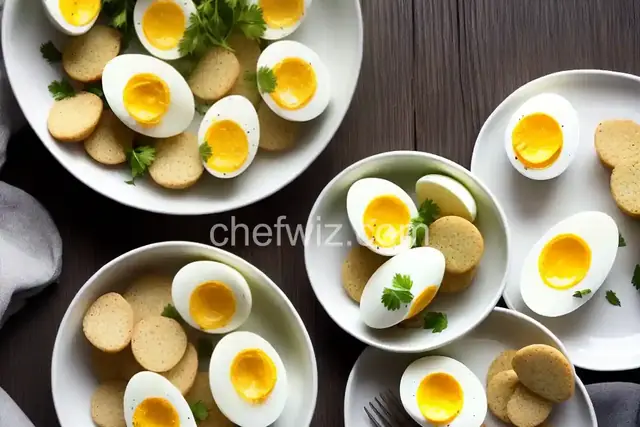
Before we get into the nitty-gritty of cooking hard-boiled eggs, let's understand why it's important to cook them properly. Overcooked eggs can result in a rubbery texture, while undercooked eggs may have a runny or even raw yolk. Achieving the perfect balance ensures a velvety, golden center and a firm yet tender white. Perfectly cooked hard-boiled eggs are not only delicious on their own but also essential for a variety of recipes like deviled eggs, egg salad, or as a nutritious snack.
So, what's the secret to cooking the perfect hard-boiled eggs? It all starts with selecting the right eggs. Fresh eggs, although delicious, can be a bit tricky to peel. It's best to use eggs that are at least a week old for easier peeling. Now, let's move on to the cooking process itself.
Start by placing your eggs in a single layer at the bottom of a saucepan or a pot. Make sure they are not overcrowded. Next, fill the pot with enough water to cover the eggs by about an inch. Adding a pinch of salt to the water can help prevent the eggs from cracking during the cooking process.
Place the pot on the stove over medium-high heat and bring the water to a rolling boil. Once the water reaches a boil, reduce the heat to low and let it simmer gently for about a minute.
After simmering the eggs for a minute, remove the pot from the heat and cover it with a lid. Let the eggs sit in the hot water for about 9-12 minutes, depending on your desired level of doneness. For soft-boiled eggs, aim for 9 minutes, while for fully set yolks, go for 12 minutes.
Once the eggs are cooked to perfection, carefully transfer them to a bowl filled with ice water using a slotted spoon. Let them sit in the ice water for at least 5 minutes to cool and stop the cooking process. Once cooled, gently tap each egg on a hard surface and roll it between your hands to loosen the shell. Peel the eggs under cool running water to make the process even easier.
Fresh eggs have a cloudy outer shell, whereas older eggs have a clearer shell. You can also perform the float test by placing an egg in a bowl of water. If it sinks, it's fresh; if it floats, it's old.
While you can use fresh eggs for hard-boiling, they can be more challenging to peel. It's best to use eggs that are at least a week old for easier peeling.
Adding a pinch of salt to the water when boiling the eggs can help prevent them from cracking. Starting with room temperature eggs can also minimize the risk of cracking.
Hard-boiled eggs can be stored in the refrigerator for up to one week. To maintain their freshness, keep them in their shells until ready to eat or use in recipes.
Yes, you can reheat hard-boiled eggs. Simply place the egg in a bowl of hot water for a few minutes or microwave it on low power for 30 seconds at a time until warmed through.
While it's challenging to achieve a perfectly centered yolk every time, you can increase your chances by gently spinning the eggs while placing them in the saucepan. This helps center the yolk before cooking.
Yes, you can use the same method for cooking soft-boiled eggs. Simply adjust the cooking time to achieve your desired level of doneness.
Absolutely! Hard-boiled eggs are a great source of protein, vitamins, and minerals. They are a nutritious and satisfying snack that can be enjoyed as part of a balanced diet.
In conclusion, cooking the perfect hard-boiled eggs is a skill that can be easily mastered. By following our foolproof method and using the right eggs, you'll be able to achieve consistently delicious results. So, don your chef's hat and get cracking – the perfect hard-boiled eggs await!
AprilCook, recipe developer and the heart of Chefwiz. More about April