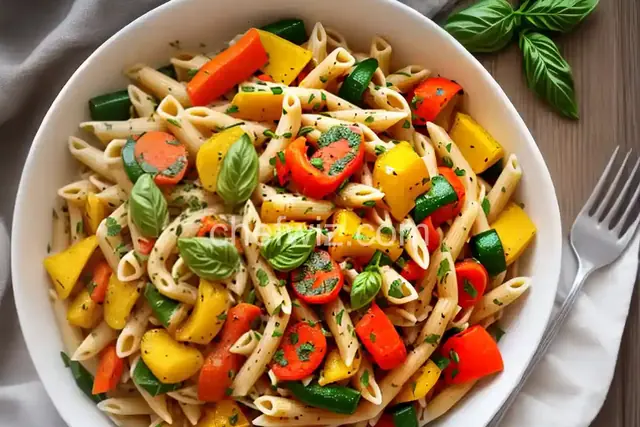
Pasta Primavera with Carrots, Bell Peppers and Squash
Rate this recipeBe the first to rate
 By AprilPublished
 Have you ever craved a dish that combines the comforting taste of pasta with the vibrant flavors of fresh vegetables?
 By AprilPublished
 Have you ever craved a dish that combines the comforting taste of pasta with the vibrant flavors of fresh vegetables?
In a large pot, bring salted water to a boil.
Add the pasta and cook according to the directions on the label.
Reserve 1/2 cup of the cooking water, then drain the pasta.
In a large nonstick skillet, melt the butter over medium heat.
Add the carrots, bell peppers, squash, chile, garlic, thyme, and vinegar to the skillet.
Season with 1/2 teaspoon of salt and a few grinds of pepper.
Reduce the heat to medium-low, cover the skillet, and cook the vegetables until they are very tender (about 20 minutes), stirring halfway through.
Pour the heavy cream into the skillet and bring it to a simmer.
Gradually stir in the parmesan cheese until it is just melted (about 1 minute).
Add the tomatoes to the skillet.
Increase the heat to medium and add the cooked pasta and the reserved cooking water.
Toss the ingredients together until the pasta is coated (about 2 minutes).
Season with salt and pepper.
Top with additional parmesan cheese.
Have you ever craved a dish that combines the comforting taste of pasta with the vibrant flavors of fresh vegetables? Look no further than Pasta Primavera! This delightful Italian-inspired dish is a celebration of spring, bursting with colorful vegetables like carrots, bell peppers, and squash. In this article, we will explore the beauty of Pasta Primavera and how you can create this mouthwatering dish in your own kitchen.
Imagine strolling through a picturesque Italian garden, surrounded by blooming flowers and lush greenery. Pasta Primavera is like capturing the essence of that garden on your plate. Just as the garden flourishes with a variety of vegetables, Pasta Primavera embraces the abundance of seasonal produce, making it a versatile and customizable dish that can showcase the flavors of any time of year.
The foundation of Pasta Primavera is, of course, the pasta itself. The choice of pasta is crucial as it should complement the medley of vegetables. Whether you prefer the classic spaghetti or opt for a fun twist with penne or fusilli, the key is to cook the pasta al dente - firm to the bite. This ensures a satisfying texture that holds up against the vibrant vegetables and the velvety sauce that coats each strand.
Now, let's dive into the star of the show - the fresh vegetables. Carrots, bell peppers, and squash take center stage in Pasta Primavera, adding a burst of color and a delightful crunch. These vegetables not only provide a visual feast but also bring a variety of flavors to the dish. The sweetness of carrots, the crispness of bell peppers, and the earthiness of squash create a harmonious combination that will leave your taste buds dancing with joy.
To elevate the flavors and bring everything together, Pasta Primavera is coated in a luscious sauce. Traditionally, a light and creamy Alfredo sauce is used, but you can also experiment with other sauces like a zesty lemon garlic sauce or a herb-infused olive oil. The sauce acts as a conductor, harmonizing the pasta and vegetables, ensuring every bite is a symphony of taste and texture.
One of the beauties of Pasta Primavera is its versatility. You can unleash your creativity and personalize the dish to suit your preferences. Craving a bit of protein? Add grilled chicken or shrimp. Want to enhance the flavors even more? Sprinkle some freshly grated Parmesan cheese or toss in a handful of fragrant herbs like basil or parsley. The possibilities are endless, and each variation will bring a unique twist to your Pasta Primavera masterpiece.
Pasta Primavera is a celebration of freshness and flavors, a dish that allows you to savor the bounties of nature in every bite. With its vibrant vegetables, perfectly cooked pasta, and a luscious sauce, it is a true symphony of taste and texture. So, next time you want to bring a burst of freshness to your plate, give Pasta Primavera a try. It's a journey through an Italian garden, right in your own kitchen.
A1: The cooking time varies depending on the type of pasta you use, but typically it takes around 10-15 minutes to cook the pasta and another 10 minutes to sauté the vegetables.
A2: Absolutely! Pasta Primavera is a versatile dish, and you can use any vegetables you like. Try experimenting with asparagus, broccoli, or even zucchini.
A3: Yes, you can. There are many gluten-free pasta options available in stores today, such as rice or corn-based pasta. Just make sure to follow the cooking instructions on the package.
A4: To make a creamy Alfredo sauce, melt butter in a saucepan, add garlic and cook until fragrant. Then whisk in heavy cream and Parmesan cheese until smooth and creamy. Season with salt and pepper to taste.
A5: Yes, you can add grilled chicken, shrimp, or even cooked bacon to Pasta Primavera for an extra protein boost.
A6: Store any leftovers in an airtight container in the refrigerator. It will stay fresh for up to 3-4 days. You can reheat it in the microwave or on the stovetop.
A7: While it's best to enjoy Pasta Primavera fresh, you can make the sauce and cook the pasta in advance. Keep them separately and combine just before serving for the best results.
A8: Yes, you can make a vegan version of Pasta Primavera by using dairy-free alternatives for the sauce, such as cashew cream or coconut milk. You can also substitute the Parmesan cheese with nutritional yeast for a cheesy flavor.
AprilCook, recipe developer and the heart of Chefwiz. More about April