Parsnip Purée
Rate this recipeBe the first to rate
 By AprilPublished
 Have you ever tasted the rich, creamy goodness of parsnip purée?
 By AprilPublished
 Have you ever tasted the rich, creamy goodness of parsnip purée?
In a medium saucepan, combine parsnips, garlic, cream, milk, and butter.
Bring the mixture to a boil.
Once boiling, reduce the heat and cover the saucepan.
Allow the mixture to simmer for 10-15 minutes or until the parsnips are very soft.
Uncover the saucepan and continue cooking for about 5 minutes, or until the liquid has reduced by half.
Season with salt.
Transfer the mixture to a blender and puree until smooth.
If preparing in advance, the puree can be made up to 1 day ahead. Allow it to cool, cover, and refrigerate.
When ready to serve, reheat the puree over medium-low heat, stirring often.
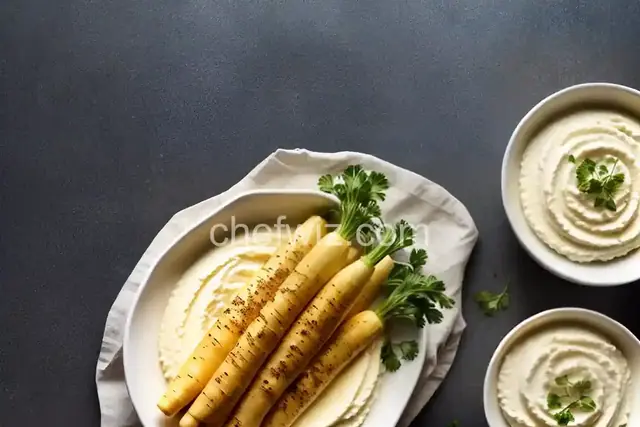
Have you ever tasted the rich, creamy goodness of parsnip purée? If not, you're in for a treat! This delightful side dish is the perfect accompaniment to any meal. With its smooth and velvety texture, it adds a touch of elegance to your plate. But what exactly is parsnip purée, and how do you make it? Let's dive in and explore the wonderful world of parsnip purée.
Parsnip purée is a dish made from cooked parsnips that have been mashed or blended to a smooth consistency. It has a similar texture to mashed potatoes but with a slightly sweeter and nuttier flavor. Parsnips, often overlooked in the culinary world, are root vegetables that resemble white carrots. They are packed with nutrients and add a unique twist to traditional mashed potatoes.
Making parsnip purée is a breeze. Start by peeling and chopping your parsnips into small pieces. Boil them until they are tender and easily mashed with a fork. Drain the cooked parsnips and transfer them to a blender or food processor. Add a splash of cream or milk, a knob of butter, and a pinch of salt and pepper. Blend until smooth and creamy. Adjust the consistency by adding more liquid if desired. Serve hot and enjoy!
To achieve the best results, keep these tips in mind:
Parsnip purée is a versatile side dish that pairs well with a variety of main courses. Here are a few serving ideas to get you started:
Not only is parsnip purée delicious, but it also offers several health benefits. Parsnips are a great source of dietary fiber, vitamin C, and potassium. They are low in calories and fat, making them an excellent option for those watching their weight. Additionally, the natural sweetness of parsnips adds a unique flavor profile to your meals without relying on excessive amounts of sugar or salt.
Parsnip purée is a delightful side dish that is easy to make and incredibly tasty. With its creamy texture and nutty flavor, it adds a touch of sophistication to any meal. Whether you're serving it with roasted chicken, seared steak, or as a base for a casserole, parsnip purée is sure to impress. Give it a try and elevate your culinary creations to new heights!
Yes, you can freeze parsnip purée. Simply transfer it to an airtight container and store it in the freezer for up to three months. Thaw it in the refrigerator overnight before reheating.
Absolutely! You can make parsnip purée a day or two in advance and store it in the refrigerator. Reheat it gently on the stovetop or in the microwave before serving.
While parsnips are the traditional choice for parsnip purée, you can experiment with other root vegetables like carrots or turnips. Each vegetable will impart its unique flavor profile to the purée.
Yes, parsnip purée is suitable for both vegetarians and vegans. Simply substitute dairy milk and butter with plant-based alternatives like almond milk and vegan butter.
Of course! Adding garlic or onions can enhance the flavor of the purée. Simply sauté them in a bit of olive oil until tender before blending them with the cooked parsnips.
Parsnip purée has a mild and slightly sweet flavor. It is not as strong as other root vegetables like radishes or turnips. The flavor can be further enhanced by adding herbs or spices to suit your taste.
If you don't have a blender or food processor, you can still make parsnip purée. Simply mash the cooked parsnips with a fork until they reach your desired consistency. It may not be as smooth as when blended, but it will still be delicious!
While fresh parsnips are preferred, you can use frozen parsnips to make parsnip purée. Make sure to thaw them before cooking and adjust the cooking time accordingly.
AprilCook, recipe developer and the heart of Chefwiz. More about April