Parmesan Peas
Rate this recipeBe the first to rate
 By AprilPublished
 Are you looking for a delicious and easy side dish to add to your meals?
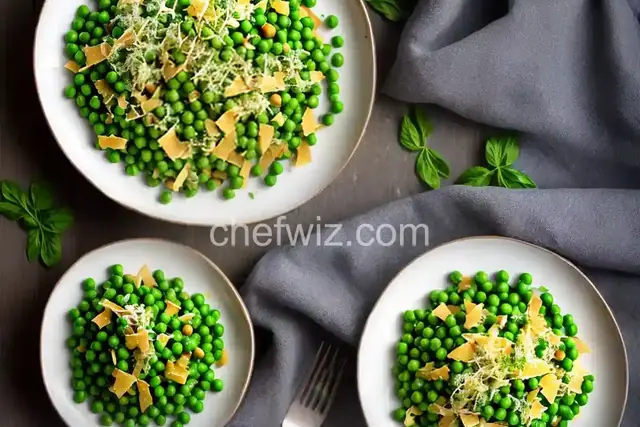 By AprilPublished
 Are you looking for a delicious and easy side dish to add to your meals?
Heat the butter in a skillet over medium heat until melted.
Add the shallots and a pinch of salt to the skillet. Cook for approximately 4 minutes or until the shallots become soft and translucent.
Stir in the peas and 1/2 teaspoon salt. Cook for an additional 2 to 3 minutes, or until the peas are tender and bright green in color.
Add the lemon juice to the skillet and mix well.
Remove the skillet from heat and stir in the Parmesan cheese and a generous pinch of black pepper.
Serve the dish hot.
Are you looking for a delicious and easy side dish to add to your meals? Look no further than Parmesan Peas! These flavorful peas are a perfect accompaniment to any main course. Not only are they quick to prepare, but they are also packed with nutrients. Let's dive into the world of Parmesan Peas and discover why they should be a staple in your kitchen.
Peas, the star ingredient of Parmesan Peas, are a nutritional powerhouse. Packed with vitamins, minerals, and dietary fiber, peas offer a wide range of health benefits. They are an excellent source of vitamin K, which is essential for bone health. Additionally, peas contain high levels of vitamin C, which boosts the immune system and promotes collagen production.
One of the reasons why Parmesan Peas are so beloved is their burst of flavor. The combination of Parmesan cheese, garlic, and herbs elevates the taste of the peas to a whole new level. The savory Parmesan adds a salty richness, while the garlic and herbs provide a fragrant and aromatic touch. Whether you enjoy them as a side dish or incorporate them into pasta dishes and salads, Parmesan Peas are sure to impress your taste buds.
Are you short on time but still want to enjoy a delicious side dish? Parmesan Peas are the answer! With their quick and easy preparation, you can have a flavorful dish on the table in no time. Simply sauté the peas in a pan with garlic and olive oil, sprinkle with Parmesan cheese and herbs, and voila! A tasty and nutritious side dish ready to be enjoyed.
Parmesan Peas are incredibly versatile when it comes to pairing them with other dishes. They complement a variety of main courses, from grilled chicken and fish to hearty beef stews. Their vibrant green color and delightful flavor make them a welcome addition to any plate. Whether you're hosting a dinner party or cooking a simple weeknight meal, Parmesan Peas are sure to impress your guests and elevate your dining experience.
Parmesan Peas are a delightful and nutritious side dish that deserves a spot in your recipe repertoire. Their burst of flavor, quick preparation, and versatility in pairing make them a go-to option for any occasion. So, why not give Parmesan Peas a try and experience the joy of a simple dish that packs a punch? Your taste buds will thank you!
Yes, absolutely! Frozen peas work just fine for this recipe. Simply thaw them before cooking and proceed with the recipe as usual.
While Parmesan cheese adds a unique flavor to the dish, you can try using other hard cheeses like Pecorino Romano or Grana Padano as substitutes.
Yes, Parmesan Peas can be enjoyed by both vegetarians and vegans. However, make sure to use a plant-based Parmesan cheese alternative for a vegan-friendly version.
Absolutely! Feel free to experiment and add other vegetables like carrots, bell peppers, or even mushrooms to enhance the dish with more flavors and textures.
While Parmesan Peas are best enjoyed fresh, you can make them ahead of time and reheat them just before serving. However, keep in mind that the texture may slightly change upon reheating.
If you're lactose intolerant, you can try using lactose-free Parmesan cheese or a dairy-free cheese alternative to still enjoy the flavors of Parmesan Peas.
Absolutely! If you enjoy spicy flavors, you can add a pinch of red pepper flakes or a dash of hot sauce to give Parmesan Peas a fiery twist.
While it's possible to freeze Parmesan Peas, the texture of the peas might become slightly softer upon thawing. It's best to enjoy them fresh for the optimal taste and texture.
AprilCook, recipe developer and the heart of Chefwiz. More about April