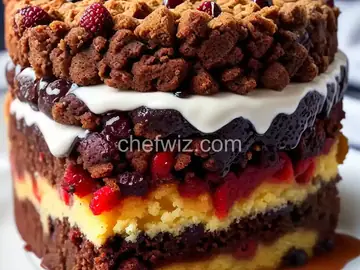
Pangiallo laziale (Italian Christmas Cakes)
Rate this recipeBe the first to rate
 By AprilPublished
 Christmas is a time of joy and celebration, and what better way to indulge in the festive spirit than with delicious Italian Christmas cakes?
 By AprilPublished
 Christmas is a time of joy and celebration, and what better way to indulge in the festive spirit than with delicious Italian Christmas cakes?
Preheat the oven to 350 degrees F (175 degrees C).
Place a sheet of parchment paper on a baking sheet.
In a large bowl, combine prunes, raisins, almonds, walnuts, hazelnuts, sugar, orange marmalade, candied orange peel, and cinnamon. Stir everything together with a wooden spoon.
Pour in the wine and olive oil.
Add flour and mix everything together until a sticky dough forms. If the mixture doesn't stick together, add more flour as needed.
With wet hands, shape the mixture into 8 logs of similar size.
Place the logs onto the prepared baking sheet.
Bake in the preheated oven for approximately 30 minutes or until golden.
Instead of prunes, you can use other dried fruits such as figs or apricots, or a combination of all three.
Allow the Pangiallo laziale to cool completely before serving.
Christmas is a time of joy and celebration, and what better way to indulge in the festive spirit than with delicious Italian Christmas cakes? One such delightful treat that is sure to make your taste buds dance is the Pangiallo laziale. This traditional Italian dessert is a true masterpiece, brimming with flavors and textures that will transport you to the heart of Italy.
Like many cherished culinary traditions, the origins of Pangiallo laziale can be traced back in time. This cake has its roots in Lazio, a region in central Italy. It is believed to have been enjoyed during ancient Roman festivities, making it a dessert that carries centuries of history and tradition.
Pangiallo laziale is a true celebration of flavors. The cake is made with a rich combination of nuts, dried fruits, honey, and spices. Each bite is a harmonious blend of sweetness and warmth, as the honey and spices infuse the cake with their fragrant essence. The nuts and dried fruits provide a delightful crunch and burst of natural sweetness, creating a symphony of flavors that will leave you wanting more.
One of the highlights of Pangiallo laziale is its unique texture. The cake has a dense and moist crumb, with a slightly chewy consistency. This texture is achieved by using a combination of breadcrumbs and flour in the batter. The result is a cake that is both satisfyingly soft and pleasantly chewy, creating a delightful mouthfeel that adds to the overall experience of indulging in this Italian delicacy.
Not only is Pangiallo laziale a treat for the taste buds, but it is also a feast for the eyes. The cake is traditionally adorned with colorful candied fruits, adding a vibrant touch to its golden-brown exterior. The sight of this beautifully decorated cake is enough to evoke feelings of joy and excitement, making it the perfect centerpiece for your Christmas table.
Food has a unique way of bringing people together and creating lasting memories. Making Pangiallo laziale can be a wonderful opportunity to gather with loved ones and embark on a culinary adventure. From gathering the ingredients to mixing the batter and patiently waiting for the cake to bake, every step is an opportunity to bond and create cherished memories that will be treasured for years to come.
Pangiallo laziale is not just a cake; it is a symbol of tradition, joy, and togetherness. This Italian Christmas delicacy embodies the spirit of the season, filling homes with warmth and sweet aromas. Whether you decide to try your hand at making Pangiallo laziale yourself or seek it out at a local bakery, be prepared to embark on a culinary journey that will create lasting memories and leave you craving more of this delightful Italian treat.
No, Pangiallo laziale is not gluten-free as it contains both breadcrumbs and flour in its recipe.
Absolutely! In fact, making Pangiallo laziale a day or two in advance allows the flavors to meld together, resulting in an even more delicious cake.
While the traditional recipe calls for specific nuts and dried fruits, feel free to experiment and use your favorite combinations. Just ensure to maintain the overall balance of flavors.
It is best to store Pangiallo laziale in an airtight container at room temperature. This will help maintain its texture and flavors for a longer period.
Yes, Pangiallo laziale can be frozen. Just make sure to wrap it tightly in plastic wrap or place it in an airtight container before freezing.
The traditional recipe for Pangiallo laziale contains honey, which is not considered vegan. However, you can explore vegan alternatives to honey to adapt the recipe to your dietary preferences.
While traditionally Pangiallo laziale is not frosted or glazed, there's no harm in experimenting. You can drizzle a simple glaze or dust the cake with powdered sugar for an added touch of sweetness.
Italy is known for its wide array of delicious Christmas desserts. Some other popular options include Panettone, Pandoro, and Torrone. Each brings its own unique flavors and traditions to the festive table.
AprilCook, recipe developer and the heart of Chefwiz. More about April