Pancit Sotanghon
Rate this recipeBe the first to rate
 By AprilPublished
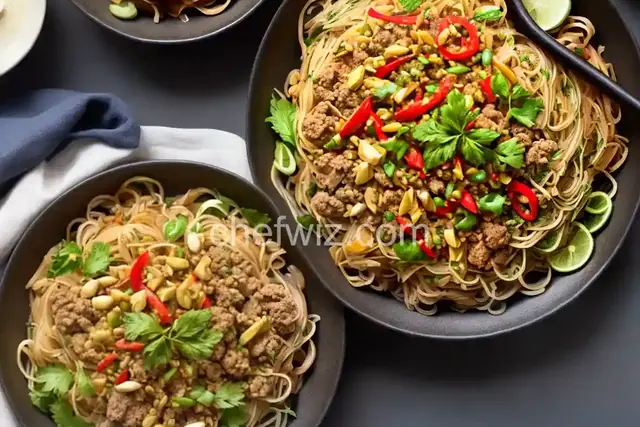
 When it comes to Filipino cuisine, one dish that stands out is Pancit Sotanghon.
 By AprilPublished
 When it comes to Filipino cuisine, one dish that stands out is Pancit Sotanghon.
Begin by soaking the vermicelli in a bowl of hot water for 2 to 3 minutes. Then, drain the vermicelli and cut it to your desired length. Set it aside.
In a separate bowl, soak the mushrooms in water to soften them. Set them aside.
Heat oil in a saucepan over medium-high heat. Cook the garlic in the hot oil until it turns brown, which should take around 2 minutes. Remove the garlic and set it aside for garnishing.
Add the onion and achiote powder to the saucepan and sauté until the onion becomes translucent, approximately 5 minutes.
Add the chicken, soy sauce, and fish sauce to the saucepan. Stir in the bouillon until it dissolves completely. Pour in 1 cup of water and bring the mixture to a boil.
Drain the softened mushrooms and cut them into 1-inch pieces.
Toss the cabbage, bok choy, and carrot into the boiling water mixture. Add the vermicelli, mushrooms, black pepper, and chili powder. Cook and mix everything well until the pancit becomes slightly dried, which should take about 5 minutes.
Transfer the pancit to a platter and garnish it with slices of egg and the browned garlic.
If desired, you can use chicken broth instead of water.
When it comes to Filipino cuisine, one dish that stands out is Pancit Sotanghon. This delectable noodle dish is a staple in Filipino households and is often served during special occasions and gatherings. But what exactly is Pancit Sotanghon and why is it so beloved by Filipinos? Let's dive into the world of this mouthwatering dish and explore its flavors and history.
Pancit Sotanghon traces its roots back to Chinese cuisine. As the Philippines has a long history of Chinese influence, it's no surprise that many Filipino dishes have Chinese origins. Sotanghon, also known as cellophane or glass noodles, is made from mung bean starch and has a translucent appearance when cooked. This type of noodle is commonly used in Chinese and Southeast Asian cooking.
Over the years, Pancit Sotanghon has evolved and become uniquely Filipino. It has been adapted to suit local tastes and preferences. The dish typically features a medley of ingredients such as chicken, shrimp, vegetables, and various seasonings. The combination of flavors and textures makes Pancit Sotanghon a truly delightful dish.
One of the reasons why Pancit Sotanghon is loved by many is its amazing combination of flavors. The noodles absorb the savory broth and sauce, creating a delicious and satisfying taste. The chicken and shrimp add a rich umami flavor, while the vegetables provide a refreshing crunch. The dish is often seasoned with soy sauce, garlic, and other aromatic herbs and spices, giving it a distinct and mouthwatering aroma.
Moreover, Pancit Sotanghon is a versatile dish that can be customized to suit individual preferences. Whether you prefer it mild or spicy, meaty or vegetarian, there are countless variations of Pancit Sotanghon to cater to different tastes. It's a dish that can be easily adapted and personalized, making it a favorite among both Filipino households and food enthusiasts.
Aside from its delicious flavors, Pancit Sotanghon also holds a special place in Filipino culture. It is often served during festive occasions such as birthdays, anniversaries, and holidays. This dish is believed to bring good luck and symbolizes long life and prosperity. It's not uncommon to see Pancit Sotanghon being served at parties and gatherings, where it becomes the centerpiece of the dining table.
Furthermore, Pancit Sotanghon represents the spirit of togetherness and sharing. It's a dish that brings people together, allowing them to bond over good food and conversations. The act of preparing and enjoying Pancit Sotanghon is a way of celebrating traditions and creating lasting memories with loved ones.
Pancit Sotanghon is more than just a dish – it's a representation of Filipino culture, tradition, and the joy of sharing good food with loved ones. Its unique combination of flavors, versatility, and symbolic significance make it a beloved favorite in Filipino households and beyond. So why not give Pancit Sotanghon a try and experience the delectable taste of this iconic Filipino dish?
Yes, Pancit Sotanghon is gluten-free as it is made from mung bean starch and does not contain wheat or other gluten-containing ingredients.
Absolutely! You can easily make a vegetarian version of Pancit Sotanghon by omitting the meat and using vegetable broth or soy sauce for flavor.
The cooking time for Pancit Sotanghon varies depending on the recipe and the desired level of doneness. On average, it takes about 30-40 minutes to prepare.
While the traditional Pancit Sotanghon uses cellophane noodles, you can experiment with other types of noodles like rice noodles or even spaghetti noodles for a unique twist.
Some popular side dishes that complement Pancit Sotanghon include lumpiang shanghai (spring rolls), tokwa't baboy (fried tofu and pork), and ensaladang talong (grilled eggplant salad).
Yes, you can reheat Pancit Sotanghon. However, note that the noodles may become softer upon reheating. It's best to reheat it gently over low heat to prevent the noodles from becoming mushy.
While it's technically possible to freeze Pancit Sotanghon, the texture of the noodles may change upon thawing. It's recommended to consume it fresh for the best taste and texture.
Absolutely! Pancit Sotanghon is a versatile dish that can be customized to your liking. Feel free to experiment with different ingredients and seasonings to create your own signature version of Pancit Sotanghon.
Pancit Sotanghon is commonly found in Filipino restaurants and food stalls. You can also try making it at home using readily available ingredients from Asian grocery stores or online retailers.
AprilCook, recipe developer and the heart of Chefwiz. More about April