Paella Valenciana
Rate this recipeBe the first to rate
 By AprilPublished
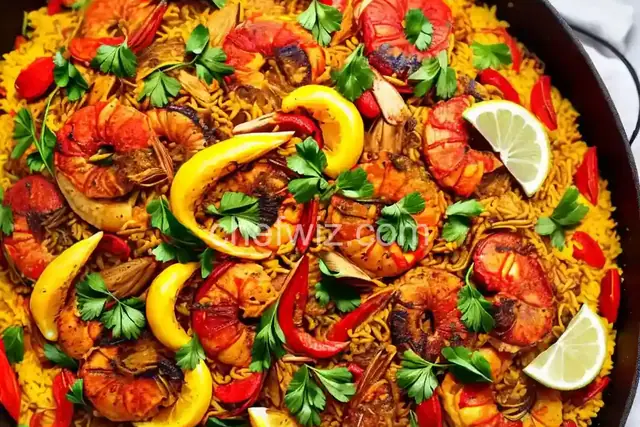
 Have you ever tasted the flavors of Spain in a single dish? If not, then you must try Paella Valenciana!
 By AprilPublished
 Have you ever tasted the flavors of Spain in a single dish? If not, then you must try Paella Valenciana!
Heat a pan with 1/4 to 1/2 cup of oil.
Add the pepper strips to the pan and fry until they begin to soften. Set aside for garnish.
Fry the chicken and rabbit on medium heat until they turn golden brown, adding more oil if necessary.
Halfway through, add the paprika to give the meat a nice color.
Push the meat to the edges of the pan and add the beans and tomatoes in the center, mixing them well.
Pour in half of the water, making sure the pan is covered halfway. Simmer for approximately 30 minutes or until most of the water has evaporated.
Add the snails and cook for an additional 5 to 10 minutes.
Evenly distribute the rice over the pan and fry for a few minutes, stirring it around.
Pour in the remaining water and cook for about 20 minutes.
Season with salt, freshly ground pepper, and a pinch of saffron for color.
Once done, avoid stirring the paella.
Increase the heat to medium-high for the last 1 to 2 minutes to caramelize the bottom layer of rice, creating the "socarrat".
If the rice starts to burn, remove the pan from the heat immediately.
Garnish the paella with the reserved red pepper strips and sprigs of rosemary.
Cover
Have you ever tasted the flavors of Spain in a single dish? If not, then you must try Paella Valenciana! This traditional Spanish rice dish originated in the region of Valencia and has become a staple in Spanish cuisine. With its vibrant colors, rich flavors, and diverse ingredients, Paella Valenciana is a feast for both the eyes and the taste buds.
Like many beloved dishes, Paella Valenciana has a fascinating history that spans centuries. It is said to have originated in the fields of Valencia, where farmers would cook a simple rice dish over an open fire using ingredients readily available to them. Over time, the dish evolved and became more elaborate, incorporating a variety of proteins such as chicken, rabbit, and snails. Today, Paella Valenciana is enjoyed by people all around the world, and each region in Spain has its own unique twist on the recipe.
One of the most remarkable aspects of Paella Valenciana is its versatility. While the traditional recipe calls for a specific set of ingredients, you can easily customize it to your liking. The essential components of a classic Paella Valenciana include saffron-infused rice, chicken, rabbit, green beans, and sometimes snails. The rice is cooked with a flavorful broth made from vegetables, spices, and meat, resulting in a tantalizing combination of flavors.
When it comes to Paella Valenciana, the type of rice you use can make all the difference. The best rice for this dish is short-grain rice, such as Bomba or Calasparra. These varieties have the ability to absorb more liquid without becoming mushy, allowing the flavors to meld together perfectly. The grains remain firm and separate, creating a delightful texture in every bite.
Seasoning is an essential part of any dish, and Paella Valenciana is no exception. The key ingredient that gives this dish its distinct flavor and beautiful golden color is saffron. This precious spice adds a subtle floral aroma and a unique taste that elevates the dish to new heights. It's important to infuse the saffron in warm broth or water before adding it to the rice to fully unlock its flavor.
Preparing Paella Valenciana requires patience and a few essential cooking techniques. The dish is traditionally cooked in a wide, shallow pan called a paellera, which allows the rice to cook evenly and develop a delightful crust on the bottom known as the "socarrat." The rice is cooked over a medium heat, allowing the flavors to meld together slowly and ensuring that each grain absorbs the delicious broth.
The socarrat is the crowning glory of Paella Valenciana. It is the caramelized layer of rice that forms at the bottom of the pan, adding a delightful crunch and depth of flavor to the dish. Achieving the perfect socarrat requires careful attention and a keen eye. The rice should be cooked until it forms a golden crust, but be careful not to burn it. This prized layer is highly coveted by paella enthusiasts and adds an extra layer of texture to the dish.
Paella Valenciana is more than just a meal; it's a social experience meant to be shared with friends and family. The dish is often enjoyed during festive occasions and gatherings, bringing people together around a steaming pan of aromatic rice. The vibrant colors, tantalizing aromas, and rich flavors of Paella Valenciana create a feast for the senses that will leave you craving for more.
While seafood is a popular addition to many paella recipes, traditional Paella Valenciana does not typically include seafood. However, feel free to experiment and add your favorite seafood to create your own unique twist on the dish!
Absolutely! You can easily adapt Paella Valenciana to suit a vegetarian diet by omitting the meat and using vegetable broth instead. Add an array of colorful vegetables like bell peppers, artichokes, and peas for a delicious vegetarian version.
Saffron is an integral part of the traditional Paella Valenciana recipe, and its unique flavor cannot be replicated by any other spice. However, if saffron is not available or too expensive, you can use a pinch of turmeric to achieve a similar golden color.
Achieving the perfect socarrat requires patience and practice. Cook the rice over medium heat, and resist the temptation to stir it too frequently. Allow the rice to form a golden crust at the bottom of the pan, and listen for the sizzling sound that indicates the socarrat is forming.
Paella Valenciana is best enjoyed fresh off the stove, but you can make some preparations in advance to save time. You can chop the vegetables, marinate the meat, and prepare the broth ahead of time. However, it's best to cook the rice just before serving to ensure optimal flavor and texture.
Yes, there are several regional variations of Paella Valenciana throughout Spain. In some regions, seafood is added, while others incorporate different meats and vegetables. Each variation has its own unique twist, but they all share the same spirit of bringing people together around a delicious, communal meal.
Yes, you can freeze leftover Paella Valenciana for future meals. Allow the dish to cool completely before transferring it to an airtight container and freezing. When ready to enjoy, simply thaw and reheat in a pan or the microwave, adding a splash of broth if needed.
AprilCook, recipe developer and the heart of Chefwiz. More about April