Paella II
Rate this recipeBe the first to rate
 By AprilPublished
 Are you ready to embark on a culinary journey to the vibrant streets of Spain?
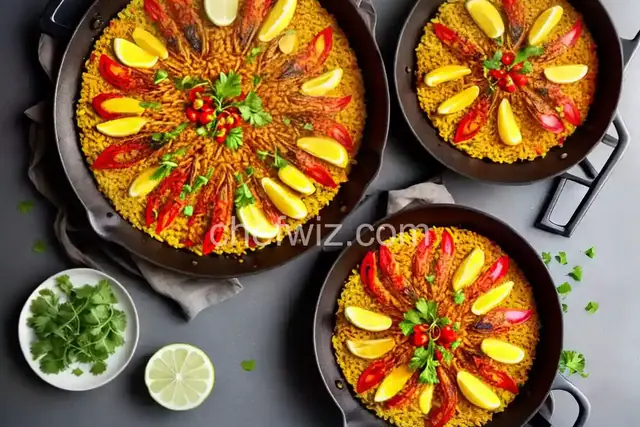 By AprilPublished
 Are you ready to embark on a culinary journey to the vibrant streets of Spain?
In a pot of water with a touch of salt, boil the mussels until they open.
Drain the mussels and remove any that did not open.
In a separate pot of salted water, boil the prawns and squid until they turn opaque, which should take about 3 to 4 minutes.
Drain the prawns and squid, but save the liquid for later.
Heat some olive oil in a large skillet.
Place the chicken pieces in the skillet and fry them until they become golden brown.
Remove the chicken pieces from the skillet and set them aside.
In the same skillet, add the garlic, peppers, and tomato cubes.
Fry the vegetables until they become soft.
In a separate pot, bring the fish stock and 3 cups of salted water to a boil.
Mix in the rice, saffron, and paprika.
Bring the mixture to a boil again.
Cover the pot, reduce the heat, and let it simmer for about 50 minutes or until the rice becomes tender.
Stir the peas into the cooked rice.
Pour the rice mixture into a large serving dish.
Arrange the fried vegetables, chicken, mussels, prawns, and squid around the rice.
Serve the dish hot.
Are you ready to embark on a culinary journey to the vibrant streets of Spain? Look no further than paella, the iconic Spanish dish that captures the essence of the Mediterranean in a single bite. In this article, we will delve into the secrets of paella, exploring its history, flavors, and the art of creating this gastronomic masterpiece.
Before we dive into the intricacies of making paella, let's take a moment to appreciate its rich history. Hailing from the region of Valencia, paella has deep roots in Spanish culture. Originally a farmer's meal, this humble dish was elevated to new heights by the addition of saffron, giving it its vibrant yellow color and distinct aroma.
Paella is a celebration of bold flavors and fresh ingredients. At its core, this delectable dish combines rice, saffron, and an assortment of meats and vegetables. From succulent chicken and tender rabbit to plump shrimp and mussels, paella offers a symphony of tastes that dance on your palate.
The star of the show in any paella is undoubtedly the rice. Spanish short-grain rice, such as bomba or calasparra, is the preferred choice due to its ability to absorb flavors while maintaining a firm texture. Every grain is infused with the essence of the broth and ingredients, creating a harmonious blend of flavors in every bite.
Creating paella is not just about following a recipe; it is an art form that requires patience, skill, and a touch of creativity. The cooking process starts with a shallow, wide pan called a paellera, which allows the rice to cook evenly and develop a beautiful socarrat - a caramelized crust at the bottom.
One of the secrets to a flavorful paella lies in the sofrito - a mixture of onions, garlic, tomatoes, and peppers. This aromatic base infuses the rice with a depth of flavors that are characteristic of Spanish cuisine. As the sofrito sizzles and releases its tantalizing aroma, you know you're on the right track to creating an authentic paella.
While the temptation to rush the cooking process may arise, the key to a perfect paella lies in patience. Allow the rice to slowly absorb the flavors of the broth, meats, and vegetables, creating a harmonious blend that tantalizes the senses. Remember, good things come to those who wait.
Paella is not just a dish; it is a symbol of togetherness and celebration. In Spain, paella is often enjoyed during festive occasions, where friends and family gather around the paellera to share in the joy of this culinary masterpiece. The act of cooking and enjoying paella becomes a social event, creating lasting memories and strengthening bonds.
Paella is a reflection of Spanish culture, a culinary embodiment of the country's zest for life and love for good food. As you savor each spoonful of this delectable dish, you are transported to the sun-soaked beaches of Spain, where time seems to slow down and every moment is savored.
Now that you have uncovered the secrets of paella, it's time to gather your ingredients, don your apron, and embark on your own gastronomic adventure. Let the flavors of Spain envelop your senses and transport you to a world of culinary delight.
Paella is more than just a dish; it is an experience that transports you to the vibrant streets of Spain. From its humble origins to its flavorful medley of ingredients, paella embodies the essence of Spanish cuisine. So, gather your loved ones, unleash your inner chef, and savor the magic of paella. ¡Buen provecho!
Creating paella may seem intimidating at first, but with the right ingredients and a little patience, anyone can master this dish. Remember, practice makes perfect!
Absolutely! Paella is a versatile dish, and you can customize it according to your preferences. You can substitute seafood with chicken, rabbit, or even vegetarian ingredients for a delicious twist.
The socarrat is achieved by allowing the rice to gently cook and develop a caramelized crust at the bottom of the pan. Moderate heat and occasional stirring will help you achieve that coveted crispy layer.
While it is recommended to use Spanish short-grain rice, you can experiment with other varieties. Just keep in mind that the texture and flavor may differ slightly from the traditional paella.
Paella is best enjoyed straight from the paellera, family-style, with loved ones gathered around. Pair it with a glass of sangria or a refreshing Spanish wine for the ultimate culinary experience.
Paella is typically enjoyed as a main course, as it is a hearty and filling dish. However, you can also serve it as a side dish alongside other Spanish delicacies.
The cooking time for paella can vary depending on the size of the dish and the heat source. On average, it takes around 30-40 minutes to cook the rice, but the overall process may take longer due to preparation and cooking the sofrito.
While paella is best enjoyed fresh, you can reheat leftovers in a pan or microwave. However, keep in mind that the texture may slightly change, and the socarrat may not be as crispy as when it was freshly cooked.
AprilCook, recipe developer and the heart of Chefwiz. More about April