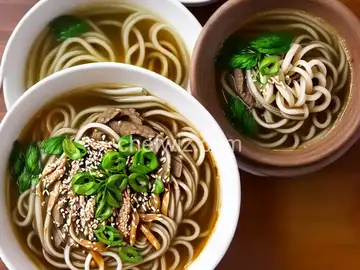
Ozoni (Japanese New Year's Soup) With Mochi, Chicken, and Vegetables Recipe
Rate this recipeBe the first to rate
 By AprilPublished
 Have you ever wondered how different cultures celebrate the arrival of the new year?
 By AprilPublished
 Have you ever wondered how different cultures celebrate the arrival of the new year?
In a small bowl, mix together chicken, sake, and 1 teaspoon of kosher salt. Place in the refrigerator for 1 hour.
In a 3-quart saucepan, combine shiitake mushrooms and kombu with the warm stock or water. Let it sit for 30 minutes.
Meanwhile, bring a medium pot of water to a boil and prepare an ice bath. Boil the spinach for about 30 seconds until tender, then transfer it to the ice bath to cool. Squeeze out excess water and roughly chop. Set aside.
Return the water to a boil and cook the burdock root for about 2 minutes until tender. Transfer to the ice bath and then to a small bowl. If using lotus root, cook it in the boiling water until crisp-tender, shock it in the ice bath, and transfer to another small bowl.
Cook the carrot and daikon in the boiling water until just tender, about 1 minute. Shock in the ice bath, drain, and set aside in a small bowl.
Place the saucepan with shiitake mushrooms and kombu over medium heat and bring to a gentle simmer. Remove the kombu and add bonito flakes. Simmer for 5 minutes, then remove from heat and let it stand for another 5 minutes. Strain the broth through a fine-mesh strainer into a heatproof container. Rinse out the saucepan and
Have you ever wondered how different cultures celebrate the arrival of the new year? In Japan, one of the most significant traditions is preparing and enjoying a hearty bowl of Ozoni, a delicious soup that is deeply rooted in Japanese culture. This delightful dish, often enjoyed with family and friends, not only warms the body but also brings a sense of togetherness and good fortune for the year ahead.
Imagine a bowl of soup that is not only delicious but also symbolic of good luck and prosperity. That's what Ozoni represents for the Japanese people. This traditional New Year's dish is believed to bring good fortune to those who partake in it. Each region in Japan has its own unique way of preparing Ozoni, with variations in ingredients and flavors. However, the common thread among them is the belief that this soup brings happiness, health, and success in the coming year.
Like any good soup, Ozoni is a delightful medley of flavors and textures. However, what sets it apart are the special ingredients used. The heart of this soup lies in the combination of savory broth, tender chicken, and a variety of vegetables. Additionally, no Ozoni is complete without the addition of a small, round, and chewy rice cake called Mochi. The Mochi represents the idea of longevity and sticking together as a family.
Preparing Ozoni is an art in itself, with each step carefully crafted to ensure a harmonious blend of flavors. The broth is often made by simmering kombu (seaweed) and dried bonito flakes, creating a rich and umami-packed base. The chicken and vegetables are then added to the broth, infusing it with their unique flavors. Finally, the Mochi is added to the soup just before serving, allowing it to become soft and chewy, creating a delightful contrast to the other ingredients.
Ozoni is more than just a soup; it's a representation of Japanese culture and tradition. This flavorful dish not only warms the body but also brings families and communities together, fostering a sense of togetherness and good fortune. Whether enjoyed during the New Year's celebrations or on any other occasion, Ozoni is a delightful culinary experience that connects people and brings joy to the table.
No, Ozoni is primarily enjoyed during the New Year's celebrations in Japan. However, it can also be savored on other special occasions and events throughout the year.
Absolutely! While chicken is the most common choice, Ozoni can also be prepared with other proteins such as beef or seafood, depending on personal preferences and regional variations.
Yes, there are vegetarian and vegan versions of Ozoni that use vegetable broth and omit the meat. These versions still maintain the essence and flavors of the traditional dish.
Making Mochi from scratch can be a time-consuming process. However, pre-packaged Mochi is readily available in many Asian grocery stores, making it convenient to prepare Ozoni at home.
Common vegetables used in Ozoni include daikon radish, carrot, taro root, and spinach. These vegetables not only add flavor and color to the soup but also provide essential nutrients.
Absolutely! Ozoni is a versatile dish, and you can customize it based on your personal preferences. Feel free to experiment with different vegetables, proteins, and seasonings to create your own unique version.
Yes, there are a few traditions associated with Ozoni. One common practice is to eat Ozoni on New Year's morning as the first meal of the year, symbolizing a fresh start. Additionally, it is considered good luck to eat the Mochi whole, without biting it, to ensure a smooth and prosperous year ahead.
While Ozoni is traditionally served as part of a larger New Year's feast, it can certainly be enjoyed as a standalone meal. Its hearty and satisfying nature makes it a perfect choice for a cozy winter lunch or dinner.
AprilCook, recipe developer and the heart of Chefwiz. More about April