New Orleans Jambalaya
Rate this recipeBe the first to rate
 By AprilPublished
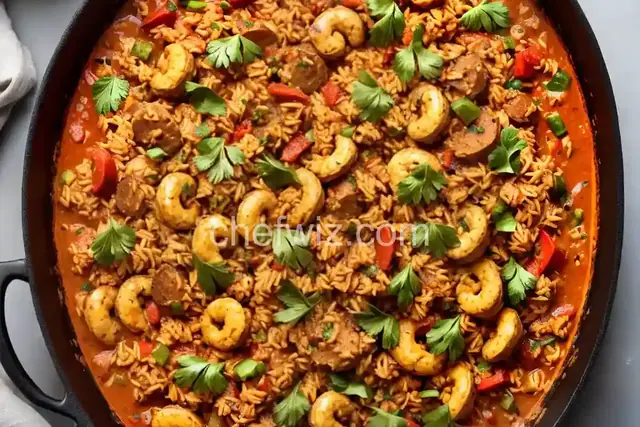
 Are you ready to take your taste buds on a journey to the vibrant streets of New Orleans?
 By AprilPublished
 Are you ready to take your taste buds on a journey to the vibrant streets of New Orleans?
Step 1: Prepare the chicken marinade by combining soy sauce, dried thyme, cayenne pepper, paprika, chopped onions, and black pepper in a large glass baking dish.
Step 2: Place the chicken in the marinade and refrigerate for at least 3 hours.
Step 3: In a Dutch oven, sauté bacon over medium heat until brown.
Step 4: Add onion and garlic and continue cooking for 5 minutes.
Step 5: Mix in flour and sausage, cooking for an additional 5 minutes while stirring frequently.
Step 6: Add ham, thyme, cayenne, chicken stock, tomatoes, reserved juice, and green peppers to the mixture, bringing it to a boil.
Step 7: Stir in rice, cover, and cook for 25 minutes.
Step 8: Remove from heat, cool completely, and refrigerate.
Step 9: Two hours before serving, discard marinade and bake chicken breasts at 500 degrees F (250 degrees C) for 12 minutes, or until firm when pressed with a finger.
Step 10: Cool and slice the chicken breasts into bite-size pieces.
Step 11: Reduce the oven temperature to 250 degrees F (120 degrees C).
Step 12: Place the covered jambalaya on a large baking tray filled with water and bake until warm, approximately 2 hours.
Step 13
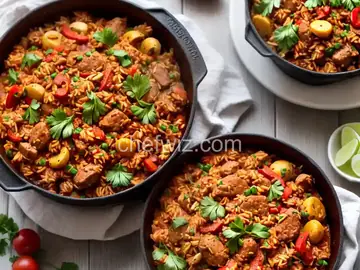
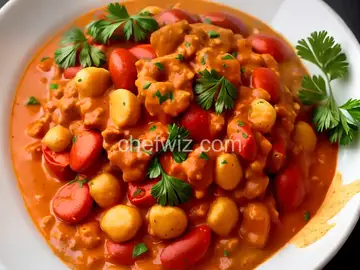
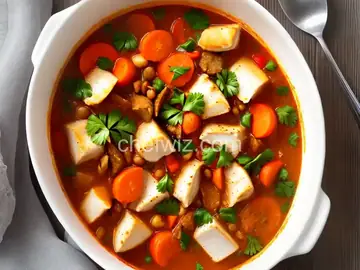
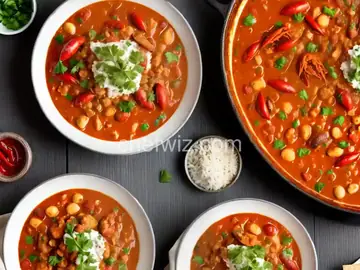
Are you ready to take your taste buds on a journey to the vibrant streets of New Orleans? Look no further than a delicious bowl of jambalaya! This iconic dish is a melting pot of flavors, just like the city itself. From the spicy kick of Andouille sausage to the rich flavors of the Holy Trinity (onions, bell peppers, and celery), every bite is a celebration of Cajun and Creole cuisine.
Jambalaya is a one-pot rice dish that originated in Louisiana. It is a perfect example of how different cultures and ingredients come together to create something truly unique. The dish is thought to have its roots in Spanish paella, African jollof rice, and French Provençal cooking. Jambalaya is a flavorful medley of rice, meat (like chicken, shrimp, or sausage), vegetables, and spices.
Just like any good story, jambalaya has its own set of main characters. The Holy Trinity – onions, bell peppers, and celery – forms the base of this dish. These three ingredients create a flavor foundation that is aromatic and savory. They are sautéed together until they become tender and translucent, imparting their distinct flavors into the dish. Think of them as the backbone of jambalaya, adding depth and complexity.
No jambalaya would be complete without a blend of spices that give it its signature kick. Cajun and Creole seasoning blends, like Tony Chachere's or Zatarain's, are commonly used to add a fiery and flavorful punch. These spice mixes typically include a combination of paprika, cayenne pepper, garlic powder, onion powder, and various herbs and spices. The result is a dish that is bold, aromatic, and irresistibly delicious.
When preparing jambalaya, the cooking techniques are just as important as the ingredients themselves. The dish is typically cooked in stages, allowing each ingredient to develop its own flavors and textures. The meat is browned to enhance its richness, the vegetables are sautéed to release their aromas, and the rice is toasted to give it a nutty flavor. By layering these elements, jambalaya becomes a symphony of tastes and textures.
One of the great things about jambalaya is its versatility. You can customize the dish to your liking, making it as mild or as fiery as you desire. Swap out the proteins, experiment with different vegetables, or add your favorite spices. Whether you prefer a classic chicken and sausage jambalaya or a seafood-packed version, the possibilities are endless. Get creative and let your taste buds guide you!
Jambalaya is a true culinary masterpiece, showcasing the diverse flavors and cultural influences of New Orleans. It's a dish that brings people together, just like the city itself. So why not embrace the spirit of New Orleans and whip up a batch of jambalaya in your own kitchen? It's a delicious way to experience the vibrant and soulful flavors of the Big Easy. Let the aroma of simmering spices transport you to the lively streets of New Orleans, even if just for a moment.
Absolutely! You can substitute meat with vegetables like bell peppers, okra, and mushrooms to create a flavorful vegetarian jambalaya.
Yes, you can! Simply add all the ingredients to your slow cooker and cook on low for 4-6 hours or on high for 2-3 hours. The result will be a deliciously tender and flavorful jambalaya.
Absolutely! Jambalaya freezes well and makes for a convenient and delicious meal later on. Just make sure to cool it completely before transferring it to an airtight container and freezing.
While jambalaya traditionally uses long-grain white rice, you can experiment with other grains like brown rice, quinoa, or even cauliflower rice for a healthier twist.
If you prefer a milder version of jambalaya, simply reduce the amount of cayenne pepper or omit it altogether. You can also serve it with a dollop of sour cream or a squeeze of lime to balance out the heat.
Absolutely! Just make sure to thaw the shrimp before adding it to the dish. You can thaw it overnight in the refrigerator or quickly thaw it under cold running water.
Jambalaya can be as spicy as you want it to be. The level of spice can be adjusted by adding more or less cayenne pepper or using a milder Cajun seasoning blend.
Absolutely! In fact, jambalaya often tastes even better the next day as the flavors have had time to meld together. Simply reheat it gently on the stovetop or in the microwave before serving.
AprilCook, recipe developer and the heart of Chefwiz. More about April