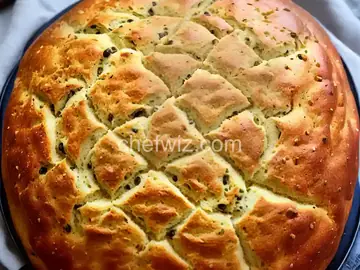
Naan Bread
Rate this recipeBe the first to rate
 By AprilPublished
 Imagine sinking your teeth into a warm, soft, and pillowy bread that instantly transports you to a world of culinary delight.
 By AprilPublished
 Imagine sinking your teeth into a warm, soft, and pillowy bread that instantly transports you to a world of culinary delight.
In a small bowl, pour warm water and add sugar and yeast. Stir until the sugar and yeast are dissolved. Set aside for 5-10 minutes or until it starts to foam.
In a blender, combine warm milk, yogurt, and melted margarine. In a large bowl, mix flour, salt, baking powder, and poppy seeds. Pour the yeast/milk mixture into the bowl and use your hands to incorporate it into the flour. Continue mixing, adding more flour or water as needed, until the dough comes together and no longer sticks to the sides of the bowl.
Knead the dough for 6 to 8 minutes, until it becomes smooth and elastic. Place the dough in a lightly oiled bowl, turning it to coat all sides. Cover with a damp cloth and let it rise in a warm place for approximately 4 hours, or until it doubles in size.
Preheat your oven to 550 degrees F (285 degrees C) or the highest setting. Place a large pizza pan or iron griddle on the lower rack and preheat it. Also, preheat the broiler.
Punch down the dough and knead it briefly. Divide it into six equal pieces and shape each piece into a ball. Place the balls on an oiled plate and cover them with lightly oiled plastic wrap. Let them rest for 10 to 15 minutes. Roll out and stretch each ball into a 10-inch
Imagine sinking your teeth into a warm, soft, and pillowy bread that instantly transports you to a world of culinary delight. That's the magic of naan bread, a traditional Indian flatbread that has captured the hearts and taste buds of people all around the globe. Whether you're enjoying it alongside a flavorful curry or using it as a vessel for your favorite dips, naan bread is the perfect accompaniment to any meal. In this article, we'll dive into the rich history of naan bread, explore its versatility, and uncover some interesting facts that will make you appreciate this delectable bread even more. So, let's get started!
Naan bread traces its roots back to the ancient Silk Road, a network of trade routes that connected the East and West. It is believed to have originated in Persia (modern-day Iran) and then made its way to India, where it became an integral part of Indian cuisine. The word "naan" itself is derived from the Persian word "non," which means bread. This flatbread was traditionally baked in a tandoor, a clay oven that imparts a unique smoky flavor and creates the characteristic charred spots on the bread's surface.
One of the reasons why naan bread has gained immense popularity is its incredible versatility. It can be enjoyed in various ways, making it suitable for different tastes and preferences. From plain naan to garlic naan, cheese naan, and even stuffed naan, the possibilities are endless. The soft texture and mild flavor of naan bread make it an excellent choice for sopping up flavorful sauces and gravies. It also serves as a perfect base for creating mouthwatering sandwiches or pizzas with an Indian twist.
Did you know that naan bread is not just limited to Indian cuisine? In fact, it has become a global sensation, finding its way into the menus of restaurants worldwide. Naan bread has even made its presence felt in space! Yes, you read that right. Astronaut Sunita Williams carried a portion of naan bread with her during her time on the International Space Station, proving that this humble bread can truly transcend boundaries.
Another fascinating fact about naan bread is that it has evolved and adapted over time to cater to different dietary needs. With the rise in popularity of gluten-free and vegan diets, many variations of naan bread have emerged to accommodate these preferences. Now, everyone can relish the joy of naan bread, regardless of their dietary restrictions.
Naan bread is more than just a bread; it's a culinary masterpiece that brings people together. Its rich history, versatility, and ability to adapt to changing times are testaments to its enduring appeal. So, the next time you indulge in a plate of aromatic curry or crave a comforting bread to accompany your meal, remember the magic of naan bread. Its softness, flavors, and cultural significance will elevate your dining experience to a whole new level!
While naan bread is a staple in Indian cuisine, it has gained popularity worldwide and can be found in many international restaurants.
Some popular variations of naan bread include garlic naan, cheese naan, and stuffed naan with fillings like paneer or minced meat.
Absolutely! Naan bread can be made at home using a regular oven or even a stovetop skillet. There are plenty of recipes available online to guide you through the process.
Traditional naan bread is not gluten-free as it is made with wheat flour. However, there are gluten-free alternatives available that use ingredients like rice flour or almond flour.
Yes, naan bread can be frozen for later use. Simply wrap it tightly in plastic wrap or aluminum foil and store it in the freezer. When ready to eat, thaw it and reheat in a hot oven or skillet.
To reheat naan bread, you can either place it in a hot oven for a few minutes or heat it on a stovetop skillet until warm and slightly crispy.
Absolutely! Naan bread is delicious on its own, thanks to its soft and slightly chewy texture. However, it truly shines when paired with flavorful curries, dips, or used as a base for sandwiches or pizzas.
Naan bread is best enjoyed fresh, but it can be stored in an airtight container at room temperature for up to 2-3 days. However, it may become slightly dry over time.
AprilCook, recipe developer and the heart of Chefwiz. More about April