My Big Fat Greek Salad
Rate this recipeBe the first to rate
 By AprilPublished
 Are you craving a fresh and flavorful salad that will transport you to the sunny shores of Greece?
 By AprilPublished
 Are you craving a fresh and flavorful salad that will transport you to the sunny shores of Greece?
Use a channel knife to peel off a few strips of cucumber skin, creating a striped pattern.
Cut the cucumbers in half crosswise, then cut each half into quarters. Slice the quarters into 1/4- to 1/2-inch thick slices.
Place the cucumber slices into a colander, toss them with kosher salt, and let them sit for 10 to 15 minutes.
Halve the cherry tomatoes.
Rinse the cucumbers and drain them thoroughly for an additional 10 to 15 minutes.
Thinly slice the onion.
Cut the bell pepper into strips, then diagonally cut the strips into diamond-shaped pieces.
Slice the Kalamata and green olives.
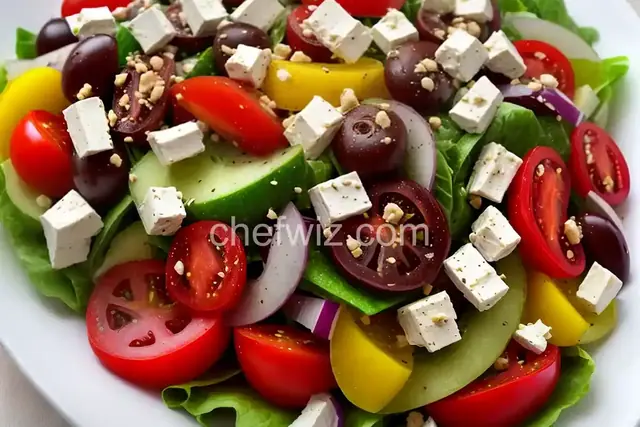
In a bowl, combine the cucumbers, tomatoes, onion, bell pepper, olives, and 2 tablespoons of oregano.
Season the mixture with salt, black pepper, and cayenne. Sprinkle in vinegar and toss well.
Drizzle olive oil over the mixture and toss again.
Add about 2/3 of the feta cheese and toss once more.
Cover the bowl with plastic wrap and refrigerate for 30 to 60 minutes.
Give the salad another mix, taste and adjust the seasoning as desired.
Scatter the remaining feta cheese on top and garnish with the remaining oregano.
16.
Are you craving a fresh and flavorful salad that will transport you to the sunny shores of Greece? Look no further than my Big Fat Greek Salad! Packed with vibrant colors, bold flavors, and wholesome ingredients, this salad is a delightful feast for both the eyes and the taste buds. In this article, we'll explore the origins of Greek salad, the key ingredients that make it so special, and some tips for creating your own mouthwatering version at home.
Just like the ancient ruins that dot the Greek landscape, Greek salad has a rich history that spans centuries. It is said to have originated in the rural areas of Greece, where fresh vegetables and herbs were abundant. Traditionally, Greek salad consisted of simple ingredients like tomatoes, cucumbers, onions, olives, and feta cheese, drizzled with olive oil and sprinkled with herbs.
The beauty of Greek salad lies in its simplicity and the quality of its ingredients. Let's take a closer look at the key components that make this salad so irresistible:
Nothing beats the juicy sweetness of ripe tomatoes in a Greek salad. They add a burst of freshness and provide a vibrant red color that is visually appealing.
Crisp and refreshing, cucumbers are a staple in Greek cuisine. They bring a cool and crunchy element to the salad, balancing out the other ingredients.
Red onions add a touch of sharpness and a beautiful purple hue to the salad. They provide a delicious contrast to the sweetness of the tomatoes.
These briny and meaty olives are an essential component of Greek salad. They add a salty and tangy flavor that complements the other ingredients perfectly.
No Greek salad is complete without crumbled feta cheese. Its creamy texture and salty taste elevate the salad to a whole new level.
Greek cuisine is known for its use of olive oil and herbs, and Greek salad is no exception. A generous drizzle of extra virgin olive oil and a sprinkle of dried oregano and fresh parsley add the finishing touch to this delectable dish.
Now that you know the key ingredients, here are some tips to help you create a mouthwatering Greek salad at home:
The quality of your ingredients will greatly impact the taste of your salad. Opt for ripe tomatoes, crisp cucumbers, and plump olives for the best flavor.
To ensure that every bite is a perfect combination of flavors, cut the tomatoes, cucumbers, and feta cheese into bite-sized pieces. This will make it easier to mix and enjoy.
Once you've assembled all the ingredients, let the salad rest for a few minutes to allow the flavors to meld together. This will result in a more harmonious and delicious salad.
Greek salad pairs beautifully with crusty bread. The bread can be used to soak up the flavorful juices from the salad, turning it into a delightful meal.
In conclusion, my Big Fat Greek Salad is a vibrant and delicious dish that captures the essence of Greek cuisine. With its fresh ingredients, bold flavors, and simple preparation, it's no wonder that Greek salad has become a favorite around the world. So, why not bring a taste of Greece into your own kitchen and enjoy this delightful salad today?
Yes, you can! While the traditional Greek salad consists of specific ingredients, feel free to add other vegetables like bell peppers or radishes to customize it to your liking.
Certainly! While feta cheese is the classic choice for Greek salad, you can experiment with other cheeses like goat cheese or even mozzarella for a unique twist.
Absolutely! Greek salad tastes even better when the flavors have had time to mingle. Just make sure to keep the dressing separate until you're ready to serve.
Definitely! Simply omit the feta cheese and you'll have a delicious vegan Greek salad. You can also substitute the traditional dressing with a vinaigrette made with lemon juice and herbs.
Yes, you can! Grilled chicken, shrimp, or even chickpeas make excellent additions to Greek salad, turning it into a filling and nutritious meal.
If you have any leftovers, store them in an airtight container in the refrigerator. The salad will keep well for a day or two, although it's best enjoyed fresh.
Absolutely! Greek salad pairs well with grilled meats, fish, or even as a refreshing side to a hearty main course. It's a versatile dish that can complement any meal.
While avocado is not a traditional ingredient in Greek salad, there's no reason why you can't add it for some extra creaminess. It's a delicious addition that adds a modern twist.
AprilCook, recipe developer and the heart of Chefwiz. More about April